


x

لوحة زيتية مرسومة يدوياً على الكانفاس بالمقاس والإطار الذي تفضله، تُنفذ حسب الطلب على أيدي فنانينا. ( التحويل للنسخة المطبوعة التبديل إلى الصورة)





























اختر من بين أحجامنا المُعدّة مسبقًا والتي تتطابق مع النسب الأصلية للعمل الفني.

يمكنك إدخال أبعادك الخاصة لتناسب إطارًا معينًا أو مساحة محددة. وإذا لم يتطابق الحجم الذي اخترته مع نسب الصورة الأصلية، فسنقوم إما بقص العمل الفني أو توسيع اللوحة بإضافة عناصر مرسومة يدويًا. سيتم إرسال نموذج رقمي إليك للموافقة عليه قبل بدء الإنتاج.
يرجى ملاحظة أن المعاينة على الشاشة لا تعكس عملية القص أو التوسيع الفعلية؛ حيث إن النموذج الرقمي وحده هو الذي سيوضح التكوين النهائي بدقة.
وعلى الرغم من توفر أحجام مخصصة، إلا أننا نوصي باختيار أبعاد من القائمة المحددة مسبقًا للحفاظ على النسب الأصلية للعمل الفني.
توصيل عالمي إلى خلال 3 إلى 4 أسابيع بدلاً من المدة المعتادة البالغة 5 أسابيع. (8 أغسطس). جودة لا تهاون فيها.


القديسة مريم والسمكة
مقاس النسخة المطبوعة
Marco Dente da Ravenna (circa 1486 – 1527) remains a figure shrouded in intriguing mystery, a silent master whose legacy is largely defined by his extraordinary skill in reproduction rather than groundbreaking originality. Born and raised in the vibrant city of Ravenna, a crucible of artistic innovation during the High Renaissance, Dente’s career unfolded within the influential workshop of Marcantonio Raimondi, where he honed his craft and ultimately became a pivotal figure in shaping the visual landscape of his time. His story is not one of solitary genius, but rather of meticulous apprenticeship, shrewd observation, and an uncanny ability to capture the essence of other artists' visions – a skill that paradoxically cemented his place within art history despite the relative obscurity of his own individual style.
Dente’s early life offers little in the way of documented detail. He was part of a prominent family in Ravenna, a city renowned for its rich artistic heritage and burgeoning printmaking scene. His training began under Marcantonio Raimondi, a master engraver known for his meticulous reproductions of classical sculptures and Raphael's drawings. This apprenticeship instilled in Dente a deep respect for the techniques of engraving and a keen understanding of how to translate complex imagery onto metal plates. Crucially, it also exposed him to the prevailing artistic trends of the era – particularly the renewed interest in antiquity and the influence of Raphael’s idealized depictions of classical forms.
What distinguishes Dente from many of his contemporaries is not a distinctive personal style, but rather his almost obsessive dedication to reproduction. Unlike artists who sought to create entirely original works, Dente specialized in meticulously copying the prints of others – primarily those produced by Marcantonio Raimondi and, most significantly, Raphael. This practice wasn’t simply mechanical; it required an extraordinary level of technical skill, a deep understanding of perspective, anatomy, and composition, and a remarkable ability to discern subtle nuances in tone and detail. His engravings were not mere copies; they were carefully crafted interpretations that sought to faithfully replicate the spirit and character of the original.
The context surrounding Dente’s work is equally important. During the early 16th century, there was a burgeoning market for images of classical antiquity – particularly casts of ancient sculptures. These casts were highly prized by wealthy patrons and collectors, but they were often difficult to transport or display. Prints offered a relatively inexpensive and accessible way to experience these masterpieces. Raimondi’s workshop, and subsequently Dente's, played a crucial role in supplying this demand, producing numerous copies of Raphael’s drawings and other classical models. This system was driven by commercial considerations – the need to replicate and distribute images efficiently – but it also had significant artistic implications, shaping the visual culture of the time.
Despite his specialization in reproduction, Dente produced a remarkable body of work that reveals both his technical mastery and his deep engagement with the artistic traditions he was replicating. His most celebrated engraving is undoubtedly his depiction of Laocoön and his two sons (circa 1520-21), a powerful and dramatic interpretation of the ancient Greek tragedy. This print, based on a lost Raphael drawing, showcases Dente’s ability to capture the dynamism and pathos of the scene with remarkable precision. The composition is meticulously rendered, the figures are anatomically accurate, and the overall effect is one of intense emotional drama.
Other notable works include his engravings of The Massacre of the Innocents (1520-21) – a harrowing depiction based on a drawing by Baccio Bandinelli – and The Judgment of Paris. These prints, like Laocoön, demonstrate Dente’s ability to translate complex narratives and visual concepts onto metal plates with remarkable skill. Throughout his oeuvre, there is a clear influence of Raphael's style—a refined elegance, balanced compositions, and an emphasis on idealized beauty. However, Dente’s engravings are not simply imitations; they possess a unique character and expressiveness that distinguish them from the originals.
Dente's career was tragically cut short by the Sack of Rome in 1527. As the city fell to invading forces, his workshop – along with countless other artistic treasures – was destroyed, erasing much of his output from existence. The loss was devastating, not only for Dente himself but also for art historians who were struggling to understand his role and significance. Despite this destruction, fragments of his work have survived, offering tantalizing glimpses into the mind of a remarkable artist.
Today, Marco Dente da Ravenna is recognized as one of the most important engravers of the High Renaissance. While he may not be celebrated for his originality, his meticulous reproductions played a crucial role in shaping the visual culture of his time and preserving the legacy of Raphael and other masters. His story serves as a poignant reminder that artistic influence can take many forms – sometimes through imitation, sometimes through subtle interpretation, and always through the enduring power of skill and dedication.

1486 - 1527 , Italy

Explore the rich history of religious iconography in art! Discover symbolism, movements & masterpieces from Byzantine to Renaissance periods. Expert insights for collectors and enthusiasts at Most-Famous-Paintings.

Explore the dramatic world of Spanish Baroque art! Discover masters like Zurbarán & the powerful influence of religious zeal on painting techniques – a guide for collectors and enthusiasts.
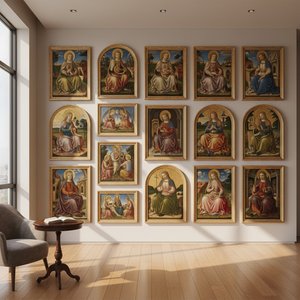
اكتشف روعة 25 لوحة لفرا أنجليكو، فنان عصر النهضة الإيطالي. استكشف قصصًا فنية وتقنيات زيتية آسرة وألوانًا سماوية. احصل على نسخ فاخرة لتزيين منزلك بجمال خالد. اكتشف جميع الروائع على Most-Famous-Paintings.com

Explore the groundbreaking art of Antonello da Messina, a pivotal figure of the Renaissance. Discover his innovative oil painting techniques, captivating portraits, and lasting influence on Italian masters. Learn more at Most-Famous-Paintings.

Explore the captivating world of Raphael Kirchner, a master of Art Nouveau illustration during the Belle Époque. Discover his iconic 'Kirchner Girls,' pioneering pin-up art & lasting influence.


ابقَ على اطلاع بأحدث أخبار الفن، والعروض الحصرية، وأفكار الديكور.
أخبرنا عن مشروعك، وسيقدم لك خبراؤنا الفنيون 3 اقتراحات فنية مخصصة لك.
دعنا نختار لك ٣ خيارات مخصصة تماماً - مجاناً!


 معاينة الحجم الحقيقي
 مشاركة
 مشاركة
 التفاصيل

 تحميل الملف
 قطع مشابهة
 الأشعة السينية
 عرض شرائح


 عرض المزيد







 خيار الزجاج متاح فقط للمقاسات التي تقل عن 110 سم


