A Sanctuary of Stone and Spirit: The Convento de San Esteban
In the heart of Salamanca, where the golden sandstone of the Meseta catches the amber glow of the Spanish sun, stands the Convento de San Esteban—a monumental testament to the enduring dialogue between faith and artistry. To enter this UNESCO World Heritage site is to step beyond the veil of the modern world and into a profound historical continuum. Founded by the Dominican Order in the mid-1erm century, the convent has served for centuries as a crucible of both spiritual devotion and intellectual revolution. It was within these hallowed walls that the School of Salamanca flourished, shaping the very foundations of Western theology and jurisprudence, and it is whispered in the corridors that even Christopher Columbus sought refuge here while presenting his daring vision of a westward voyage to the Spanish crown.
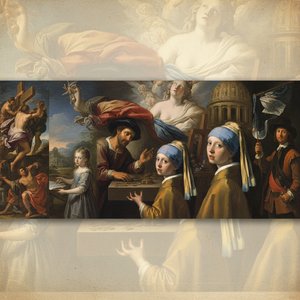
The architecture of San Esteban is a breathtaking narrative written in stone, showcasing a seamless transition between the intricate delicacy of the Plateresque and the dramatic grandeur of the Baroque. The facade acts as an outdoor altarpiece, a masterpiece of sculptural relief where the martyrdom of Saint Stephen and scenes from the Calvary are rendered with such exquisite detail that the stone seems to breathe with life. This ornate complexity finds its counterpoint in the serene simplicity of the portico, inspired by the elegant loggias of the Italian Renaissance. As one moves into the church itself, a Latin cross plan unfolds, revealing a harmonious fusion of late Gothic and Renaissance elements that reflect the shifting aesthetic sensibilities of the eras that built it.
The true soul of the collection, however, resides within the main chapel, where the sheer audacity of the Baroque period reaches its zenith. Here, the monumental altarpiece by José Benito de Churriguera commands the senses; its lavishly gilded surfaces and twisting solomonic columns create a celestial spectacle that seems to dissolve the boundaries between heaven and earth. Amidst this golden splendor, the artistry of Claudio Coello shines in his poignant depiction of the martyrdom of St. Stephen, while Antonio Palomino’s The Triumph of the Church fills the choir with a vibrant, triumphant energy. Even the sacristy offers a moment of refined contemplation, where Corinthian pilasters and meticulous detailing evoke a classical elegance that complements the more exuberant displays found elsewhere in the complex.
What distinguishes San Esteban from the traditional museum experience is its holistic immersion into the human condition. It is not merely a repository for sacred objects but a living monument where history, architecture, and theology converge. For the art lover, it offers a masterclass in Spanish religious evolution; for the historian, a window into the Counter-Reformation; and for the designer, an unparalleled study in the interplay of light, texture, and monumental scale. To visit San Esteban is to engage with a legacy that transcends the visual, offering a rare opportunity to contemplate the profound beauty born from centuries of unwavering devotion and intellectual pursuit.