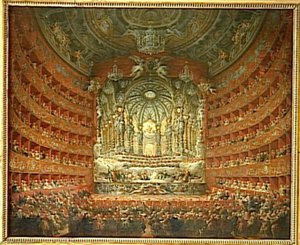
Giovanni Paolo Panini (1691–1765): Master of Roman Vedute & Architectural Fantasies
Giovanni Paolo Pannini, a name synonymous with the grandeur and romantic allure of 18th-century Rome, was more than just a painter; he was a visual architect of memory. Born in Piacenza in 1691, his artistic journey began under the tutelage of Giuseppe Natali and Andrea Galluzzi, but it was his exposure to the theatrical designs of Francesco Galli-Bibiena that truly ignited his imagination. This early immersion in stagecraft would profoundly influence his later work, imbuing it with a sense of dramatic composition and illusionistic space. In 1711, Panini relocated to Rome, a city already steeped in artistic history, where he honed his skills under the guidance of Benedetto Luti, mastering the art of drawing and laying the foundation for his future mastery of perspective.Early Training & Influences: Shaping a Vision
Giovanni Paolo Pannini’s formative years were marked by rigorous instruction in classical art principles. He began his artistic education in Piacenza under Giuseppe Natali and Andrea Galluzzi, absorbing foundational techniques in disegno (drawing) and quadratura (scenic perspective). Crucially, he encountered Francesco Galli-Bibiena's theatrical designs—a burgeoning field of illusionistic stagecraft—which instilled within him a fascination for dramatic composition and spatial manipulation. This encounter proved pivotal, shaping his artistic sensibility and preparing him for the ambitious projects that would define his career. The influence of Galli Bibiena’s work is evident in Pannini’s later frescoes and *vedute*, where he skillfully employed theatrical devices to create immersive environments.From Frescoes to Vedute: The Evolution of an Artistic Style
Panini initially gained renown as a decorator of palaces, undertaking monumental fresco commissions that showcased his exceptional technical prowess. His canvases adorned prestigious Roman residences, including the Villa Patrizi (1719–1725), Palazzo de Carolis (1720) and Seminario Romano (1721–1722). These early projects allowed him to refine his quadraturist skills—the art of designing perspective—and establish a reputation within Rome’s artistic circles. However, it was Pannini's embrace of the *veduta*, or view painting, that would ultimately cement his legacy as one of the most innovative artists of his era. Unlike earlier topographical painters who prioritized accurate documentation, Pannini reimagined Rome, blending existing structures with fragments of ancient ruins and fantastical architectural elements—a technique known as *capriccio*. This approach wasn’t merely about recording what he saw; it was about conveying a feeling, an atmosphere, capturing the spirit of Rome's layered history.The Pantheon & Beyond: Pannini's Iconic Views
Among Pannini’s most celebrated achievements is his depiction of the Pantheon—a masterpiece of Roman architecture that embodies both grandeur and mathematical precision. Commissioned by Francesco Algarotti, Panini meticulously rendered the interior space with breathtaking accuracy, utilizing innovative perspective techniques to create a convincing illusion of depth. This monumental fresco remains one of Rome's most iconic artworks, attracting visitors from around the globe. Pannini’s *vedute* extended beyond the Pantheon, encompassing vistas of Piazza Navona, Campo dei Fiori and numerous other Roman squares and monuments. He skillfully captured the bustling activity of daily life alongside the solemn beauty of ancient ruins—a duality that reflects the intellectual currents of his time. His meticulous attention to detail—the subtle interplay of light and shadow, the precise rendering of architectural ornamentation—established Pannini as a pioneer in the field of topographical painting.Legacy & Influence: Shaping Artistic Discourse
Giovanni Paolo Panini’s influence resonated throughout the artistic landscape of the 18th century. He was admitted into the Congregazione dei Virtuosi al Pantheon in 1719, marking his growing recognition within the Roman art world and securing him a prominent position among Rome's leading artists. Pannini taught perspective drawing at the Accademia di San Luca and the Académie de France in Paris, shaping the artistic sensibilities of a generation of painters—including Hubert Robert—who would adopt his innovative approach to architectural painting. His meticulous observation of Roman ruins inspired Piranesi’s fantastical engravings and contributed to the development of *capriccio*, a genre that celebrated imagination alongside reality. Pannini's enduring legacy lies in his contribution to the birth of Romanticism, demonstrating how art could evoke emotion and convey psychological depth—a departure from the rational idealism of Neoclassicism. His works continue to inspire artists today, testifying to the timeless beauty and intellectual rigor of his vision.- Notable Works: Villa Patrizi Frescoes, Palazzo de Carolis Decorations, Seminario Romano Paintings
- Influential Techniques: Quadratura (Scenic Perspective), Capriccio (Imaginary Landscape)