


x

 Akryl på lærredVægkunstFauvism
 1921Moderne
 50.0 x 61.0 cm
Håndmalet olie på lærred i din valgte størrelse og ramme, udført efter bestilling af vores kunstnere. ( Køb print Køb billede)





























Vælg mellem vores forudindstillede størrelser, der matcher kunstværkets originale proportioner.

Du kan indtaste dine egne mål for at passe til en bestemt ramme eller plads. Hvis den valgte størrelse ikke stemmer overens med det originale billedes proportioner, vil vi enten beskære kunstværket eller udvide maleriet med yderligere håndmalede elementer. En digital skitse sendes til din godkendelse, før produktionen påbegyndes.
Bemærk venligst, at forhåndsvisningen på skærmen ikke afspejler den faktiske beskæring eller udvidelse. Kun skitsen vil nøjagtigt vise den endelige komposition.
Selvom specialmål er mulige, anbefaler vi at vælge en dimension fra den foruddefinerede liste for at bevare de originale proportioner.
Levering i hele verden () på 3/4 uger i stedet for de standard 5 uger. (23 august). Ingen kompromiser med kvaliteten.


Odalisque in red trousers
Størrelse på reproduktion
Henri Matisse's *Odalisque in Red Trousers*, painted in 1921, is more than just a portrait; it’s an immersion into a world of vibrant color, sensual repose, and the lingering allure of the Orient. Housed within the Musée de l'Orangerie in Paris, this captivating work stands as a pivotal example of Fauvism and a testament to Matisse’s profound fascination with North African culture and decorative arts. The painting immediately commands attention – not through realistic representation, but through an audacious celebration of hue and form, inviting the viewer into a dreamlike state of contemplation.
Matisse's journey to this moment was deeply shaped by his travels to Morocco and Algeria in 1906 and 1912. These experiences ignited within him a profound appreciation for the rich textures, bold patterns, and luminous light characteristic of Moorish architecture and design. He wasn’t simply documenting these landscapes; he was absorbing their essence, translating them into a visual language that prioritized emotional impact over strict adherence to naturalism. The *Odalisque* embodies this transformation – it's a carefully constructed fantasy built upon the foundations of Matisse’s newfound artistic vocabulary.
At the heart of the composition lies an odalisque, a term historically referring to a female attendant in a Turkish or Moorish harem. However, Matisse reimagines this archetype with remarkable freedom. The woman reclines languidly on a divan, her posture suggesting both vulnerability and quiet strength. Her attire is strikingly unconventional: a vibrant red trouser suit – a bold departure from traditional depictions of women within the harem setting – paired with a flowing, light green blouse. This deliberate juxtaposition immediately disrupts expectations, signaling Matisse’s intention to challenge conventional representations and explore new modes of expression.
The background is equally significant. It's not merely a backdrop but an integral part of the painting’s narrative. The richly patterned fabrics adorning the divan – in shades of blue, green, and gold – echo the decorative motifs found in Moorish interiors. A small table to the left holds a vase overflowing with flowers, its contours mirroring the curves of the odalisque's body, creating a harmonious visual dialogue between figure and environment. Even the bowl at the top of the painting subtly reinforces this connection, adding another layer of intricate detail.
Matisse’s technique is characterized by its deliberate simplification and abstraction. He employs a flattened perspective, reducing depth and creating a sense of immediacy. The brushstrokes are loose and expressive, applied with thick impasto – a visible build-up of paint that adds texture and dynamism to the surface. This approach is quintessential Fauvist, prioritizing color and emotional intensity over precise representation.
Color as Language: The painting’s power resides largely in its masterful use of color. Matisse utilizes a vibrant, non-naturalistic palette – intense reds, greens, blues, and yellows – to evoke mood and atmosphere. The red trousers are particularly arresting, drawing the eye immediately and injecting a sense of energy into the scene. These colors aren't blended; they’re applied in bold blocks, creating a dazzling visual effect that pulsates with life.*Odalisque in Red Trousers* is not simply a depiction of a woman reclining on a divan; it’s an exploration of sensuality, repose, and the exotic allure of the Orient. The red trousers themselves can be interpreted as a symbol of rebellion – a challenge to traditional gender roles and expectations. The overall atmosphere is one of tranquility and contemplation, inviting the viewer to lose themselves in the painting's dreamlike quality.
Matisse’s work during this period reflects a broader shift in artistic sensibilities, moving away from academic realism towards a more subjective and expressive approach. *Odalisque in Red Trousers* stands as a landmark achievement in this evolution, solidifying Matisse’s position as one of the most influential artists of the 20th century. For those seeking to experience the brilliance of his vision, reproductions like Most-Famous-Paintings's offer an exceptional opportunity to bring this captivating masterpiece into your home.
*Fleurs et céramique* and *The Blue Nude (Souvenir of Biskra)* are further examples of Matisse’s artistic genius, offering a deeper understanding of his unique style and enduring legacy.


1869 - 1954 , Frankrig
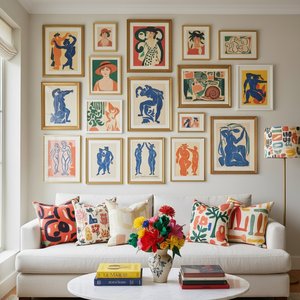
Oplev Henri Matisse' 25 mest ikoniske kunstværker – fra Fauvisme til Paper Cutouts. Lær historien bag farvernes mester og find inspiration til din boligindretning med museumskvalitets reproduktioner på Most-Famous-Paintings.com.

Oplev fauvismens 10 mest ikoniske værker! Dyk ned i Henri Matisse, André Derains og andre kunstneres vilde farver & expressionistiske stil. Find museumskvalitets reproduktioner og inspiration til din indretning på Most-Famous-Paintings.com.
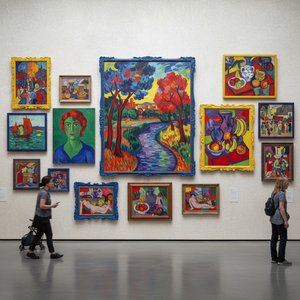
Oplev fauvismens 10 mest ikoniske værker! Dyk ned i Henri Matisse, André Derains og andre fauvisters revolutionerende brug af farver. Find inspiration til din boligindretning & køb museumskvalitets kunsttryk på Most-Famous-Paintings.com.

Explore the rich symbolism of the red dress in art history! From ancient power displays to iconic portraits like Cézanne’s 'Madame Cezanne', discover the cultural and artistic significance behind this captivating color. Expert analysis & insights.

Explore the revolutionary Fauvism movement & Henri Matisse's bold use of color! Discover key characteristics, iconic artworks, and its lasting impact on modern art history with Most-Famous-Paintings.


Hold dig opdateret med de seneste kunstnyheder, eksklusive tilbud og indretningsideer.
Fortæl os om dit projekt, og vores kunsteksperter vil give dig 3 personlige kunstforslag.
Vi kuraterer 3 valgmuligheder kun til dig – Gratis!


 Se i fuld skala
 Del
Del Del
Del
 Detaljer

 Download
 Lignende værker
 Røntgenundersøgelse
 Diasshow
 Se mere







 Glasmulighed er kun tilgængelig i størrelser under 110 cm


