


x


 Oil On CanvasWallArtNorthern Renaissance
 1535
1535 50.0 x 35.0 cm
 Nelson-Atkins Kunstmuseum
Håndmalet olie på lærred i din valgte størrelse og ramme, udført efter bestilling af vores kunstnere. ( Switch to Print Switch to Image)





























Vælg mellem vores forudindstillede størrelser, der matcher kunstværkets originale proportioner.

Du kan indtaste dine egne mål for at passe til en bestemt ramme eller plads. Hvis den valgte størrelse ikke stemmer overens med det originale billedes proportioner, vil vi enten beskære kunstværket eller udvide maleriet med yderligere håndmalede elementer. En digital skitse sendes til din godkendelse, før produktionen påbegyndes.
Bemærk venligst, at forhåndsvisningen på skærmen ikke afspejler den faktiske beskæring eller udvidelse. Kun skitsen vil nøjagtigt vise den endelige komposition.
Selvom specialmål er mulige, anbefaler vi at vælge en dimension fra den foruddefinerede liste for at bevare de originale proportioner.
Levering i hele verden () på 3/4 uger i stedet for de standard 5 uger. (28 juli). Ingen kompromiser med kvaliteten.


The Three Graces
Størrelse på reproduktion
Lucas Cranach the Elder’s “The Three Graces” transcends mere depiction; it embodies the very spirit of Northern Renaissance artistry—a harmonious blend of classical ideals and humanist observation. Painted in 1535 during a period marked by religious upheaval, this masterpiece at the Nelson-Atkins Museum of Art stands as a testament to Cranach’s mastery of capturing beauty and conveying profound symbolic meaning.
Style and Influences: Cranach's work firmly establishes itself within the Northern Renaissance tradition. Drawing inspiration from Italian humanist thinkers like Leonardo da Vinci and Michelangelo, he skillfully integrates classical motifs—particularly those derived from Greek mythology—into his compositions. Unlike the opulent grandeur of Florentine art, Cranach’s aesthetic prioritizes restraint and elegance, favoring subtle tonal gradations and meticulous detail to illuminate the human form.
Painting Details and Technique: Executed in oil on panel, “The Three Graces” showcases Cranach's unparalleled technical prowess. The artist employs a pyramidal composition—a hallmark of Renaissance painting—to elevate the figures of Euphrosyne, Aglaea, and Thalia to a position of prominence. Delicate brushstrokes create an illusion of soft flesh tones and drapery folds, capturing the ethereal quality characteristic of Northern Renaissance art. Cranach’s meticulous attention to anatomical accuracy reflects his deep understanding of human anatomy, furthering enhancing the realism of the scene.
Symbolism: The painting's symbolism resonates deeply with humanist beliefs prevalent during Cranach’s time. The Graces—Euphrosyne (Joy), Aglaea (Splendor), and Thalia (Youth)—represent virtues associated with feminine beauty, grace, and prosperity. Their poses are deliberately reminiscent of sculptures by Praxiteles, emphasizing the ideal human form and celebrating divine harmony. The black background serves to heighten the luminosity of the nude figures, directing the viewer’s gaze towards their serene expressions and idealized postures.
Historical Context: Created amidst the Protestant Reformation, “The Three Graces” reflects a renewed interest in classical art as a counterbalance to medieval religious dogma. Cranach's patrons—including Frederick III of Saxony—embraced humanist ideals, fostering an environment conducive to artistic innovation. This painting exemplifies the Renaissance’s commitment to portraying human beauty and virtue with dignity and grace – values that continue to inspire artists and collectors today.
Availability: Explore a stunning reproduction of “The Three Graces” at Most-Famous-Paintings.com, where you can acquire a high-quality print that captures the essence of this iconic Renaissance artwork.


1472 - 1553 , Tyskland

Oplev de 25 mest ikoniske kunstværker fra Metropolitan Museum of Art i New York! Fra Monet til Van Gogh – lær historierne bag mesterværkerne og find inspiration til dit hjem. Køb museumskvalitets reproduktioner på Most-Famous-Paintings.com.
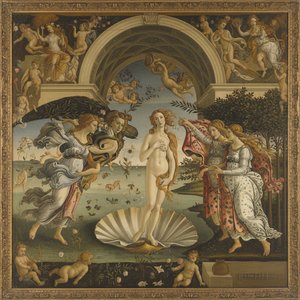
Oplev Sandro Botticellis 25 mest ikoniske malerier! Fordyb dig i renæssancens skønhed, mytologi og kunstnerisk genialitet. Find museumskvalitets reproduktioner & inspiration til din bolig på Most-Famous-Paintings.com – udforsk samlingen online!
Oplev renæssancens guldalder! Udforsk top 10 mesterværker fra Leonardo da Vinci, Michelangelo & Botticelli. Lær om kunsthistorie og find museumskvalitets reproduktioner til dit hjem på Most-Famous-Paintings.com. Inspiration & dekoration.
Oplev Raphaels 25 mest ikoniske værker! Dyk ned i renæssancens kunsthistorie, fra 'Skolen i Athen' til smukke madonna-malerier. Find inspiration & køb museumskvalitets reproduktioner på Most-Famous-Paintings.com.

Oplev renæssancens humanistiske idealer gennem 10 ikoniske mesterværker af Leonardo da Vinci, Michelangelo & Rafael. Lær historien bag disse berømte malerier og find inspiration til din indretning med museumskvalitets kunsttryk på Most-Famous-Paintings.com.


Hold dig opdateret med de seneste kunstnyheder, eksklusive tilbud og indretningsideer.
Fortæl os om dit projekt, og vores kunsteksperter vil give dig 3 personlige kunstforslag.
Vi kuraterer 3 valgmuligheder kun til dig – Gratis!


 Preview
 Del
Del Del
Del
 Detaljer

 Download
 Lignende værker
 Røntgenundersøgelse
 Diasshow
 Se mere







 Glasmulighed er kun tilgængelig i størrelser under 110 cm


