x

Handgemaltes Ölgemälde auf Leinwand in Ihrer Wunschgröße und mit Rahmen, auf Bestellung von unseren Künstlern angefertigt. ( Zum Druck wechseln Zum Bild wechseln)





























Wählen Sie aus unseren vordefinierten Formaten, die den ursprünglichen Proportionen des Kunstwerks entsprechen.

Sie können Ihre eigenen Maße eingeben, um einen bestimmten Rahmen oder Platz auszufüllen. Wenn die gewählte Größe nicht den Proportionen des Originalbildes entspricht, werden wir das Kunstwerk entweder beschneiden oder das Gemälde durch zusätzliche, handgemalte Elemente erweitern. Ein digitales Mockup wird Ihnen zur Genehmigung zugesandt, bevor die Produktion beginnt.
Bitte beachten Sie, dass die Bildschirmvorschau nicht die tatsächliche Beschneidung oder Erweiterung widerspiegelt. Nur das Mockup zeigt die endgültige Komposition exakt an.
Obwohl Sondermaße verfügbar sind, empfehlen wir, eine Größe aus der vordefinierten Liste zu wählen, um die ursprünglichen Proportionen beizubehalten.
Weltweiter Versand () in nur 3 bis 4 Wochen statt der üblichen 5 Wochen. (8 August). Keine Kompromisse bei der Qualität.


Country Dance
Format der Reproduktion
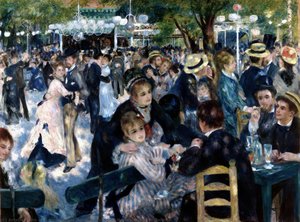
Pierre-Auguste Renoir’s “Country Dance” (1883) isn't merely a depiction of a rural fête; it’s a vibrant distillation of joy, movement, and the fleeting beauty of a summer afternoon. Painted during a pivotal period in Renoir’s artistic evolution – a deliberate shift away from the rigid conventions of Impressionism towards a more sensual and evocative style – this work captures an intimate scene brimming with life and warmth. The painting transports us to a sun-drenched meadow, where a couple, Paul Lhôte and Aline Charigot, are lost in the rhythm of a country dance. Renoir masterfully eschews photographic realism, instead prioritizing the *impression* of light, color, and emotion – a hallmark of his mature style.
The composition is deceptively simple yet profoundly effective. The figures, rendered with loose, confident brushstrokes, are bathed in a golden light that seems to emanate from within the canvas itself. Notice how Renoir doesn’t meticulously detail every garment or facial feature; rather, he focuses on capturing the *feeling* of movement and connection. The surrounding chairs, arranged in a semi-circle, aren't merely props but contribute to the sense of communal celebration. Even the background – a suggestion of trees and foliage – is rendered with an atmospheric haze, drawing the viewer’s eye directly to the central couple.
Renoir's journey towards this newfound expressive freedom was deeply influenced by his travels in Italy during 1881. Inspired by the frescoes of Raphael, particularly the harmonious balance and idealized beauty he observed in works like “The Triumph of Bacchus,” Renoir sought to emulate this sense of classical grace and serenity within his own paintings. This Italian influence is subtly reflected in the painting’s composition – the balanced arrangement of figures, the use of warm colors, and the overall feeling of idyllic tranquility. However, unlike the static perfection of Raphael's works, Renoir injects a palpable sense of life and movement into his scene.
Furthermore, the choice of subject matter itself reflects this Italian influence. Country dances were popular in Italy during the Renaissance, providing a rich source of visual inspiration for artists like Raphael. Renoir’s decision to depict a country dance not only aligns with this historical context but also suggests a desire to connect with a tradition of artistic beauty that stretches back centuries.
Renoir's technique in “Country Dance” is characterized by his signature *plein air* painting method – working directly outdoors, capturing the fleeting effects of light and atmosphere. He employs a broken brushstroke technique, layering colors to create a shimmering effect that seems to vibrate with life. The palette is dominated by warm hues—sun-kissed yellows, rosy reds, and verdant greens—that evoke the warmth of summer and the joy of celebration. Observe how he uses color not just to represent reality but also to convey emotion – the vibrant yellow gloves of the woman, for example, suggest a playful spirit.
The loose brushwork is particularly evident in the rendering of the figures’ clothing and hair. Renoir doesn't attempt to create precise details; instead, he uses short, expressive strokes to capture the overall impression of texture and form. This technique contributes significantly to the painting’s sense of immediacy and vitality.
Currently residing in the prestigious Musée d'Orsay in Paris, “Country Dance” stands as a testament to Renoir’s artistic genius. It represents a crucial turning point in his career, marking a shift towards a more personal and expressive style that would define his legacy. The painting continues to captivate viewers with its vibrant colors, dynamic composition, and evocative portrayal of human connection. Reproductions of this masterpiece offer an accessible way to experience the beauty and charm of Renoir’s vision – a timeless celebration of life, love, and the simple pleasures of a summer afternoon.

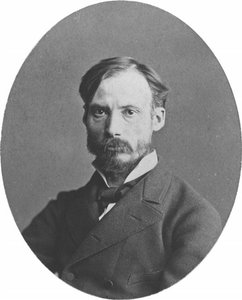
1841 - 1919 , Frankreich

Entdecken Sie die 25 schönsten Meisterwerke von Pierre-Auguste Renoir! Tauchen Sie ein in die Welt des Impressionismus, erleben Sie berühmte Gemälde wie 'Bal au moulin de la Galette' und finden Sie hochwertige Kunstdrucke für Ihr Zuhause. Jetzt auf Most-Famous-Paintings.com!

Entdecken Sie die 10 Meisterwerke des Impressionismus! Von Monet bis Renoir – erleben Sie die Geschichten, Techniken & Farben berühmter Künstler. Kunstdrucke in Museumsqualiät auf Most-Famous-Paintings.com.

Entdecken Sie die 10 Meisterwerke des Impressionismus! Von Monet bis Renoir – erfahren Sie die Geschichten hinter ikonischen Gemälden, Techniken & Farben. Hochwertige Reproduktionen auf Most-Famous-Paintings.com.

Explore the captivating world of Pierre-Auguste Renoir! Discover his life, iconic Impressionist masterpieces & enduring legacy with our expert guide. High-quality reproductions available.
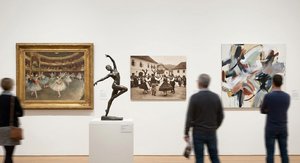
Explore the captivating history of dance in art! From Degas' ballet scenes to abstract expressions, discover how artists have captured movement and cultural significance across time. Expert insights for collectors & enthusiasts.


Bleiben Sie über die neuesten Kunstnachrichten, exklusive Angebote und Dekorationsideen auf dem Laufenden.
Erzählen Sie uns von Ihrem Projekt, und unsere Kunstexperten erstellen für Sie drei personalisierte Kunstvorschläge.
Wir kuratieren 3 Optionen exklusiv für Sie – kostenlos!


 Vorschau anzeigen
 Versenden
 Teilen
 Details anzeigen

 Herunterladen
 Ähnliche Objekte
 Röntgenaufnahme
 Diashow


 Weiterlesen







 Die Glasoption ist nur für Größen unter 110 cm verfügbar.