


x

 Ακρυλικά σε καμβάΕκθέσιμα Έργα ΤέχνηςBaroque Style
 1673
1673 74.0 x 61.0 cm
 Γκαλερί Κουάρτλουντ
Χειροποίητη oil painting σε καμβά στο δικό σας μέγεθος και πλαίσιο, κατά παραγγελία από τους καλλιτέχνες μας. ( Αγορά εκτύπωσης Αγορά ψηφιακής εικόνας)





























Επιλέξτε από τις προκαθορισμένες διαστάσεις μας που διατηρούν τις αρχικές αναλογίες του έργου τέχνης.

Μπορείτε να ορίσετε δικές σας διαστάσεις ώστε το έργο να ταιριάζει σε ένα συγκεκριμένο πλαίσιο ή χώρο. Εάν το επιλεγμένο μέγεθος δεν συμπίπτει με τις αναλογίες της αρχικής εικόνας, θα περικοψούμε το έργο ή θα επεκτείνουμε τη ζωγραφιά με πρόσθετα χειρόγραφα στοιχεία. Ένα ψηφιακό προσχέδιο θα σας αποσταλεί για έγκριση πριν την έναρξη της παραγωγής.
Παρακαλούμε σημειώστε ότι η προεπισκόπηση στην οθόνη δεν αντικατοπτρίζει την πραγματική περικοπή ή επέκταση. Μόνο το προσχέδιο θα δείξει με ακρίβεια την τελική σύνθεση.
Παρόλο που είναι διαθέσιμα προσαρμοσμένα μεγέθη, συνιστούμε να επιλέξετε μια διάσταση από τη λίστα των προκαθορισμένων μεγεθών για τη διατήρηση των αρχικών αναλογιών.
Παγκόσμια Αποστολή () σε 3-4 εβδομάδες αντί για τις συνήθεις 5 εβδομάδες. (20 Αύγουστος). Χωρίς συμβιβασμούς στην ποιότητα.


Gian Lorenzo Bernini
Διαστάσεις Αναπαραγωγής

In the grand, theatrical theater of the Roman Baroque, few names command as much awe as Giovanni Battista Gaulli. Known affectionately to his contemporaries and history as Baciccio—a Genoese diminutive meaning “the little painter”—Gaulli did not merely paint surfaces; he dissolved them. Born in Genoa on May 8, 1639, his early life was shaped by the vibrant artistic currents of Northern Italy, yet it was his migration to Rome in 1657 that would forever alter the trajectory of Western art. This move placed him at the very heart of the Counter-Reformation's visual propaganda, where the goal of art was to overwhelm the senses and transport the soul toward the divine.
The foundation of Gaulli’s genius was laid within the orbit of the legendary Gian Lorenzo Bernini. Immersing himself in Bernini’s atelier, Gaulli absorbed the principles of sculptural grandeur and theatrical illusionism that defined the High Baroque. He learned to view a canvas not as a flat plane, but as a window into an infinite, celestial space. This profound influence is evident in his mastery of chiaroscuro, where the dramatic interplay between deep shadow and piercing light serves to sculpt figures with a weight and presence that rivals marble. By blending the painterly richness of masters like Rubens and Van Dyck with the structural drama of Bernini, Gaulli developed a style that prioritized emotional resonance and spiritual ecstasy over mere anatomical precision.
Gaulli’s most enduring achievements are found in his monumental frescoes, works that transformed the ceilings of Rome into portals to the heavens. His ability to execute quadratura—the technique of painting architectural perspectives that appear to extend the real space of a building—reached its zenith in the great churches of the city. Perhaps most breathtaking is his work in the Il Gesù church, specifically the Adoration of the Name of Jesus. In this masterpiece, Gaulli achieved a dizzying sense of movement; clouds seem to spill over the edges of the frame, and saints and angels appear to tumble through the very air of the nave, bathed in a holy, radiant light that blurs the line between the earthly and the eternal.
Beyond these vast ceiling compositions, Gaulli’s talent extended to more intimate, yet equally powerful, devotional works. His St John the Baptist, created around 1676, demonstrates his ability to capture intense human emotion through a realistic lens, utilizing vibrant colors and dynamic poses to engage the viewer's empathy. Whether working on a massive scale for papal commissions or crafting poignant altarpieces, his hand was always recognizable by its energy, its luminous palette, and an almost restless sense of motion.
The career of Baciccio represents the pinnacle of the High Baroque era, acting as a bridge between the heavy, muscular drama of the mid-17th century and the lighter, more decorative flourishes of the early Rococo. His ability to manipulate light and space left an indelible mark on the Roman school of painting, influencing generations of artists who sought to capture the sublime. As he moved through the late 17th century, his works became increasingly complex, pushing the boundaries of what could be achieved with pigment and plaster.
When Gaulli passed away in Rome on April 2, 1709, he left behind a legacy that continues to haunt the corridors of Italy's most sacred basilicas. To study his work is to witness the triumph of illusion; he remains an artist who understood that the true purpose of art was not just to show the world as it is, but to reveal the magnificent, unseen glory of the divine.

1639 - 1709

Explore the profound elegance of Baroque Classicism. Discover how 17th-century masters synthesized dramatic emotion with classical order through the lens of the Counter-Reformation and the works of legends like Carlo Maratta and Andrea Sacchi.
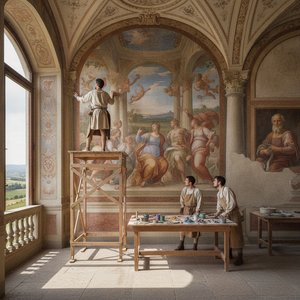
Explore the profound history and technical mastery of fresco painting. From ancient Roman murals to Michelangelo's Sistine Chapel, discover the enduring chemistry and artistry behind this timeless wall painting technique used by the world's greatest masters.

Explore the dramatic world of Italian Baroque art. Discover how masters like Caravaggio used chiaroscuro and tenebrism to revolutionize painting through light, shadow, and profound realism. A definitive guide for history lovers and art collectors.


Μείνετε ενημερωμένοι για τις τελευταίες ειδήσεις σχετικά με την τέχνη, αποκλειστικές προσφορές και ιδέες διακόσμησης.
Πείτε μας περισσότερα για το έργο σας και οι ειδικοί μας στην τέχνη θα σας προσφέρουν 3 εξατομικευμένες προτάσεις έργων τέχνης.
Αφήστε μας να επιμεληθούμε 3 επιλογές αποκλειστικά για εσάς – Δωρεάν!


 Δείτε σε πραγματικό χώρο
 Αποστολή
 Κοινοποίηση
 Λεπτομέρειες

 Λήψη
Λήψη
 Παρόμοια αντικείμενα συλλογής
 Ακτινογραφία
 Παρουσίαση
 Διαβάστε περισσότερα







 Η επιλογή με γυαλί είναι διαθέσιμη μόνο για μεγέθη κάτω από 110 εκ.


