Hippolyte Paul Delaroche: Bridging Romanticism and Academic Tradition
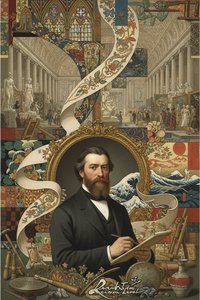
Paul Delaroche (1797-1856) stands as a pivotal figure in 19th-century French art, embodying the tensions between Romantic fervor and Academic rigor. Born into a family steeped in artistic heritage—his father an art expert and his uncle curator of the Cabinet des Estampes—Delaroche’s formative years instilled within him a profound appreciation for visual culture and established a trajectory toward mastering artistic technique. He began his artistic journey under the tutelage of Antoine Jean Gros, absorbing Gros's masterful command of dramatic composition and capturing the grandeur of historical narratives. This early influence would prove crucial in shaping Delaroche’s distinctive style—a style characterized by meticulous detail and emotionally charged depictions that resonated deeply with audiences of his time.
Early Life & Artistic Training
Delaroche’s education was exceptional for its era, fostering a deep understanding of artistic principles and preparing him for a distinguished career. Gros’s guidance instilled in him the importance of capturing emotion and conveying narrative complexity through visual means—a lesson that would permeate Delaroche's entire oeuvre. He demonstrated an innate talent for drawing and painting from a young age, honing his skills under various mentors before embarking on his independent artistic pursuits. This formative period cemented his commitment to mastering both technical proficiency and expressive storytelling.
Mentorship & Collaboration
Delaroche nurtured the talents of younger artists like Thomas Couture, Jean Léon Gérôme, and Jean François Millet, establishing himself as a respected teacher and fostering a collaborative spirit within the Parisian art scene. These relationships undoubtedly contributed to Delaroche’s artistic development and broadened his stylistic horizons—a testament to his generosity as an educator and his belief in the power of collective creativity. He championed innovative approaches to painting while upholding the standards of Academic excellence, shaping the artistic landscape of his time.
Delaroche's Artistic Style: A Synthesis of Emotion and Precision
Delaroche’s artistic output reflects this dual influence—Romanticism’s passion for emotion and neoclassicism’s dedication to accuracy. He skillfully blended these approaches, producing canvases that were both aesthetically stunning and intellectually stimulating. His paintings frequently tackled monumental historical subjects, meticulously researched and rendered with breathtaking realism. The result was a visual language that captivated the public imagination and cemented his reputation as one of France’s foremost artists. Consider “The Execution of Lady Jane Grey,” for instance—a scene fraught with psychological tension conveyed through masterful lighting and dramatic poses, yet underpinned by meticulous attention to detail and adherence to Academic conventions. As Oxford Dictionary of Art aptly describes it, Delaroche's works are "hollywoodienses," mirroring the grandeur and spectacle of theatrical productions.
Notable Achievements & Legacy
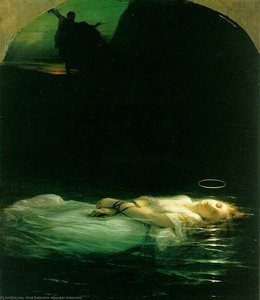
Delaroche achieved considerable success during his lifetime, securing commissions from prominent patrons and garnering critical acclaim for his ambitious projects—most notably his series on the Life of the Virgin Mary. His depictions of biblical figures showcased his unparalleled skill in conveying emotion through subtle gestures and expressions, while simultaneously upholding the highest standards of artistic craftsmanship. Furthermore, Delaroche’s influence extended beyond his own lifetime, inspiring subsequent generations of artists who embraced both Romantic idealism and Academic rigor—a legacy that continues to endure today, as evidenced by his paintings residing in institutions such as The Walters Art Museum and accessible on Most-Famous-Paintings.com. His enduring impact underscores the significance of Delaroche’s contribution to French art history.