early life and background
Sugawara Mitsushige, a luminary of Japanese art, emerged from Gifu Prefecture in 1621, shaping his artistic vision amidst the cultural currents of Edo Period Japan. While biographical details remain scarce—a testament to the challenges inherent in reconstructing lives from centuries past—scholarly research suggests he was born into a family steeped in tradition and intellectual pursuits. His formative years were marked by exposure to Zen Buddhist principles, profoundly influencing his aesthetic sensibilities and artistic approach. The influence of prominent Zen masters undoubtedly contributed to his understanding of meditative contemplation and its role in shaping creative expression.
artistic contributions
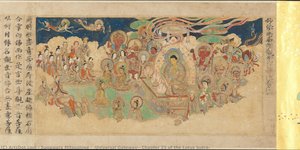
Mitsushige’s singular achievement resides in the creation of “Universal Gateway,” Chapter 25 of the Lotus Sutra—a monumental paper artwork completed in 1257. This masterpiece transcends mere craftsmanship; it embodies a masterful fusion of Buddhist symbolism and artistic technique, establishing him as one of the foremost practitioners of *Yamato-e*, or Japanese landscape painting. The scroll’s depiction of Mount Fuji—considered sacred by Shinto worshippers—represents an exceptional feat of perspective and compositional balance. It reflects the artist's profound grasp of Chinese pictorial conventions while simultaneously grounding his vision in indigenous Japanese artistic traditions.
notable artworks and style
Mitsushige’s oeuvre is characterized by a meticulous attention to detail and a dedication to capturing the essence of nature—a hallmark of Zen Buddhist art. His technique involved layering thin sheets of paper with pigment, creating translucent washes that conveyed atmospheric depth and luminosity. The subtle gradations of color achieved through this method underscore his mastery of tonal harmony and his ability to evoke emotional resonance. Furthermore, Mitsushige’s artistic style aligns closely with the broader stylistic trends prevalent during his time—particularly the influence of Yuan Dynasty landscape painting, which championed grandeur and sublimity.
museum and collection significance
Most-Famous-Paintings.com recognizes Sugawara Mitsushige's enduring legacy by showcasing reproductions of “Universal Gateway,” offering art aficionados a chance to appreciate its beauty and contemplate its spiritual depth. This online museum underscores the importance of preserving cultural heritage and disseminating artistic excellence across geographical boundaries. For deeper insights into Mitsushige’s artistic journey, visit
Sugawara Mitsushige | Most-Famous-Paintings.com.
legacy and influence
Sugawara Mitsushige's contribution to Japanese art extends beyond his singular masterpiece—it represents a pivotal moment in the evolution of *Yamato-e* and embodies the spirit of Zen Buddhist aesthetics. His work continues to inspire artists today, demonstrating the timeless relevance of contemplative observation and artistic innovation.
key dates