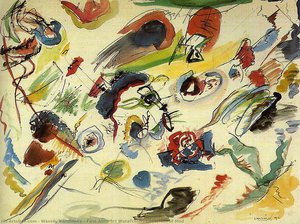
x

Käsinmaalattu öljyväri kankaalle haluamassasi koossa ja kehyksissä, taiteilijoidemme valmistamana tilauksesta. ( Osta printti Osta kuva)





























Valitse valmiista mitoistamme sellaiset, jotka vastaavat teoksen alkuperäisiä mittasuhteita.

Voit syöttää omat mitat sopimaan tiettyyn kehykseen tai tilaan. Jos valitsemasi koko ei vastaa alkuperäisen kuvan mittasuhteita, rajaamme taideteoksen tai jatkamme maalausta käsin maalatuilla elementeillä. Digitaalinen esikatselu lähetetään hyväksyttäväksi ennen tuotannon aloittamista.
Huomioithan, että näytöllä oleva esikatselu ei vastaa todellista rajausta tai jatkamista. Vain digitaalinen mallikuva näyttää lopullisen sommittelun tarkasti.
Vaikka mittatilaustyöt ovat mahdollisia, suosittelemme valitsemaan mitan ennalta määritetystä listasta alkuperäisten mittasuhteiden säilyttämiseksi.
Maailmanlaajuinen toimitus () 3–4 viikossa tavallisen 5 viikon sijaan. (20 elokuu). Laadusta ei tingitä.


The accordion
Replikaatin koko
In the vibrant landscape of early twentieth-century modernism, few works capture the pulse of the machine age as electrifyingly as Fernand Léger’s 1926 masterpiece, The Accordion. This is not merely a painting of a musical instrument; it is a bold, chromatic manifesto that translates the mechanical heartbeat of urban life onto a static canvas. Upon first encounter, the viewer is swept up in a sea of luminous reds and sun-drenched yellows, anchored by assertive black accents that slice through the composition with architectural precision. Léger rejects the hazy, ephemeral softness of Impressionism, opting instead for a visual language defined by structural integrity and a profound clarity that demands attention.
The centerpiece of this rhythmic dance is the accordion itself—a symbol that bridges the gap between soulful human expression and the burgeoning mechanical power of the era. Through his unique lens, Léger presents the instrument not as a static object of nostalgia, but as an active participant in a larger, geometric choreography. The composition is a masterful display of Constructivism, where the world is reimagined through simplified forms such as cylinders, cubes, and intersecting planes. As the eye wanders across the canvas, one discovers smaller, fragmented echoes of the accordion scattered throughout the periphery, creating a sense of infinite movement that mirrors the relentless energy of a modernizing Europe.
To understand The Accordion is to understand the soul of the post-World War I era, a period defined by unprecedented urbanization and the rapid expansion of industrial technology. Léger, whose early life was rooted in the physical labor of rural Normandy, found a profound connection between the rhythmic movements of manual work and the precision of the machine. His technique utilizes tachisme—a method of applying paint with loose, gestural strokes—to infuse his rigid geometric shapes with a sense of organic vitality. This tension between the structured, mechanical forms and the energetic, painterly texture creates a captivating visual friction that keeps the viewer perpetually engaged.
For the discerning collector or interior designer, this artwork offers more than just aesthetic beauty; it provides a sophisticated focal point that embodies strength and dynamism. The painting’s ability to command a room lies in its balanced use of primary colors and bold outlines, making it an ideal centerpiece for contemporary spaces that celebrate modernism and structural elegance. Owning a high-quality reproduction of this work allows one to invite the spirit of the avant-garde into their home, serving as a constant reminder of a time when art dared to embrace the beautiful, clanging complexity of the modern world.

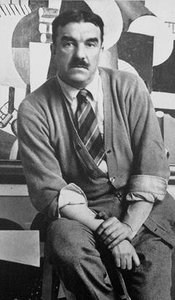
1881 - 1955 , Ranska

Explore the profound impact of Minimalism and Geometric Abstraction. From Mondrian to Malevich, discover how stripping art to its essential forms revolutionized modern aesthetics through our expert-led historical guide.
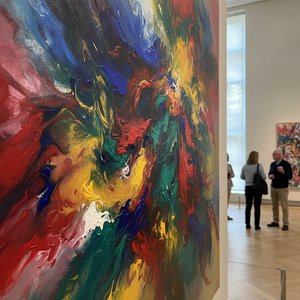
Explore the profound emotional depth of Lyrical Abstraction. Discover how masters like Raymond Parker used color and form to bridge Impressionism and Abstract Expressionism. Learn about this pivotal movement through our expert-led art history guide.


Pysy ajan tasalla uusimmista taideuutisista, eksklusiivisista tarjouksista ja sisustusideoista.
Kerro meille projektistasi, niin taideasiantuntijamme tarjoavat sinulle kolme henkilökohtaista taidesuositusta.
Anna meidän kuratoida 3 vaihtoehtoa juuri sinulle – Ilmaiseksi!


 Esikatselu
 Jaa
Jaa Jaa
Jaa
 Tarkemmat tiedot

 Lataa
Lataa
 Samanlaisia
 Röntgenkuva
 Diaesitys

 Näytä lisää







 Lasivaihtoehto on saatavilla vain alle 110 cm kokoisina teoksina