


x

Käsinmaalattu öljyväri kankaalle haluamassasi koossa ja kehyksissä, taiteilijoidemme valmistamana tilauksesta. ( Osta printti Osta kuva)





























Valitse valmiista mitoistamme sellaiset, jotka vastaavat teoksen alkuperäisiä mittasuhteita.

Voit syöttää omat mitat sopimaan tiettyyn kehykseen tai tilaan. Jos valitsemasi koko ei vastaa alkuperäisen kuvan mittasuhteita, rajaamme taideteoksen tai jatkamme maalausta käsin maalatuilla elementeillä. Digitaalinen esikatselu lähetetään hyväksyttäväksi ennen tuotannon aloittamista.
Huomioithan, että näytöllä oleva esikatselu ei vastaa todellista rajausta tai jatkamista. Vain digitaalinen mallikuva näyttää lopullisen sommittelun tarkasti.
Vaikka mittatilaustyöt ovat mahdollisia, suosittelemme valitsemaan mitan ennalta määritetystä listasta alkuperäisten mittasuhteiden säilyttämiseksi.
Maailmanlaajuinen toimitus () 3–4 viikossa tavallisen 5 viikon sijaan. (22 elokuu). Laadusta ei tingitä.


Neitsyt Maria ja enkelit
Replikaatin koko

In the vibrant, sun-drenched landscape of fourteenth-century Tuscany, a period defined by profound spiritual devotion and the dawn of artistic transformation, the name Jacopo del Casentino resonates with the quiet power of a prayer. Often known to history through the mistaken identity of Jacopo Landino—a nomenclature born from the historical errors of Giorgio Vasari—this Florentine master navigated the delicate transition between the late Gothic tradition and the burgeoning sensibilities of the early Renaissance. While the precise details of his birth and early years remain shrouded in the mists of time, his presence is indelibly etched into the sacred altarpieces that once graced the chapels of Italy, serving as a bridge between the stylized elegance of the past and the humanistic depth of the future.
The origins of his artistry are deeply rooted in the Florentine milieu, likely shaped by the influential circle surrounding the Master of St. Cecilia. This formative period instilled in him a reverence for sacred geometry and a capacity to translate theological complexity into visual splendor. His work does not merely depict religious scenes; it invites the viewer into a state of contemplation. Through his brush, the divine becomes tangible, as he mastered the subtle art of chiaroscuro long before it became a hallmark of the High Renaissance. By manipulating the interplay of light and shadow, he breathed life into drapery and gave weight to the celestial figures that populate his compositions, creating a sense of three-dimensional presence that was revolutionary for his era.
The true brilliance of Jacopo del Casentino is most vibrantly realized in his monumental depictions of the Virgin Mary. His Madonna Enthroned with Angels and Saints stands as a testament to his ability to command both scale and emotion. In this masterpiece, one can witness the artist's profound skill in rendering the ethereal glow that surrounds the Queen of Heaven. The throne, adorned with rich, heavy fabrics, serves as an anchor for the composition, while the surrounding angelic figures radiate a serene luminescence that seems to emanate from within the painting itself. This careful orchestration of light does more than illuminate; it sanctifies the space, guiding the eye toward the central mystery of the Incarnation.
Beyond his celebrated Madonnas, Jacopo’s repertoire included significant works such as the Crucifixion and various Madonna and Child compositions, each demonstrating a versatile command over different narrative tones. In his more somber works, he utilized shadow to evoke the profound sorrow of the Passion, whereas in his devotional icons, he employed a luminous palette to inspire hope and reverence. His ability to weave complex theological narratives into a single, cohesive visual experience allowed him to communicate with both the literate clergy and the faithful laity, making his art a vital instrument of the Church's spiritual mission.
Though the historical record regarding his exact lifespan is subject to scholarly debate—with some placing his activity in the first half of the 14th century—his impact on the Florentine school remains undeniable. He was a painter who understood that art was not merely an ornament but a window into the divine. His contributions helped lay the groundwork for the next generation of masters, providing a foundation of technical precision and emotional sincerity upon which the giants of the Renaissance would later build.
To study the works of Jacopo del Casentino is to witness the evolution of the human spirit through paint. His legacy survives in the enduring beauty of his altarpieces, which continue to captivate modern observers with their:

1330 - 1380 , Italy

Uppoudu Firenzen Uffizin 25 mestariteokseen! Tutustu Botticellin, Da Vincin ja muiden renessanssin huipputaiteilijoiden tarinoihin. Löydä inspiraatiota sisustukseesi ja korkealaatuiset taideprintit Most-Famous-Paintingsilla. Explore the full collection online!

Embark on a profound journey through art history with our exploration of the most iconic depictions of the Virgin Mary. Discover the divine grace, symbolism, and masterful techniques found in Renaissance masterpieces and sacred iconography.
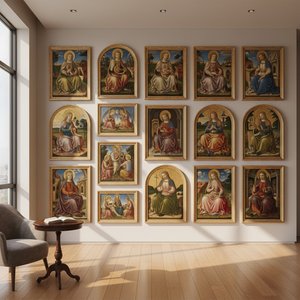
Tutustu Fra Angelicon 25 mestariteokseen – varhaisen renessanssin lumoavia freskoja ja alttaritauluja. Uppoudu italialaisen taidemaalarin hengelliseen maailmaan Most-Famous-Paintings.comissa! Taidekopiokuvia ja sisustusideoita.
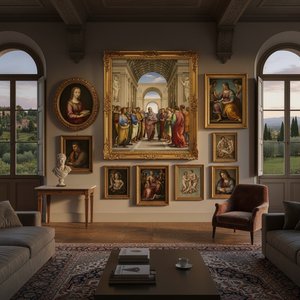
Tutustu Rafaelin 25 upeimpaan mestariteokseen! Uppoudu renessanssitaiteen maailmaan, opi maalauksien tarinat ja löydä inspiraatiota kotiisi. Laadukkaat taideprintit Most-Famous-Paintingsilta – tutki kokoelma verkossa!

Explore the profound beauty of Marian iconography through an art historian's lens. Discover iconic masterpieces by Raphael and Renaissance masters, celebrating the divine grace and timeless elegance of the Virgin Mary in classical fine art.


Pysy ajan tasalla uusimmista taideuutisista, eksklusiivisista tarjouksista ja sisustusideoista.
Kerro meille projektistasi, niin taideasiantuntijamme tarjoavat sinulle kolme henkilökohtaista taidesuositusta.
Anna meidän kuratoida 3 vaihtoehtoa juuri sinulle – Ilmaiseksi!


 Esikatselu
 Jaa
Jaa Jaa
Jaa
 Tarkemmat tiedot

 Lataa
Lataa
 Samanlaisia
 Röntgenkuva
 Diaesitys


 Näytä lisää







 Lasivaihtoehto on saatavilla vain alle 110 cm kokoisina teoksina


