x

Käsinmaalattu öljyväri kankaalle haluamassasi koossa ja kehyksissä, taiteilijoidemme valmistamana tilauksesta. ( Osta printti Osta kuva)





























Valitse valmiista mitoistamme sellaiset, jotka vastaavat teoksen alkuperäisiä mittasuhteita.

Voit syöttää omat mitat sopimaan tiettyyn kehykseen tai tilaan. Jos valitsemasi koko ei vastaa alkuperäisen kuvan mittasuhteita, rajaamme taideteoksen tai jatkamme maalausta käsin maalatuilla elementeillä. Digitaalinen esikatselu lähetetään hyväksyttäväksi ennen tuotannon aloittamista.
Huomioithan, että näytöllä oleva esikatselu ei vastaa todellista rajausta tai jatkamista. Vain digitaalinen mallikuva näyttää lopullisen sommittelun tarkasti.
Vaikka mittatilaustyöt ovat mahdollisia, suosittelemme valitsemaan mitan ennalta määritetystä listasta alkuperäisten mittasuhteiden säilyttämiseksi.
Maailmanlaajuinen toimitus () 3–4 viikossa tavallisen 5 viikon sijaan. (15 elokuu). Laadusta ei tingitä.


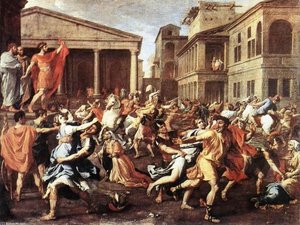
Nicolas Poussinin "Scipionin kunnia"
Replikaatin koko
Nicolas Poussin’s “The Noble Deed of Scipio,” painted around 1640, isn’t merely a historical depiction; it's a profound meditation on honor, restraint, and the timeless values enshrined in ancient Rome. This captivating work, now residing within the esteemed Pushkin State Museum in Moscow, offers a glimpse into the Baroque era’s masterful command of light, composition, and emotional resonance – qualities that continue to enthrall viewers centuries later. Poussin, already establishing himself as a leading figure in French art, meticulously crafted this scene based on a Roman legend: the story of Scipio Africanus’s act of chivalry—returning a captive woman to her awaiting fiancé after she had been briefly held by his soldiers. More than just recounting an event, Poussin elevates it into a potent allegory for human virtue.
The painting immediately draws the eye with its carefully orchestrated arrangement. The central figures – Scipio himself and the young woman – are positioned within a shallow space, creating a sense of intimacy and immediacy. Notice how Poussin employs a subtle pyramidal composition, guiding the viewer’s gaze upward towards Scipio, who stands in a commanding red robe, a color traditionally associated with nobility and leadership. This vibrant hue contrasts beautifully with the pristine white of the woman’s dress, symbolizing her innocence and purity—a visual shorthand for virtue itself. The surrounding figures – soldiers, attendants, and other Roman nobles – are rendered with remarkable detail, each contributing to the scene’s overall sense of dignity and importance. The artist’s skill in depicting textures—the folds of the robes, the sheen of armor, the delicate fabric of the woman’s dress—is truly astonishing.
Poussin was a master of *chiaroscuro*, the dramatic use of light and shadow, a hallmark of the Baroque style. He doesn’t simply illuminate the scene; he sculpts it with light, creating depth and emphasizing key elements. Observe how the light falls across Scipio's face, highlighting his noble expression and conveying a sense of solemn resolve. The shadows deepen the background, receding into an atmospheric haze that adds to the painting’s overall mood. This masterful manipulation of light isn’t just aesthetic; it serves to heighten the emotional impact of the scene, reinforcing Scipio’s virtuous act.
Furthermore, Poussin’s meticulous attention to detail is evident in every aspect of the composition. The swords and military equipment scattered throughout the painting serve as a poignant reminder of the context—a world of war and conquest. However, they are presented not as symbols of aggression but rather as elements that underscore Scipio’s restraint and self-control. The artist’s use of linear perspective – creating an illusion of depth through converging lines – is exceptionally precise, contributing to the painting’s realism and sense of spatial coherence. The subtle variations in color and tone further enhance this effect, drawing the viewer into the scene.
Beyond its technical brilliance, “The Noble Deed of Scipio” is rich in symbolism. The red robe worn by Scipio isn’t simply a signifier of his status; it represents his commitment to honor and justice. The woman's white dress symbolizes her vulnerability and innocence—a virtue that Scipio protects with unwavering restraint. Even the background landscape, rendered with atmospheric perspective, contributes to the painting’s symbolic meaning, evoking a sense of timelessness and moral grandeur. The presence of the attendants, some gesturing towards the scene, subtly reinforces the importance of this particular act.
Poussin's inspiration stemmed from classical ideals—particularly those of ancient Rome—where he sought to capture not just the outward appearance of historical events but also their underlying moral significance. “The Noble Deed of Scipio” stands as a testament to his artistic vision, continuing to inspire artists and captivate audiences with its masterful technique and profound understanding of human nature.
For those seeking a stunning reproduction or a deeper appreciation of this iconic masterpiece, Most-Famous-Paintings offers meticulously crafted hand-painted reproductions that faithfully capture the essence of Poussin’s vision. These reproductions allow you to experience the grandeur and beauty of Baroque art in your own home, bringing the spirit of Scipio Africanus into your living space.


1594 - 1665 , Ranska

Explore the profound elegance of Baroque Classicism. Discover how 17th-century masters synthesized dramatic emotion with classical order through the lens of the Counter-Reformation and the works of legends like Carlo Maratta and Andrea Sacchi.

Explore the dramatic evolution from Mannerist distortion to Baroque grandeur. Discover how light, shadow, and emotion redefined art history through a masterclass in technical mastery and religious fervor.


Pysy ajan tasalla uusimmista taideuutisista, eksklusiivisista tarjouksista ja sisustusideoista.
Kerro meille projektistasi, niin taideasiantuntijamme tarjoavat sinulle kolme henkilökohtaista taidesuositusta.
Anna meidän kuratoida 3 vaihtoehtoa juuri sinulle – Ilmaiseksi!


 Esikatselu
 Jaa
Jaa Jaa
Jaa
 Tarkemmat tiedot

 Lataa
Lataa
 Samanlaisia
 Röntgenkuva
 Diaesitys


 Näytä lisää







 Lasivaihtoehto on saatavilla vain alle 110 cm kokoisina teoksina