Jose Honorato Lozano: A Visionary Painter of Toledo’s Sacred Spaces
Jose Honorato Lozano (1821 – 1885) stands as a pivotal figure in Mexican art history, primarily recognized for his monumental frescoes adorning the Capilla de San José in Toledo Cathedral. Though overshadowed by contemporaries like El Greco and Murillo during his lifetime, Lozano’s contribution to Spanish Renaissance Revival is undeniable, cementing his legacy as one of Toledo's most celebrated artists. His work embodies a profound devotion to religious iconography and reflects the artistic sensibilities of his era, skillfully blending tradition with emerging stylistic innovations.
Early Life and Artistic Training
Born in Guadalajara, Jalisco, Lozano’s formative years were marked by exposure to the vibrant cultural landscape of Nueva España. He received an initial education in Guadalajara Cathedral School, honing his skills in drawing and painting under the tutelage of José María Martínez Barrio, a respected academician who instilled in him a meticulous approach to artistic craftsmanship. This grounding in classical principles would prove invaluable as Lozano embarked on his artistic journey toward Madrid, where he enrolled at the Real Academia Española, furthering his knowledge of art history and honing his technical prowess.
The Toledo Frescoes: A Triumph of Color and Composition
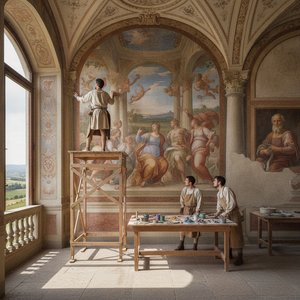
Lozano’s magnum opus – the frescoes decorating the Capilla de San José – represent a watershed moment in Toledo’s artistic revival. Commissioned by Bishop Francisco Jiménez Cisneros in 1869, Lozano undertook this ambitious project with unwavering dedication, transforming the chapel's interior into a breathtaking panorama of biblical narratives and saints’ portraits. His masterful use of color—particularly vibrant reds and blues—created an immersive experience for viewers, capturing the grandeur and solemnity of religious devotion. The frescoes are notable for their dynamic compositions, skillfully employing perspective and chiaroscuro to convey depth and emotion. Lozano's technique demonstrated a remarkable understanding of pigment mixing and layering, resulting in surfaces that retain exceptional luminosity and textural richness even today.
Influences and Artistic Style
Lozano’s artistic style drew inspiration from both Baroque grandeur and Renaissance idealism. Like Murillo, he favored idealized figures rendered with serene expressions and graceful poses—a stylistic hallmark of the Toledo School. However, Lozano's approach also incorporated elements of El Greco’s expressive distortion and spiritual intensity, reflecting a broader trend toward incorporating Byzantine influences into Spanish art. His meticulous attention to detail and his unwavering commitment to capturing the essence of religious emotion distinguished him from many of his peers.
Legacy and Historical Significance
Despite facing challenges during his lifetime—including financial difficulties and limited recognition—Lozano’s frescoes at Capilla de San José endure as a testament to Toledo Cathedral's artistic heritage. They continue to inspire admiration for their beauty, technical brilliance, and profound spiritual resonance. Lozano’s contribution to the revival of Spanish Renaissance Revival is recognized by art historians as crucial in preserving and disseminating cultural values during a period of significant social and political change. His enduring influence can be seen in subsequent generations of Toledo artists who sought to emulate his masterful technique and expressive vision—solidifying Jose Honorato Lozano's place among Mexico’s most important painters.