Vendez vos œuvres
Ma liste de souhaits Panier Cart
Aperçu en situationAperçu en situation Visualiser en RAVisualiser en RA Acheter l'impression Acheter l'impressionAcheter l'image Acheter l'image EnvoyerEnvoyer
Détails de l'œuvreDétails de l'œuvre Ajouter aux favoris Ajouter aux favoris TéléchargerTélécharger Articles similairesArticles similaires RadiographieRadiographie DiaporamaDiaporama

La Terre aux Femmes

"La Terre aux Femmes" de Francisco Goya : Une peinture romantique puissante explorant la vieillesse, la mort et la vulnérabilité humaine avec une symbolique riche et une lumière dramatique. Découvrez cette œuvre emblématique !

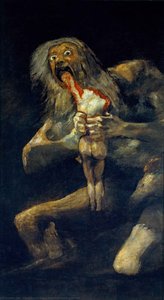
Francisco Goya : Le peintre espagnol de la Révolution et du Romancier ! Ses œuvres marquantes comme Les Désastres de la guerre et Saturn dévorant son fils témoignent d'une sensibilité inégalée.

Reproduction à l'huile faite à la main

Huile sur toile peinte à la main, avec cadre et dimensions personnalisés, réalisée sur commande par nos artistes. (Acheter l'impression Acheter l'impressionAcheter l'image Acheter l'image)

P118B $10
P118H $10
P118W $10
P438Z $10
P508JH $12
P508YH $12
P805H $10
P805Z $10
P919BZ $10
P919G $10
P919XJ $10
P959ZH $10
P968JZ $12
W106C $8
W218G $10
W218JH $8
W218Y $10
W307PJ $10
W316G $10
W316PJ $8
W316Y $10
W398PJ $8
W4111J $10
W500HY $15
W500JH $15
W692G $12
W849H $8
W940BG $15
W953PJ $8

Standard
custom
CM
INCH

Choisissez parmi nos formats prédéfinis qui respectent les proportions originales de l’œuvre.

largeur
hauteur

Vous pouvez saisir vos propres dimensions pour l'adapter à un cadre ou à un espace spécifique. Si la taille sélectionnée ne correspond pas aux proportions de l'image d'origine, nous recadrerons l'œuvre ou prolongerons la peinture avec des éléments peints à la main supplémentaires. Une maquette numérique vous sera envoyée pour approbation avant le début de la production.
Veuillez noter que l'aperçu à l'écran ne reflète pas le recadrage ou l'extension réels. Seule la maquette montrera fidèlement la composition finale.
Bien que des tailles personnalisées soient disponibles, nous vous recommandons de sélectionner une dimension dans la liste prédéfinie afin de préserver les proportions d'origine.

Exemples de personnalisation possibles : remplacer un visage par la photo du client ; ajouter un animal de compagnie (par exemple, remplacer un chat par un chien) ; inclure un message caché en arrière-plan ; modifier le paysage ou les éléments de l'arrière-plan.
Après la commande, l’équipe Most-Famous-Paintings.com contactera le client par e-mail pour recueillir ses instructions et lui fournira une maquette d’aperçu

Livraison dans le monde entier () en 3 à 4 semaines au lieu des 5 semaines habituelles. (12 août). Aucun compromis sur la qualité.

why_choose_icon
Livraison express gratuite dans le monde entier
why_choose_icon
Toile de lin de qualité supérieure
why_choose_icon
Assurance transport complète
why_choose_icon
Garantie de remboursement des droits de douane
why_choose_icon
Garantie de fidélité des couleurs
why_choose_icon
Politique de retour de 60 jours (uniquement en cas de défaut)
why_choose_icon
Garantie de remboursement à 100%
why_choose_icon
Offre de tarifs dégressifs

Prix total

$ 272

reproduction

La Terre aux Femmes

Technique de reproduction

Format de la reproduction

-

Prix total

$ 272

Informations clés

  • Movement: Romanticism
  • Artist: Francisco de Goya
  • Year: 1820
  • Location: Musèe des Beaux-Arts, Lille France
  • Notable elements or techniques: Dramatic lighting; Symbolism
  • Subject or theme: Aging; Mortality; Human vulnerability
  • Artistic style: Capricho

Quiz d'art

Chaque question ne comporte qu'une seule bonne réponse.

Question 1:
What artistic movement is Francisco de Goya associated with?
Question 2:
The painting ‘Time of the Old Women’ depicts two elderly women primarily symbolizing:
Question 3:
What is a prominent feature of Goya's technique in ‘The Time of the Old Women’?
Question 4:
What is the significance of the barren landscape in ‘The Time of the Old Women’?
Question 5:
Why was Goya’s work considered revolutionary during his lifetime?

Description de l'œuvre

Introduction to Francisco de Goya and Romanticism

Francisco José de Goya y Lucientes, a prominent Spanish romanticist, was born in 1746. He is renowned for his forward-looking oeuvre that spans painting and printmaking (Francisco De Goya | Francisco José de Goya y Lucientes). Romanticism, which originated in Europe towards the end of the 18th century, emphasized emotion, individualism, and nature while challenging the prevailing ideology of the Age of Enlightenment (Romanticism).

The Time of the Old Women: A Profound Exploration of Aging and Mortality

The Time of the Old Women, also known as La Tierra de los Mujeres, is a powerful painting by Francisco de Goya that explores themes of aging, mortality, and human vulnerability. The painting features two elderly women sitting on a bench, with their backs turned to the viewer (Painting by 'Francisco De Goya' | Francisco De Goya:The Time of the Old Women).

Symbolism and Interpretation

Goya masterfully employs symbolism in this painting to convey a sense of melancholy and impending doom. The two women, dressed in black, represent the passage of time and the inevitability of death (Francisco De Goya | Francisco José de Goya y Lucientes). Their hunched postures suggest a burdened existence, while their turned backs evoke a sense of isolation and introspection. The barren landscape in the background further emphasizes the desolation and loneliness experienced by the elderly women. The absence of vibrant colors and the predominance of dark hues contribute to the somber atmosphere of the painting.

Goya's Legacy and Most-Famous-Paintings Reproductions

As a pivotal figure in art history, Goya’s works continue to inspire contemporary artists and collectors alike. At Most-Famous-Paintings, we offer high-quality handmade oil painting reproductions of Goya's masterpieces, including The Time of the Old Women. Our skilled artisans meticulously recreate each detail to ensure an authentic and captivating representation of this profound work (Painting by 'Francisco De Goya' | Francisco De Goya:The Time of the Old Women). By acquiring a Most-Famous-Paintings reproduction, you not only enrich your living space but also contribute to preserving the legacy of this remarkable artist. Explore our collection and discover the timeless beauty of Goya’s masterpieces today (Francisco De Goya: The Time of the Old Women). Photo Description: The painting is a portrait of three women in a room with one woman sitting on a chair while the other two stand behind her. The woman sitting has a book open in front of her, possibly reading or studying. The other two women are engaged in conversation and appear to be discussing something important. In addition to the people, there is an angel figure present in the painting, which adds a sense of spirituality to the scene. There are also several books scattered throughout the room, indicating that the women might be involved in some form of intellectual or academic pursuit. The overall atmosphere of the painting suggests a sense of curiosity and learning among the three women. Size: Unknown Date: Unknown Artist Information:
  • Born: 1746 in Fuentes del Tó, Aragon, Spain.
  • Goya’s artistic journey began at the age of fourteen as an apprentice to José Luzán y Martínez.
  • He later moved to Madrid and studied with Anton Raphael Mengs, a prominent painter of the time.
  • This early training provided him with a solid foundation in traditional artistic techniques.
Biography:

Francisco de Goya: Life and Legacy

Goya was born in Fuendetodos, Aragon to José Benito de Goya y Franque and Gracia de Lucientes y Salvador. The family had moved that year from the city of Zaragoza, but there is no record of why; likely, José was commissioned to work there. He was the son of a notary and of Basque origin, his ancestors being from Zerain, earning his living as a gilder, specialising in religious and decorative craftwork. He oversaw the gilding and most of the ornamentation during the rebuilding of the Basilica of Our Lady of the Pillar (Santa Maria del Pilar), the principal cathedral of Zaragoza. Francisco was their fourth child, following his sister Rita (b. 1737), brother Tomás (b. 1739) (who was to follow in his father's trade) and second sister Jacinta (b. 1743). There were two younger sons, Mariano (b. 1750) and Camilo (b. 1753). His mother’s family had pretensions of nobility and...

Biographie de l'artiste

The Spanish Soul: A Journey Through the Life and Art of Francisco Goya y Lucientes

Francisco José de Goya y Lucientes, a name synonymous with both the grandeur of Old Master tradition and the unsettling premonitions of modern art, remains one of history’s most compelling and enigmatic figures. Born in 1746 in the small village of Fuendetodos, Spain, his journey from aspiring provincial artist to court painter, and ultimately, to a visionary chronicler of human suffering and societal decay, is a testament to both his extraordinary talent and the turbulent times he inhabited. Goya’s early training began at age fourteen under José Luzán y Martinez, laying a foundation in traditional techniques before he moved to Madrid and refined his skills with Anton Raphael Mengs, then the dominant artistic force at the Spanish court. This initial period instilled in him a mastery of form and composition, evident in his early commissions – designs for tapestries that showcased lively scenes of everyday life, reflecting a Rococo sensibility tempered by a distinctly Spanish realism. Marriage to Josefa Bayeu, sister of another painter within the royal circle, further cemented his position within the artistic establishment. These early works, while charming and skillfully executed, offered little hint of the profound emotional depth and unsettling darkness that would come to define his later oeuvre.

From Royal Commissions to Visions of Turmoil

Goya’s ascent through the ranks of the Spanish court was steady. He became a painter to the Royal Chamber in 1786, securing a stream of portrait commissions from the aristocracy and royalty. These portraits are remarkable not merely for their technical brilliance – Goya possessed an uncanny ability to capture likeness with unflinching honesty – but also for their psychological insight. He didn’t simply paint what his sitters *looked* like; he revealed something of their character, their vulnerabilities, and even their hidden anxieties. However, beneath the veneer of courtly success, a transformation was brewing within Goya. In 1793, a severe illness left him profoundly deaf, an event that irrevocably altered his perception of the world and, consequently, his art. This affliction plunged him into a period of intense introspection and isolation, severing his connection to the social life he once enjoyed and forcing him inward, towards a darker, more subjective reality. The shift in his artistic style was dramatic. Gone were the bright colors and cheerful scenes; in their place emerged a brooding palette, loose brushwork, and compositions charged with emotional intensity. He began to explore themes of madness, violence, and the irrational, foreshadowing the anxieties that would grip Europe in the coming decades.

The Caprichos, Disasters, and Black Paintings: A Descent into Darkness

This period of artistic ferment culminated in some of Goya’s most iconic works. Los Caprichos, a series of eighty etchings published in 1799, are a scathing satire of Spanish society – its follies, superstitions, and moral corruption laid bare with unflinching wit and biting irony. The images are grotesque yet captivating, populated by witches, monsters, and caricatures of the aristocracy, all rendered with a masterful command of etching techniques. But it was The Disasters of War, created between 1810 and 1820, that truly cemented Goya’s reputation as a fearless chronicler of human suffering. These harrowing etchings depict the brutality of the Peninsular War – the atrocities committed by both sides, the starvation, the despair, and the utter devastation wrought upon the Spanish people. They are not heroic depictions of battle; they are unflinching portrayals of its horrors, devoid of any romanticism or glorification. Perhaps most unsettling of all were The Black Paintings, a series of fourteen murals Goya painted directly onto the walls of his house, “Quinta del Sordo” (the Deaf Man’s Villa), between 1819 and 1823. These works – including the terrifying *Saturn Devouring His Son* and the haunting *Asmodea* – are a descent into the darkest recesses of the human psyche, expressing themes of despair, madness, and existential dread with unparalleled intensity.

Legacy: A Bridge Between Worlds

In 1824, disillusioned by political unrest in Spain, Goya sought exile in Bordeaux, France, where he continued to work until his death in 1828. His final years were marked by a renewed focus on printmaking, culminating in the *La Tauromaquia* series, which explored the spectacle and brutality of bullfighting. Francisco Goya’s legacy is immense and far-reaching. He stands as a pivotal figure in art history, bridging the gap between the Old Masters and the modern movement. His influence can be seen in the works of countless artists who followed – from Édouard Manet and Pablo Picasso to Francis Bacon – all drawn to his expressive brushwork, psychological depth, and willingness to confront uncomfortable truths. He challenged artistic conventions, embraced innovation, and dared to explore the darker aspects of human experience, leaving behind a body of work that continues to resonate with audiences today. Goya wasn’t merely painting pictures; he was holding up a mirror to society, forcing us to confront our own flaws and vulnerabilities, and reminding us of the enduring power – and fragility – of the human spirit.

L'essentiel de l'artiste

  • Artistic Movement Or Style: Romancier
  • Artists Who Influenced This Artist:
    • Velázquez
    • Rembrandt
    • Mengs
  • Date Of Birth: 30 mars 1746
  • Date Of Death: 16 avril 1828
  • Full Name: Francisco José de Goya y Lucientes
  • Nationality: Espagnol
  • Notable Artworks:
    • Los Caprichos
    • Les Désastres de la guerre
    • La Maja nue
    • Saturne dévorant son fils
  • Place Of Birth: Fuendetodos, Espagne
Explorez des œuvres d'art classées par thèmes, styles et caractéristiques.