Vendez vos œuvres
Ma liste de souhaits Panier Cart
Aperçu en situationAperçu en situation Visualiser en RAVisualiser en RA Passer au tirage Passer au tiragePasser à l'image Passer à l'image EnvoyerEnvoyer
Détails de l'œuvreDétails de l'œuvre Ajouter aux favoris Ajouter aux favoris TéléchargerTélécharger Articles similairesArticles similaires RadiographieRadiographie DiaporamaDiaporama

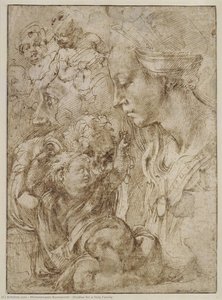
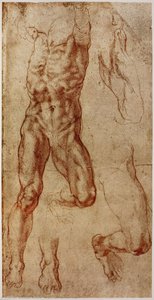
Woman with a Distaff and Three Children (recto)

Magnifique dessin de Michelango Buonarroti représentant une femme avec une distaff et trois enfants. Découvrez l'œuvre emblématique du Renaissance italien.

Michel-Ange (1475-1564) : Maître de la Renaissance ! Explorez les sculptures emblématiques comme David et la Pietà, les fresques de la Chapelle Sixtine et son impact sur l'art de la Haute Renaissance et du Manichéisme.

Reproduction à l'huile faite à la main

Huile sur toile peinte à la main, avec cadre et dimensions personnalisés, réalisée sur commande par nos artistes. (Passer au tirage Passer au tiragePasser à l'image Passer à l'image)

P118B $10
P118H $10
P118W $10
P438Z $10
P508JH $12
P508YH $12
P805H $10
P805Z $10
P919BZ $10
P919G $10
P919XJ $10
P959ZH $10
P968JZ $12
W106C $8
W218G $10
W218JH $8
W218Y $10
W307PJ $10
W316G $10
W316PJ $8
W316Y $10
W398PJ $8
W4111J $10
W500HY $15
W500JH $15
W692G $12
W849H $8
W940BG $15
W953PJ $8

Standard
custom
CM
INCH

Choisissez parmi nos formats prédéfinis qui respectent les proportions originales de l’œuvre.

largeur
hauteur

Vous pouvez saisir vos propres dimensions pour l'adapter à un cadre ou à un espace spécifique. Si la taille sélectionnée ne correspond pas aux proportions de l'image d'origine, nous recadrerons l'œuvre ou prolongerons la peinture avec des éléments peints à la main supplémentaires. Une maquette numérique vous sera envoyée pour approbation avant le début de la production.
Veuillez noter que l'aperçu à l'écran ne reflète pas le recadrage ou l'extension réels. Seule la maquette montrera fidèlement la composition finale.
Bien que des tailles personnalisées soient disponibles, nous vous recommandons de sélectionner une dimension dans la liste prédéfinie afin de préserver les proportions d'origine.

Exemples de personnalisation possibles : remplacer un visage par la photo du client ; ajouter un animal de compagnie (par exemple, remplacer un chat par un chien) ; inclure un message caché en arrière-plan ; modifier le paysage ou les éléments de l'arrière-plan.
Après la commande, l’équipe Most-Famous-Paintings.com contactera le client par e-mail pour recueillir ses instructions et lui fournira une maquette d’aperçu

Livraison dans le monde entier () en 3 à 4 semaines au lieu des 5 semaines habituelles. (7 août). Aucun compromis sur la qualité.

why_choose_icon
Livraison express gratuite dans le monde entier
why_choose_icon
Toile de lin de qualité supérieure
why_choose_icon
Assurance transport complète
why_choose_icon
Garantie de remboursement des droits de douane
why_choose_icon
Garantie de fidélité des couleurs
why_choose_icon
Politique de retour de 60 jours (uniquement en cas de défaut)
why_choose_icon
Garantie de remboursement à 100%
why_choose_icon
Offre de tarifs dégressifs

Prix total

$ 272

reproduction

Woman with a Distaff and Three Children (recto)

Technique de reproduction

Format de la reproduction

-

Prix total

$ 272

Informations clés

  • Movement: Cinquecento Art Movement
  • Notable elements or techniques: Chiaroscuro, Anatomical Detail
  • Influences: Leonardo Da Vinci
  • Artist: Michelangelo Buonarroti
  • Title: Woman with a Distaff and Three Children
  • Dimensions: 212 x 283 cm
  • Medium: Chalk

Quiz d'art

Chaque question ne comporte qu'une seule bonne réponse.

Question 1:
What artistic movement is Michelangelo’s ‘Woman with a Distaff and Three Children (recto)’ associated with?
Question 2:
Where is the painting ‘Woman with a Distaff and Three Children (recto)’ currently housed?
Question 3:
What medium was Michelangelo primarily known for using in his sculptures?
Question 4:
Michelangelo’s technique of chiaroscuro is prominently featured in ‘Woman with a Distaff and Three Children (recto)’. What does chiaroscuro refer to?
Question 5:
Which artist’s work shares a similar emphasis on human anatomy and emotional expression with Michelangelo's ‘Woman with a Distaff and Three Children (recto)?

Description de l'œuvre

Michelangelo Buonarroti - A Woman with a Distaff and Three Children (recto)

Michelangelo Buonarroti’s “Woman with a Distaff and Three Children” stands as an emblem of the High Renaissance, encapsulating its humanist ideals within a masterful depiction of familial tenderness. Completed in 1515 during his prolific period at Villa Farnese in Rome—commissioned by Cardinal Alessandro Farnese—the painting transcends mere representation; it embodies a profound exploration of human emotion and spiritual contemplation.

Historical Context: The Cinquecento Art Movement

The artwork resides within the broader context of the Cinquecento, or Mannerism, artistic movement that dominated Italy during Michelangelo’s lifetime. Unlike the idealized beauty championed by Leonardo da Vinci and Raphael, Mannerist painters deliberately sought to unsettle conventions, prioritizing expressive distortion and psychological complexity over harmonious proportions. This stylistic choice reflects a shift in intellectual currents—away from classical rationalism toward a preoccupation with inner experience and emotion—a trend powerfully articulated by thinkers like Pico della Mirandola and Erasmus. Michelangelo’s approach aligns seamlessly with this ethos, rejecting the serene composure favored by earlier generations for a more visceral engagement with human psychology.

The Painting: Technique and Composition

Executed in chalk on paper—a medium chosen for its delicacy and ability to capture subtle tonal variations—the painting showcases Michelangelo's unparalleled skill in anatomical rendering. The central figure of the woman exudes an aura of maternal grace, her posture conveying unwavering devotion to her offspring. Notice the meticulous attention to detail—the folds of her drapery, the expressive gaze of her eyes—all meticulously crafted to convey a sense of palpable emotion. Furthermore, Michelangelo skillfully employs chiaroscuro—the dramatic interplay between light and shadow—to sculpt volume and create depth within the composition. The placement of the children—one seated on the ground, two standing attentively beside their mother—reinforces the theme of familial unity and reinforces the painting's emotional resonance.

Symbolism: Distaff and Divine Femininity

The distaff—a tool traditionally used by women for spinning flax into yarn—serves as a potent symbol within the artwork. It represents not merely domestic labor but also fertility, nurturing, and the feminine principle—essential components of Renaissance humanist thought. Michelangelo’s depiction elevates the woman to a position of spiritual significance, portraying her as an embodiment of divine grace and compassion. The serene expression on her face reflects inner peace and acceptance—a testament to the transformative power of faith and contemplation.

Comparison with Other Masters

Michelangelo Buonarroti's “Woman with a Distaff and Three Children” finds kinship with Leonardo da Vinci’s “Study for the Last Supper,” where Da Vinci similarly prioritized psychological realism and emotional depth. Both artists rejected the rigid formalism of earlier artistic traditions, opting instead for expressive distortion to convey profound human experience. Similarly, Raphael’s “Moses Receiving the Tablets of the Law”—a monumental fresco adorning St Peter's Basilica—demonstrates a comparable commitment to harmonious balance and idealized beauty—albeit achieved through markedly different stylistic techniques. These comparative analyses illuminate Michelangelo’s contribution to the artistic landscape of his era and underscore the enduring legacy of Mannerist art.

Conclusion: An Icon of Renaissance Humanism

Michelangelo Buonarroti's “Woman with a Distaff and Three Children” remains an indelible symbol of Renaissance humanism—a testament to its conviction that art should illuminate the complexities of human emotion and inspire contemplation on spiritual truths. Its masterful execution, evocative symbolism, and profound psychological insight continue to captivate audiences worldwide, cementing Michelangelo’s place as one of history's greatest artistic innovators. For those seeking a stunning reproduction of this masterpiece, Most-Famous-Paintings offers exceptional quality prints crafted by skilled artisans—bringing the beauty and emotional power of Michelangelo’s vision into your home.

Biographie de l'artiste

Michel-Ange Buonarroti : Un Titan de la Renaissance

Jeunesse et Formation (1475-1496)

  • Michel-Ange di Lodovico Buonarroti Simoni est né le 6 mars 1475 à Caprese Michelangelo, en Toscane.
  • Initialement, son père résistait à une carrière artistique, mais a cédé à l'exceptionnelle talent de son fils pour le dessin.
  • À l’âge de 13 ans, il est devenu apprenti de Domenico Ghirlandaio, apprenant les techniques de fresque et de dessin.
  • Il s'est rapidement tourné vers la sculpture, étudiant les œuvres classiques dans les jardins des Médicis – une influence décisive.

Période Précoce : Établissement du Maîtrise (1490-1505)

  • Autour de 1496, il reçoit sa première commande majeure : la sculpture de la Piéta, achevée en 1499.
  • La Piéta, hébergée dans la basilique Saint-Pierre, a fait preuve de son maîtrise du travail de la pierre et de sa profondeur émotionnelle.
  • Son prochain chef-d'œuvre emblématique est la statue colossale de David (1501-1504), symbolisant les idéaux républicains florentins.
  • Le David, plus de 17 pieds de haut, a démontré sa compréhension de l'anatomie et sa capacité à insuffler la vie aux pierres.

La Renaissance Italienne : Fresques de la Chapelle Sixtine (1505-1520)

  • Le pape Jules II a commandé à Michel-Ange de peindre le plafond de la chapelle Sixtine en 1508.
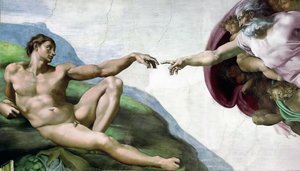
  • Sur une période de quatre ans, il a peint plus de 300 figures représentant des scènes de la Genèse, y compris La Création d'Adam.
  • Ce cycle de fresques monumental est une réalisation marquante dans l’art occidental, démontrant ses compétences en composition et son pouvoir narratif.
  • Il a également commencé à travailler sur la tombe du pape Jules II – un projet qui durera des décennies mais restera inachevé tel qu'initialement envisagé.

Années Ultérieures : Architecture et le Jugement Dernier (1520-1564)

  • En 1520, Michel-Ange devient architecte de la basilique Saint-Pierre à Rome, modifiant considérablement le projet de Bramante.
  • Entre 1536 et 1541, il a peint Le Jugement Dernier sur le mur d'autel de la chapelle Sixtine.
  • Ce vaste cycle de fresques a dépeint le Second Coming du Christ avec une composition dramatique et une intensité émotionnelle, reflétant un passage vers le Manichéisme.

Influences et Développement Artistique

  • Antiquité Classique : L'étude des sculptures grecques et romaines a profondément influencé sa compréhension de l'anatomie et de la proportion.
  • Humanisme Renaissance : L'accent mis sur le potentiel humain est évident dans sa célébration de la forme humaine.
  • Tradition Florentine : Il s’est appuyé sur la lignée d'artistes tels que Donatello et Masaccio.
  • Son style a évolué de l'idéalisme classique à un Manichéisme plus dynamique et expressif.

Signification Historique et Héritage

  • Michel-Ange est considéré comme l’un des plus grands artistes de tous les temps, incarnant le “homme de la Renaissance”.
  • Ses sculptures, ses peintures et son architecture ont inspiré des générations et continuent de captiver les publics du monde entier.
  • Il a profondément influencé les mouvements artistiques de la Renaissance italienne et du Manichéisme.
  • Son exactitude anatomique, ses compositions dramatiques et sa profondeur émotionnelle ont établi de nouvelles normes d'excellence artistique.

Années Finales

  • Michel-Ange est décédé le 18 février 1564 à Rome, laissant derrière lui un ouvrage inestimable.
  • Son héritage continue de façonner notre compréhension de la beauté, du pouvoir et du potentiel humain.
Michel-Ange Buonarroti

Michel-Ange Buonarroti

1475 - 1564 , Italie

L'essentiel de l'artiste

  • Artistes Influents:
    • Donatello
    • Masaccio
    • Antiquité Classique
  • Date De Décès: 18 février 1564
  • Date De Naissance: 6 mars 1475
  • Influences Artistiques:
    • Manierisme
    • Haute Renaissance
  • Lieu De Naissance: Caprese Michelangelo, Italie
  • Mouvement Artistique: Haute Renaissance, Manierisme
  • Nationalité: Italienne
  • Nom Complet: Michel-Ange Buonarroti
  • Oeuvres Notables:
    • La Pietà
    • David
    • Plafond de la Chapelle Sixtine
    • Le Jugement Dernier
Explorez des œuvres d'art classées par thèmes, styles et caractéristiques.