A Pivotal Moment in Modern Art: Exploring Cézanne’s *Still Life with Petunias*
Paul Cézanne's *Still Life with Petunias*, painted around 1880, represents far more than a simple floral arrangement. It is a crucial work demonstrating the artist’s transition from Impressionism towards his groundbreaking Post-Impressionist style – a style that would profoundly influence the development of Cubism and modern art as a whole. This painting encapsulates Cézanne's lifelong investigation into representing the underlying structure of nature through color, form, and spatial relationships. It stands as a testament to his unwavering dedication to redefining artistic expression and establishing a new visual language for the twentieth century.
Bridging Eras: From Impressionism to Modernity
While rooted in the principles of Impressionism – particularly its focus on capturing fleeting light effects and vibrant color – *Still Life with Petunias* already hints at Cézanne’s departure from purely optical representation. The loose, broken brushstrokes characteristic of the movement are employed not merely to depict *how* light falls upon the petals and terracotta pots, but also to build form and volume. Cézanne wasn't simply trying to reproduce what he saw; he was striving to convey what he *felt*. This compositional decision—three pots overflowing with pink and red petunias arranged across a horizontal plane—is deliberately simple. It allows Cézanne to explore spatial relationships and the interplay of planes – key concerns that would dominate his later work. The indistinct background suggests an outdoor setting, focusing attention on the still life and intensifying its presence. He sought to capture not just the appearance of things but their essence, mirroring a shift in artistic thought away from mere observation towards intellectual understanding.
Technique & Materiality: Building with Paint
Cézanne’s masterful technique is immediately apparent in his layering of color and texture. He doesn't blend colors seamlessly; instead, he juxtaposes them, allowing the viewer’s eye to perform the mixing. This creates a sense of luminosity and vibrancy that feels remarkably modern. The rough surfaces of the terracotta pots are rendered with palpable tactility, achieved through *impasto* – thick application of paint – and expressive brushwork. Cézanne meticulously built up these textures, creating visual depth and simulating the materiality of the objects depicted. The delicate petals of the flowers, while seemingly loose and spontaneous, are carefully constructed using variations in tone and hue. This careful observation and deliberate construction demonstrate Cézanne’s commitment to understanding the underlying structure of his subjects—a cornerstone of his Post-Impressionist approach. He was less interested in achieving photographic accuracy than conveying a profound sense of presence and materiality.
Historical Context: A Shifting Artistic Landscape
Painted during a period of significant artistic change, *Still Life with Petunias* reflects the evolving priorities within the art world. Impressionism was challenging traditional academic painting, and artists like Cézanne were pushing those boundaries even further. Influenced by contemporaries such as Gauguin and Seurat, he began to move away from simply recording visual impressions towards a more analytical approach. Cézanne’s work signaled a decisive break from the conventions of his predecessors, aligning him with a burgeoning movement that questioned established artistic dogma. This pivotal moment in art history foreshadowed the radical innovations of Cubism and cemented Cézanne's place as one of the most influential figures of modern art.
Symbolism & Emotional Resonance
Though seemingly straightforward, still life paintings often carry symbolic weight. Flowers, particularly vibrant petunias, can represent beauty, fragility, and the transient nature of life—themes that resonated deeply with Cézanne’s artistic vision. Cézanne's choice to depict these blooms in humble terracotta pots suggests a connection between natural beauty and human creation. The painting evokes a sense of quiet contemplation and appreciation for the simple pleasures of everyday life. It invites viewers to pause and consider the profound implications of observing the world around them with an artist’s eye—a legacy that continues to inspire artists today. Cézanne's aim wasn't merely to depict flowers; he sought to express a deeper emotional truth about existence itself.
- Style: Post-Impressionism
- Subject: Still Life – Flowers in Terracotta Pots
- Date: c. 1880
- Emotional Impact: Serene, contemplative, appreciative of simple beauty.
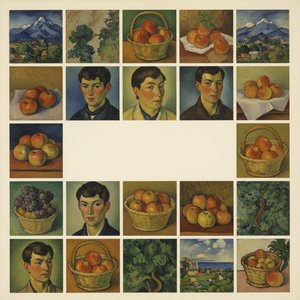
Photo Description: --Overall Impression-- The artwork depicts three terracotta pots overflowing with vibrant pink and red flowers and foliage. It’s a still life painting executed in an impressionistic style, characterized by loose brushstrokes and a focus on capturing the fleeting effects of light and color. The composition is relatively simple, featuring the pots arranged horizontally across the canvas, creating a sense of depth through overlapping forms and receding planes. The background is indistinct, suggesting an outdoor setting – likely a balcony or terrace – with a hint of a wall visible in the distance. The lighting appears to be natural daylight, casting soft shadows and highlighting the textures of the flowers and pots. Lines are used expressively to define the shapes of the plants and create a sense of movement within the composition. The color palette is dominated by warm earth tones – browns, ochres – punctuated by the bright pinks and reds of the blossoms. The brushwork is visible and contributes to the overall impressionistic feel. Texture is emphasized through the depiction of the rough surfaces of the pots and the delicate petals of the flowers. Perspective is somewhat flattened, typical of Impressionism, prioritizing the visual experience over strict realism. The subject matter centers on the beauty of nature and the transient qualities of light and color. Cézanne’s meticulous attention to detail—particularly in capturing the subtle nuances of color and texture—transformed traditional still life painting into a vehicle for profound artistic exploration.
Size: Unknown
Date: 1880
ARTIST INFORMATION:
==================
Artist: Paul Cézanne
Birth Year: 1839
Death Year: 1906
Birth City: Aix-en-Provence
Birth Country: France
Biography:
A Revolutionary Vision: The Life and Art of Paul Cézanne
Paul Cézanne, born in Aix-en-Provence in 1839, stands as a monumental figure bridging the gap between the fleeting impressions of Impressionism and the fragmented forms of Cubism. His journey was not one of immediate acclaim; rather, it was a slow burn of artistic exploration, marked by periods of self-doubt and critical dismissal, ultimately culminating in a legacy that would irrevocably alter the course of modern art. Born to a prosperous family – his father initially a hatmaker who later became a banker – Cézanne enjoyed a financial security unusual for aspiring artists, allowing him the freedom to dedicate himself to his passion without the immediate pressures of commercial success. Though initially steered towards a legal career by his father’s ambitions, the pull of artistic expression proved too strong, and he eventually abandoned law to pursue painting, a decision that wou