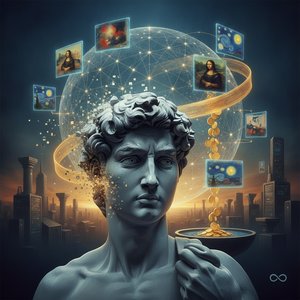
Noriyuki Juni: Bridging the Physical and Digital Realms
Noriyuki Juni, born in Osaka, Japan in 2013, stands at the forefront of a burgeoning artistic movement—one that seeks to reconcile the tangible world with the boundless possibilities offered by virtual reality. His moniker, air floating media, encapsulates this core preoccupation: a constant exploration of how our perceptions transform when confronted with digital interfaces, mirroring the dynamic cultural landscape of modern Japan. From his initial fascination with cyberpunk aesthetics and the philosophical ramifications of simulated environments, Juni has relentlessly pursued innovative artistic methodologies—primarily utilizing augmented reality alongside sculptural installations—aiming to provoke profound contemplation on identity, connection, and transformation itself.Early Influences: The Cyberpunk Spark
Juni’s formative experiences were undeniably shaped by a deep engagement with cyberpunk culture. This genre's preoccupation with dystopian futures, technological advancements blurring the lines between human and machine, and questioning societal norms instilled within him an unwavering desire to investigate themes of alienation and metamorphosis through mediums that defy conventional artistic limitations. The influence of these concepts is palpable in his stylistic choices—particularly his penchant for geometric forms and immersive spatial experiences—reflecting a broader trend toward challenging established artistic conventions.Technique & Methodology: Sculptural Resonance with Digital Projection
Juni’s distinctive artistic style centers around crafting multidimensional installations that transcend the limitations of traditional art forms. He meticulously considers the interplay between light, shadow, and spatial perception to create environments that stimulate both visual and emotional engagement. His approach distinguishes itself through a masterful fusion of sculptural craftsmanship—often incorporating intricate geometric structures—with projected imagery. This technique allows him to generate immersive experiences that actively engage viewers’ senses, prompting them to reconsider their relationship with the physical world and its digital counterpart. The resulting artworks are not merely decorative objects; they are conduits for conceptual exploration and dialogue about the evolving role of technology in shaping human consciousness.Exploring Virtual Space: Augmented Reality as Artistic Medium
Recognizing the pervasive influence of digital platforms on contemporary life, Juni’s artistic vision deliberately engages with augmented reality (AR). Unlike traditional art forms that exist solely within physical space, AR installations invite participation and actively reshape our understanding of reality—a conscious decision to foster discussion about how technology fundamentally alters our perception of existence. His collaborative project with Under The Sea exemplifies this commitment: “Future Food Experiences Using Augmented Reality,” where he harnessed AR to transform a dining space into an interactive journey exploring sustainable gastronomy and technological innovation, demonstrating the potential for art to catalyze social change and inspire new perspectives on environmental responsibility.Notable Achievements & Recognition
Juni’s work has garnered considerable acclaim for its conceptual depth and technical prowess—a testament to his dedication to pushing artistic boundaries. His exploration of geometric forms combined with AR projection represents a significant contribution to Japan's contemporary art scene, establishing him as a visionary artist who anticipates the future direction of creative expression. Furthermore, collaborations like “Future Food Experiences” underscore his ability to translate complex philosophical ideas into engaging and accessible artistic experiences for public audiences.Looking ahead, Juni’s continued commitment to experimenting with new technologies—particularly AI-driven art generation—promises to further enrich the dialogue surrounding creativity and innovation in Japan.