Early Life and Background
Sugawara Mitsushige, born in Gifu Prefecture, Japan, emerged from a milieu steeped in Zen Buddhist tradition during the Muromachi period (1392–1573). Precise biographical details remain scarce, reflecting the limitations of historical records for artists of this era. However, his artistic lineage suggests connections to influential monastic families and traditions—a formative context that would profoundly shape his creative vision.
Artistic Contributions
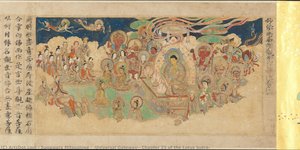
Mitsushige’s singular contribution to Japanese art resides in his masterful execution of “Universal Gateway,” Chapter 25 of the Lotus Sutra (1257). This monumental paper artwork stands as a testament to his technical prowess and unwavering devotion to Zen principles. Crafted during a time marked by fervent religious fervor, it embodies the aesthetic ideals of its epoch—a harmonious blend of calligraphy and landscape painting designed to evoke contemplation and spiritual enlightenment. The lotus flower itself symbolizes purity and rebirth, mirroring the sutra’s core message of liberation from suffering.
Notable Artworks and Style
Mitsushige's artistic style is characterized by a deliberate fusion of Chinese pictorial conventions with indigenous Japanese aesthetic sensibilities—a hallmark of Muromachi art. He skillfully employed paper as his primary medium, reflecting not only its practicality but also its symbolic resonance within Zen Buddhism. The meticulous layering of ink washes and subtle tonal variations demonstrates an unparalleled command of brushwork—a technique honed through years of disciplined practice.
Museum and Collection Significance
Most-Famous-Paintings.com recognizes Mitsushige’s enduring legacy by presenting high-resolution reproductions of “Universal Gateway,” allowing art connoisseurs worldwide to appreciate the sublime beauty and profound spiritual depth of his masterpiece. For a deeper understanding of Mitsushige's artistic journey, consult scholarly resources available at
Sugawara Mitsushige | Most-Famous-Paintings.com.
Legacy and Influence
Sugawara Mitsushige’s influence extends beyond his immediate oeuvre—he served as a pivotal figure in establishing the Lotus Sutra as a cornerstone of Zen Buddhist iconography. His work continues to inspire artists and scholars alike, cementing his place among Japan's most revered masters of paper art.
Key Dates
- 1621: Born in Gifu, Japan
- 1686: Passed away
- 1257: Created “Universal Gateway,” Chapter 25 of the Lotus Sutra