x

 Ulje na platnuZidna umjetnostRomantic Baroque Elegance
 185319. stoljeće
 178.0 x 246.0 cm
 Muzej umjetnosti Metropolitan
Ručno oslikano uljanim bojama na platnu u dimenzijama i okviru po vašem izboru, izrađeno po narudžbi od strane naših umjetnika. ( Kupi print Kupi digitalnu sliku)





























Odaberite jednu od naših unaprijed definiranih veličina koje odgovaraju izvornim proporcijama umjetničkog djela.

Možete unijeti vlastite dimenzije kako bi odgovarale određenom okviru ili prostoru. Ako odabrana veličina ne odgovara proporcijama izvorne slike, izrezat ćemo umjetničko djelo ili proširiti sliku dodatnim ručno oslikanim elementima. Digitalni nacrt bit će vam poslan na odobrenje prije početka proizvodnje.
Imajte na umu da pregled na ekranu ne prikazuje stvarno izrezivanje ili proširivanje. Samo će nacrt točno prikazati konačni sastav.
Iako su dostupne prilagođene veličine, preporučujemo odabir dimenzije s preddefiniranog popisa kako bismo očuvali izvorne proporcije.
Isporuka širom svijeta () u roku od 3-4 tjedna umjesto standardnih 5 tjedana. (19 Kolovoz). Bez kompromisa u kvaliteti.


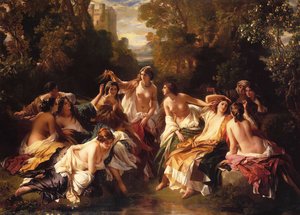
Florinda
Veličina reprodukcije
Franz Xaver Winterhalter’s “Florinda” (1853) stands as an emblem of Romanticism's zenith – a breathtaking oil painting that transports viewers to a realm where elegance intertwines with the serenity of nature. More than just a portrait, it’s a meticulously crafted tableau capturing a fleeting moment of communal joy amidst a landscape designed to inspire awe.
Composition and Technique: Winterhalter's genius lies in his masterful orchestration of visual elements. The central grouping of nude women reclining on a riverbank is framed by rolling hills and distant cypress trees, establishing a harmonious balance between figure and environment. Fluid lines dominate the canvas, delineating the graceful curves of the female bodies and mirroring the undulating contours of the foliage. Thick brushstrokes imbue the painting with palpable texture – from the velvety smoothness of skin tones to the rich sheen of draped fabrics – demonstrating Winterhalter’s unparalleled command of oil paint.
Color Palette and Lighting: The artwork's palette is dominated by warm, earthy hues—ochres, browns, golds, and reds—creating a comforting visual experience. Dramatic chiaroscuro illuminates the figures from above, casting shadows that sculpt their forms and accentuating their beauty. This masterful use of light enhances the painting’s depth and dimensionality, drawing the eye into its captivating embrace.
Historical Context: Winterhalter was arguably the foremost portraitist of his era, securing commissions from royalty across Europe. “Florinda” exemplifies his skill in blending realism with romantic idealism—a technique that resonated deeply with audiences eager for depictions of idealized beauty and aristocratic refinement. The painting reflects a broader cultural preoccupation with classical mythology and pastoral landscapes, themes prevalent throughout Romantic art.
Symbolism and Emotional Impact: Beyond its aesthetic splendor, “Florinda” carries profound symbolic weight. The natural setting—particularly the cypress trees—may represent immortality and remembrance, mirroring the enduring legacy of artistic achievement. The overall mood is one of tranquil contemplation and understated elegance – inviting viewers to savor the beauty of the human form in communion with the sublime grandeur of nature.
Size: 178 x 246 cm
Date: 1853
Born in Menzenschwand, Germany, Franz Xaver Winterhalter’s artistic journey began amidst the quiet traditions of rural life. Despite humble origins, his innate talent for drawing and engraving quickly propelled him toward formal training at a Benedictine monastery and later under Karl Ludwig Schüler in Freiburg—establishing a foundation for his future success as Europe's most celebrated portraitist.
Winterhalter’s distinctive style – characterized by meticulous layering of paint and an unwavering commitment to capturing likeness with flattering artistry – cemented his reputation as the artist of kings and queens. His ability to infuse portraits with both realism and romantic sensibility captivated audiences and secured him commissions from influential figures across the continent.
Winterhalter’s compositional brilliance is immediately apparent in the central grouping of nude women—a deliberate choice reflecting Romantic ideals of feminine beauty. The circular arrangement fosters a sense of harmony and balance, while the subtle use of perspective creates depth without sacrificing clarity. Thick brushstrokes contribute to textural richness, conveying the velvety smoothness of skin tones and the luxurious sheen of draped fabrics – demonstrating Winterhalter’s mastery of oil paint.
The distant cypress trees—a recurring motif in Romantic art—symbolize immortality and remembrance, underscoring the enduring significance of artistic creation. The overall atmosphere is one of serene contemplation—inviting viewers to appreciate the beauty of human form alongside the grandeur of nature.


1805 - 1873

Explore the rich history & techniques of oil painting – from Renaissance masters to Impressionism. Discover pigments, layering methods, and why this timeless medium endures. Expert insights for artists & art enthusiasts.

Explore the rich history & enduring techniques of oil painting with Most-Famous-Paintings. Discover masterpieces, learn about art collecting, and find authentic handmade reproductions crafted by skilled artists.

Explore the rich history & enduring techniques of oil painting on canvas. Discover the science behind its longevity, conservation practices, and contemporary relevance. Expert insights for art enthusiasts.

Istražite povijest uljanog slikarstva od renesanse do danas! Otkrijte tajne tehnika, materijala i očuvanja remek-djela. Stručni vodič za umjetnike i ljubitelje umjetnosti.

Explore the rich history of oil on board painting! Discover techniques, aesthetic qualities & enduring appeal from early masters to modern practice. Expert insights for collectors and art enthusiasts.


Budite u tijeku s najnovijim umjetničkim vijestima, ekskluzivnim ponudama i idejama za dekoraciju.
Recite nam nešto o svom projektu, a naši će stručnjaci za umjetnost pripremiti 3 personalizirana prijedloga umjetnina.
Dopustite nam da odaberemo 3 opcije samo za Vas – Besplatno!


 Pregledaj u stvarnoj veličini
 Pošalji
 Podijeli
 Detalji o umjetničkom djelu

 Preuzmi
 Slični predmeti
 Rentgenska snimka
 Automatska prezentacija
 Prikaži više







 Opcija stakla dostupna je samo za dimenzije manje od 110 cm