Értékelje át műveit
Kedvencek listája Kosár tartalma Cart
x
MegtekintésMegtekintés Műalkotás AR előnézeteMűalkotás AR előnézete Nyomat rendelése Nyomat rendeléseKép letöltése Kép letöltése KüldésKüldés
RészletekRészletek Kedvencekhez ad Kedvencekhez ad LetöltésLetöltés Hasonló darabokHasonló darabok X-ray felvételX-ray felvétel DiavetítésDiavetítés

A Sacrificio di Isacco (Caravaggio)

A Sacrificio di Isacco (Caravaggio): Egy őrült fény és árnyék konfliktusa, melyet Caravaggio egyetemi művész megalkotott 1603 körül. Együtt vizsgáljuk meg részletes elemzésével!

Caravaggio (1571-1610): Barokk festő, aki a realizmust és a chiaroscuro drámai fényekkel ötvözte. Vallási témák, intenzív érzelmek, forradalmi stílus!

Kézzel készített olajfestmény reprodukció

Kézzel festett olajvastú vászon, az Ön által választott méretben és keretben, művészeink készítik meglévőre. (Nyomat rendelése Nyomat rendeléseKép letöltése Kép letöltése)

P118B $10
P118H $10
P118W $10
P438Z $10
P508JH $12
P508YH $12
P805H $10
P805Z $10
P919BZ $10
P919G $10
P919XJ $10
P959ZH $10
P968JZ $12
W106C $8
W218G $10
W218JH $8
W218Y $10
W307PJ $10
W316G $10
W316PJ $8
W316Y $10
W398PJ $8
W4111J $10
W500HY $15
W500JH $15
W692G $12
W849H $8
W940BG $15
W953PJ $8

Standard
custom
CM
INCH

Válasszon előre meghatározott méreteink közül, amelyek megfelelnek a műalkotás eredeti arányainak.

szélesség
magasság

Ön megadhat saját méreteket egy adott kerethez vagy térhez igazításhoz. Ha a kiválasztott méret nem egyezik az eredeti kép arányával, akkor a műalkotást levágjuk, vagy további kézzel festett elemekkel meghosszabbítjuk a festményt. A gyártás megkezdése előtt küldünk Önnek egy digitális előnézetet jóváhagyásra.
Kérjük, vegye figyelembe, hogy a képernyőn megjelenő előnézet nem tükrözi a tényleges vágást vagy kiterjesztést. Csak az előnézet fog pontosan mutatni a végső kompozíciót.
Bár egyedi méretek állnak rendelkezésre, javasoljuk, hogy válasszon egy méretet az előre meghatározott listából az eredeti arányok megőrzése érdekében.

Példák arra, mit lehet módosítani: az arc kicserélése az ügyfél fotójára; háziállat hozzáadása (pl. macska helyett kutya); rejtett üzenet elhelyezése a háttérben; a háttér tájának vagy elemeinek megváltoztatása.
A rendelést követően a Most-Famous-Paintings.com csapata e-mailt küld az ügyfélnek az instrukciókért, és biztosít egy előnézeti képet (mockup).

Világszerte elérhető szállítás () 3-4 hét alatt a szokásos 5 hét helyett. (21 augusztus). A minőség nem kérdőjelezhető.

why_choose_icon
Ingyenes globális expressz szállítás
why_choose_icon
Prémium minőségű len vászon
why_choose_icon
Teljes körű szállítási biztosítás
why_choose_icon
Vámvisszatérítési Garancia
why_choose_icon
Hiteles színpontosság garancia
why_choose_icon
60 napos visszaküldési lehetőség (csak hibás termékek esetén)
why_choose_icon
100% pénzvisszatérítési garancia
why_choose_icon
Több darab vásárlása esetén kedvezmény

Összesített ár

$ 297

reproduction

A Sacrificio di Isacco (Caravaggio)

Reprodukciós technika

Reprodukció mérete

-

Összesített ár

$ 297

Gyors információk

  • location: Galleria degli Uffizi, Florence
  • movement: Baroque
  • medium: oil on canvas
  • title: The Sacrifice of Isaac
  • year: 1601
  • style: Chiaroscuro
  • subject: Biblical scene - Abraham and Isaac

Művészeti kvíz

Minden kérdésre csak egy helyes válasz létezik.

Kérdés 1:
What biblical story does Caravaggio depict in 'The Sacrifice of Isaac'?
Kérdés 2:
Which artistic technique is most prominently used in 'The Sacrifice of Isaac' to create dramatic contrast?
Kérdés 3:
In what city is 'The Sacrifice of Isaac' currently housed?
Kérdés 4:
What emotional state is most evident in the depiction of Isaac within the painting?
Kérdés 5:
To what art movement is Caravaggio most closely associated?

A műalkotás leírása

A Moment Suspended: Unveiling Caravaggio’s *The Sacrifice of Isaac*

Caravaggio's 1601 masterpiece, *The Sacrifice of Isaac*, is a visceral and profoundly moving depiction of one of the most dramatic narratives in the Old Testament. Housed within the esteemed Galleria degli Uffizi in Florence, this oil on canvas (104 x 135 cm) continues to captivate viewers with its raw emotionality and revolutionary artistic approach. It’s a painting that transcends mere representation; it strives to capture the very essence of faith, fear, and agonizing decision—themes that resonate powerfully across centuries.

Biblical Narrative & Historical Context

The painting illustrates the biblical story of God’s test of Abraham's faith – a command to sacrifice his beloved son, Isaac. Created during the Counter-Reformation, Caravaggio’s interpretation resonated with the era’s emphasis on religious fervor and personal piety. However, unlike earlier depictions that often glorified the divine intervention, Caravaggio focuses intensely on the *human* drama of the moment – Abraham's internal struggle and Isaac’s vulnerability. The artist meticulously researched the biblical text, striving to convey not just what happened but how it felt for those involved. This dedication to historical accuracy is evident in every detail, from the weathered faces of Abraham and Isaac to the carefully rendered folds of their garments.

A Masterclass in Baroque Realism

Caravaggio’s style is immediately recognizable for its dramatic realism and groundbreaking use of light and shadow—a technique known as *tenebrism*. He eschewed idealized forms, instead portraying his figures with unflinching honesty, revealing their age, imperfections, and emotional turmoil. This departure from Mannerist conventions was revolutionary. The composition isn't grand or sweeping; it’s intimate and claustrophobic, drawing the viewer directly into the heart of the scene. Caravaggio deliberately minimized perspective, prioritizing a sense of immediacy and psychological pressure over spatial accuracy. He achieved this effect through masterful manipulation of chiaroscuro—the stark contrast between intensely lit areas and deep shadows—creating a theatrical spotlight that draws attention to key figures and actions.

Decoding the Artistic Technique

  • Chiaroscuro & Tenebrism: The dramatic lighting is Caravaggio’s signature, dominating the canvas with pools of radiant light that illuminate Abraham's hand holding the sacrificial knife and Isaac’s resigned gaze. This technique wasn’t merely decorative; it served to heighten emotional tension and convey a profound sense of drama.
  • Naturalistic Detail: Note the meticulous rendering of textures – the rough fabric of Abraham’s tunic, the smooth skin of Isaac’s face—reflecting Caravaggio's unwavering commitment to observing nature with uncompromising accuracy. He painstakingly recreated every surface, capturing subtle nuances that would have been absent in earlier artistic styles.
  • Compositional Focus: The figures are positioned close together, almost filling the canvas, amplifying the feeling of urgency and psychological confrontation. The angel’s outstretched arm acts as a diagonal line, disrupting the impending act and directing the viewer's gaze.
  • Direct Observation: Caravaggio famously worked directly from life models, eschewing preparatory sketches. This approach ensured that his figures possessed an unparalleled sense of realism—a testament to his artistic genius.

Symbolism & Emotional Resonance

Beyond the literal depiction of the biblical story, *The Sacrifice of Isaac* is rich in symbolism. Abraham’s aged face and hesitant posture convey not triumphant faith but agonizing internal conflict—a reflection of humanity's struggle with moral dilemmas. Isaac’s youthful vulnerability underscores the tragedy of potential loss, embodying innocence confronted by divine judgment. The angel isn’t portrayed as a benevolent deity; rather, he emerges from darkness—a subtle yet powerful representation of divine intervention that feels both immediate and profoundly relatable. The painting evokes feelings of fear, sorrow, faith, and ultimately, acceptance—themes that continue to inspire contemplation and artistic interpretation today.

A Lasting Legacy & Collecting Considerations

*The Sacrifice of Isaac* remains a cornerstone of Baroque art, influencing generations of artists with its dramatic intensity and psychological depth. Its innovative technique—particularly tenebrism—established new standards for portraying human emotion and creating theatrical visual experiences. For collectors and interior designers seeking a statement piece that embodies artistic mastery and emotional resonance, a high-quality reproduction of this work offers an opportunity to bring a fragment of art history into any space. The painting’s somber palette and powerful imagery lend themselves well to both traditional and contemporary interiors, adding layers of sophistication and contemplation. It's a timeless masterpiece—a testament to Caravaggio’s enduring influence on Western artistic tradition. Photo Description: --Overall Impression-- The artwork is a dramatic oil painting depicting the biblical scene of Isaac's sacrifice by his father Abraham. It’s characterized by intense emotionality and a stark realism typical of Caravaggio’s style. The composition is dynamic, with figures clustered closely together in the foreground, creating a sense of immediacy and urgency. Light plays a crucial role, dramatically illuminating the central action while casting deep shadows that heighten the scene's tension. Lines are used to define strong contours and create a sense of volume, particularly in the figures’ musculature and drapery. Shapes are predominantly organic – human forms, animal shapes (the ram), and natural elements like trees and mountains. Textures appear smooth due to the oil paint technique, but there is also a visible layering that contributes to the depth. The lighting is chiaroscuro, with strong contrasts between light and dark areas, emphasizing key details and creating a theatrical effect. Perspective is somewhat flattened, focusing on the immediate action rather than strict spatial realism. Depth is suggested through atmospheric perspective – distant elements are rendered in paler tones. The subject matter is religious and symbolic, representing faith, obedience, and divine will. Symbolic elements include the ram offered as a substitute for Isaac, highlighting Abraham’s willingness to sacrifice his son. Emotionally, the painting evokes feelings of fear, sorrow, faith, and acceptance. The style is Baroque, emphasizing drama and emotional intensity. The technique involves meticulous brushwork and layering of oil paint to achieve rich colors and textures. Materials used are primarily oil paints on canvas. Size: 104 x 135 cm Date: 1601 ARTIST INFORMATION: ================== Artist: Caravaggio Birth Year: 1571 Death Year: 1610 Birth City: Milan Birth Country: Spain Biography:

A Life Forged in Shadow and Light

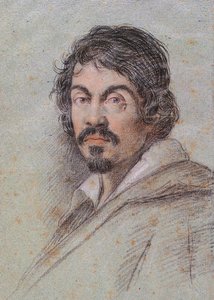
Michelangelo Merisi da Caravaggio (also Michele Angelo Merigi or Amerighi da Caravaggio; 29 September 1571 – 18 July 1610), known mononymously as Caravaggio, was an Italian painter active in Rome for most of his artistic life. During the final four years of his life, he moved between Naples, Malta, and Sicily. His paintings have been characterized by art critics as combining a realistic observation of the human state, both physical and emotional, with a dramatic use of lighting, which had a formative influence on Baroque painting. Caravaggio employed close physical observation with a dramatic use of chiaroscuro that came to be known as tenebrism. He made the technique a dominant stylistic element, transfixing subjects in bright shafts of light and darkening shadows. Caravaggio vividly expressed crucial moments and scenes, often featuring violent struggles, torture, and death. He worked rapidly with live models, preferring to forgo drawings and work directly onto the canvas. His inspiring effect on the new Baroque style that emerged from Mannerism was profound. His influence can be seen directly or indirectly in the work of Peter Paul Rubens, Jusepe de Ribera, Gian Lorenzo Bernini, and Rembrandt. Artists heavily under his influence were called the “Caravaggisti” (or “Caravagesques”), as well as tenebrists or tenebrosi (“shadowists”). Caravaggio trained as a painter in Milan before moving to Rome when he was in his twenties. He developed a considerable name as an artist and as a violent, touchy and provocative man. He killed Ranuccio Tommasoni in a brawl, which led to a death sentence for murder and forced him to flee to Naples. There he again established himself as one of the most prominent Italian painters of his generation. He travelled to Malta and on to Sicily in 1607 and pursued a papal pardon for his sentence. In 1609, he returned to Naples, where he was involved in a violent clash; his face was disfigured, and rumours of his death circulated. He died in 1610 under uncertain circumstances while on his way from Naples to Rome. Reports stated that he died of a fever, but suggestions have been made that he was murdered or that he died of lead poisoning. Caravaggio's innovations inspired Baroque painting, but the latter incorporated the drama of his chiaroscuro without the psychological realism. The style evolved and fashions changed, and Caravaggio fell out of favour. In the 20th century, interest in his work revived, and his importance to the development of Western art was reevaluated. The 20th-century art historian André Berne-Joffroy stated: “What begins in the work of Caravaggio is, quite simply, modern painting.”

A művész életrajza

Egy Élet az Árnyék és a Fény között

Michelangelo Merisi da Caravaggio, akinek neve összefonódott a barokk festészet drámai intenzitásával, 1571-ben született Milánóban, egy olyan korszakban, amely tele volt művészi virágzással és társadalmi felfordulásokkal. Korai évei veszteséggel voltak terheltek; a pestis elpusztította szülővárosát, hatéves korában elvesztve apját és nagypapáját. Viszonylagos szegénységben nevelkedett, Michelangelo fiatal éveiben mély tudatosság alakult ki az emberi szenvedéssel és ellenállóképességgel kapcsolatban – témák, amelyek később vásznait uralták. Művészi képzését Milánóban kezdte Simone Peterzano alatt, Titian egykori tanítványánál, elsajátítva a reneszánsztudás alapjait, de már ekkor is látszott egy lázadó szellem, amely hamarosan meg fogja törni a hagyományos normákat. Ez a tanulószerződés szilárd alapot biztosított, ám Rómában, körülbelül 1592-ben érkezve találta meg igazán hangját, bár kezdeti küzdelmek és nehézségek nélkül nem is. A város, a művészeti pártfogáság és vallási izgalom élénk központja, egyaránt vonzó és kegyetlen volt az ambiciózus fiatal festő számára.

Forradalmasító Látásmód: Technika és Stílus

Caravaggio megérkezése Rómába a művészet világában földrengést jelentett. Elutasította a korábbi manierista stílust – amelyet mesterképességével és nyújtott formáival jellemeztek – egy kompromisszumot nem ismerő realizmus javára, amely megdöbbentette és lenyűgözte a közönséget. Legmeghatározóbb újítása volt a chiaroscuro mesteri használata, a fény és sötétség drámai kontrasztja, amelyet egyedülálló kifejező erőre emelt. Ez a technika, gyakran tenebrizmus néven ismert, nem csupán esztétikai választás volt; az érzelmi hatás fokozásának eszköze volt, bevonva a nézőt a jelenet szívébe, és képi alakjait tapintható jelenlétével átitatva. Elutasította az idealizált ábrázolásokat, ehelyett a mindennapi embereket – gyakran Róma utcáiról – használta vallási figurák modelljeiként. Ez radikális megközelítés megkérdőjelezte a szépség és szentség hagyományos fogalmait, így téve a szentet kapcsolhatóvá és mélyen emberivé. Kompozíciói gyakran szűkek és közvetlenek voltak, intenzív drámai pillanatokra összpontosítva, legyen szó "A Keresztfogás" brutális realizmusáról vagy "Szent Ferenc asszisziói extázis" csendes elmélkedéséről.

Főbb Művei és Tartós Hatása

Viszonylag rövid pályafutása során Caravaggio olyan munkákat alkotott, amelyek a mai napig rezonálnak a közönséggel. Korai művei, mint például "A Jövőkártya" (1594), tehetségét mutatják a realista részletek és pszichológiai árnyalatok megragadásában. A londoni National Galleryben található "Emmausi vacsora" (1601-1602) példázza a chiaroscuro elsajátítását és a bibliai narratíván belüli mély érzelmi mélység közvetítésének képességét. A "Dávid Goliát fejével" (kb. 1610) különösen kísérteties, gyakran önarcképként értelmezik, amely Caravaggio saját nyugtalan lelkiállapotát tükrözi. Hatása messze túlnyúlt Olaszország határain, inspirálva a "caravaggisták" vagy „árnyékfestők” egy generációját, akik Európa-szerte átvették stílusát. Neves követői közé tartozott Peter Paul Rubens, Jusepe de Ribera és Gerrit van Honthorst, mindegyikük Caravaggio technikáit saját egyedi művészi látásmódjához igazította.

Zűrzavaros Élet és Tartós Örökség

Caravaggio élete ugyanolyan drámai és viharos volt, mint a művészete. Volatil temperamentuma és verekedések iránti hajlama gyakran bajba keverte a törvénnyel, 1606-ban egy gyilkossági váddal végződött, ami arra kényszerítette, hogy elmeneküljön Rómából. A következő négy évét Nápolyban, Máltán és Szicíliában töltötte, festett, miközben kétségbeesetten keresett pápai kegyelmet. Erfőlésének ellenére bűnös maradt, múltja kísértette és személyes konfliktusok sújtották. 1610-ben halt meg Porto Ercoleban, Olaszországban rejtélyes körülmények között – halálának oka máig vitatott, a láztól a mérgezésig terjedő elméletekkel. Rövid élete ellenére Caravaggio művészeti öröksége tanúbizonyságát teszi forradalmasító látásmódjáról és a realizmus iránti töretlen elkötelezettségéről. Megkérdőjelezte kora konvencióit, utat nyitva egy modernebb festészeti megközelítésnek, és maradandó nyomot hagyott a nyugati művészettörténetben. Művei továbbra is ámulatot keltenek és elgondolkodtatnak, emlékeztetve minket a művészet erejére, hogy megvilágítsuk az emberi létezés legsötétebb sarkait.
Caravaggio

Caravaggio

1571 - 1610 , Spanyolország

A művészről röviden

  • Artistic Movement Or Style: Barokk, Tenebrizmus
  • Artists Or Movements Influenced By This Artist:
    • Rubens
    • Caravaggisták
  • Artists Who Influenced This Artist:
    • Titian
    • Leonardo da Vinci
  • Date Of Birth: 1571. szeptember 29.
  • Date Of Death: 1610. július 18.
  • Full Name: Michelangelo Merisi da Caravaggio
  • Nationality: Olasz
  • Notable Artworks:
    • A jövőképző
    • Emmausi vacsora
  • Place Of Birth (City And Country): Milánó, Spanyolország
Fedezze fel a műalkotásokat témák, stílusok és jellemzők szerint csoportosítva.