x

Kézzel festett olajvastú vászon, az Ön által választott méretben és keretben, művészeink készítik meglévőre. ( Nyomat rendelése Kép letöltése)





























Válasszon előre meghatározott méreteink közül, amelyek megfelelnek a műalkotás eredeti arányainak.

Ön megadhat saját méreteket egy adott kerethez vagy térhez igazításhoz. Ha a kiválasztott méret nem egyezik az eredeti kép arányával, akkor a műalkotást levágjuk, vagy további kézzel festett elemekkel meghosszabbítjuk a festményt. A gyártás megkezdése előtt küldünk Önnek egy digitális előnézetet jóváhagyásra.
Kérjük, vegye figyelembe, hogy a képernyőn megjelenő előnézet nem tükrözi a tényleges vágást vagy kiterjesztést. Csak az előnézet fog pontosan mutatni a végső kompozíciót.
Bár egyedi méretek állnak rendelkezésre, javasoljuk, hogy válasszon egy méretet az előre meghatározott listából az eredeti arányok megőrzése érdekében.
Világszerte elérhető szállítás () 3-4 hét alatt a szokásos 5 hét helyett. (14 augusztus). A minőség nem kérdőjelezhető.


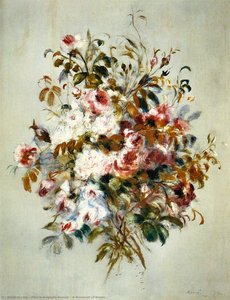
Vase of Lilacs and Roses
Reprodukció mérete
Pierre-Auguste Renoir’s “Vase of Lilacs and Roses,” painted in 1870, isn't merely a still life; it’s an invitation into a world brimming with delicate beauty and the fleeting magic of light. This pivotal work within the burgeoning Impressionist movement transcends the simple arrangement of flowers, transforming them into a meditation on color, texture, and the ephemeral nature of pleasure – a quiet intimacy captured in a single, luminous moment. Renoir, already gaining recognition for his vibrant depictions of Parisian life, masterfully presents us with a scene that feels both familiar and profoundly evocative, as if stepping into a private sanctuary bathed in an afternoon sun.
The heart of the painting lies in Renoir’s revolutionary approach to color. He deliberately eschews photographic realism, opting instead for a technique characterized by broken brushstrokes and the strategic juxtaposition of complementary hues – the cool blues of the vase dancing against the warm pinks and purples of the blossoms. This isn't about accurately representing the colors we *see*, but rather capturing the *impression* of color as it shifts and changes with light. Notice how Renoir skillfully uses subtle variations in tone to create a shimmering effect, almost as if the painting itself is vibrating with life. The delicate petals of the lilacs are rendered with an astonishing sensitivity, each fold and curve illuminated by fleeting highlights – a testament to his meticulous observation and masterful control of paint.
“Vase of Lilacs and Roses” stands firmly within the context of the Impressionist movement, yet it also reveals Renoir’s unique artistic voice. He was deeply influenced by his contemporaries, particularly Claude Monet, whose groundbreaking explorations of capturing the effects of light at different times of day profoundly shaped Renoir's approach to painting. Like Monet, Renoir sought not just to depict what he *saw*, but how he *felt* about what he saw – the emotional resonance of a scene rather than its literal form. However, unlike Monet’s often expansive landscapes, Renoir focused on capturing intimate moments within domestic settings, frequently featuring women and children, imbuing his work with a sense of warmth and domesticity.
The subtle suggestion of a table beneath the vase hints at a lived-in space, adding to the painting's sense of quiet comfort and familiarity. The influence of Édouard Manet is also evident in Renoir’s bold color palette and his willingness to depict modern life – albeit filtered through an Impressionistic lens. Manet’s earlier works paved the way for a shift away from academic constraints, encouraging artists to explore subjective experience and capture the immediacy of perception.
Beyond its purely aesthetic qualities, “Vase of Lilacs and Roses” is rich with symbolic meaning. Lilacs, traditionally associated with love, innocence, and springtime’s renewal, evoke a sense of romantic longing and youthful beauty. The roses, representing passion, admiration, and even fleeting pleasure, add an element of sensual delight to the composition. The arrangement itself – a carefully curated display – suggests a deliberate act of creating beauty within the home, a celebration of domesticity and the appreciation for simple pleasures.
Flowers have long held symbolic significance in art and culture, and Renoir’s choice of these particular blooms speaks to his interest in capturing not just visual beauty but also the emotional associations connected to them. The vase, rendered in a simple, unassuming blue, acts as a grounding element, anchoring the vibrant colors of the flowers and providing a sense of stability within the composition – a quiet counterpoint to the exuberance of the blossoms.
“Vase of Lilacs and Roses” is more than just a pretty picture; it’s a testament to Renoir's artistic vision and his ability to capture the essence of everyday beauty. Its influence can be seen in countless works that followed, inspiring generations of artists to embrace a more subjective and expressive approach to painting. The painting’s enduring appeal lies in its ability to evoke a sense of nostalgia, tranquility, and appreciation for the simple pleasures of life. Today, reproductions of this iconic work continue to grace homes and galleries around the world, offering viewers a glimpse into the luminous world of Pierre-Auguste Renoir – a master of light, color, and the fleeting beauty of the moment. Most-Famous-Paintings offers meticulously crafted, hand-painted reproductions that faithfully capture the spirit and artistry of this beloved masterpiece.


1841 - 1919 , Franciaország

Fedezze fel Pierre-Auguste Renoir 25 legszebb művét! Ismerje meg az impresszionizmus gyöngyszemeit, a színek és fény játékát. Vásároljon exkluzív Renoir reprodukciókat otthonába a Most-Famous-Paintings.com kínálatából – minőségi faliképek és inspiráló dekoráció.

Fedezze fel a 10 legikonikusabb impresszionista festményt! Monet, Renoir és más mesterek művészete életre kel Most-Famous-Paintings.com-on. Vászonképek, faliképek – inspirálja otthonát a benyomásosok színeivel és hangulatával! Explore the full collection online.

Fedezze fel a 10 legikonikusabb impresszionista festményt! Monet, Renoir és más mesterek alkotásainak története, technikái és örök szépsége. Vászonképek, faliképek otthonába – Most-Famous-Paintings.com.

Fedezze fel a 10 legnagyobb impresszionista remekművet! Monet, Degas és Renoir alkotásainak története, technikája és időtálló szépsége. Vásároljon online prémium minőségű festmény reprodukciókat a Most-Famous-Paintings-on – inspirálja otthonát művészettel!

Explore the captivating world of Pierre-Auguste Renoir! Discover his life, iconic Impressionist masterpieces & enduring legacy with our expert guide. High-quality reproductions available.


Maradjon naprakész a legfrissebb művészeti hírekkel, exkluzív ajánlatokkal és dekorációs ötletekkel.
Írja le nekünk projektjét, és művészeti szakértőink 3 személyre szabott műalkotási javaslatot készítenek Önnek.
Hagyjuk, hogy mi válogassunk ki Önnek 3 legjobb opciót – Ingyenesen!


 Megtekintés
 Küldés
 Megosztás
 Részletek

 Letöltés
 Hasonló darabok
 X-ray felvétel
 Diavetítés

 Összes részlet megjelenítése







 Az üvegkeretes opció csak 110 cm alatti méretben érhető el