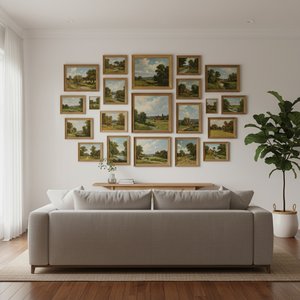
Lodewijk Johannes Kleijn: A Painter of Tranquil Dutch Landscapes
Lodewijk Johannes Kleijn (1817-1897) stands as a quiet yet significant figure in the landscape painting tradition of 19th century Holland. Born in Leiden, he emerged from a milieu steeped in artistic fervor – his father was a professor of anatomy and physiology at Leiden University, fostering an environment conducive to intellectual curiosity and artistic exploration. While Kleijn’s biography remains relatively sparse compared to contemporaries like Koekkoek or Maris, his contribution to Dutch Romanticism is undeniable, particularly through his masterful depictions of waterways and rural scenes imbued with serene beauty.
Kleijn's artistic journey began in Utrecht where he studied under Anton Mauve, a pivotal influence who championed the Impressionistic movement’s embrace of fleeting light and atmospheric perspective. Mauve encouraged Kleijn to prioritize observation and capture the essence of nature rather than striving for photographic accuracy—a crucial distinction that shaped Kleijn’s distinctive style. This formative period instilled in him a deep appreciation for tonal gradations and subtle color harmonies, techniques he skillfully employed throughout his prolific career.
His artistic output focused predominantly on landscapes featuring canals, rivers, and windmills – motifs deeply rooted in the Dutch countryside and reflecting the socio-economic realities of the era. Unlike some Romantic painters who sought dramatic grandeur, Kleijn favored understated compositions that conveyed a profound sense of peace and tranquility. His canvases often depict figures engaged in everyday activities alongside water features—farmers tending their fields, laborers navigating barges—creating scenes that resonate with authenticity and capturing the rhythms of rural life. These depictions weren’t merely aesthetically pleasing; they served as visual records of a disappearing world, documenting the changing landscape of Holland during a period of industrialization.
Kleijn's artistic development progressed steadily throughout his lifetime, honing his technique and refining his vision. He exhibited regularly in Utrecht and Amsterdam salons, garnering critical acclaim for his landscapes and securing commissions from wealthy patrons who appreciated his ability to evoke emotion through subtle tonal variations and luminous color palettes. Notably, Kleijn’s work aligns closely with the broader Romantic movement's preoccupation with sublime beauty—the awe-inspiring grandeur of nature—albeit tempered by a humanist sensibility that emphasized human connection to the natural world.
Despite lacking extensive fame during his lifetime, Kleijn’s paintings continue to hold considerable artistic merit and historical significance. His landscapes exemplify the best qualities of Dutch Impressionism, prioritizing atmospheric effects and tonal harmony over detailed representation. They offer valuable insights into the visual culture of 19th century Holland and serve as reminders of a time when artists sought to capture not just what they saw but also how it felt—a pursuit that resonates powerfully with contemporary viewers seeking solace and inspiration in the beauty of the natural world. His legacy resides in his ability to convey profound emotion through deceptively simple compositions, cementing his place as an enduring artist within Dutch art history.