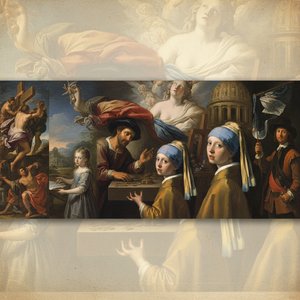
A Palatial Symphony of Genoese Splendor
To step across the threshold of the Galleria di Palazzo Reale in Genoa is to leave the modern world behind and enter a living chronicle of aristocratic grandeur. This magnificent structure, which began its life in 1618 as a bold declaration of status for the ambitious Balbi family, serves as much more than a mere museum; it is an immersive journey through the very soul of Genoese nobility. As one wanders through its halls, the architecture itself performs a captivating dialogue between the structured elegance of the Renaissance and the dramatic, emotive flourishes of the Baroque. The palace was not merely built but composed, with every gilded stucco and vaulted ceiling designed to evoke awe. Under the later stewardship of the Durazzo family and the architectural genius of Carlo Fontana, the residence expanded into an opulent masterpiece of Baroque splendor, eventually finding its ultimate transformation as a royal seat for the House of Savoy in the nineteenth century.
The interior experience is one of profound sensory richness, where sunlight streams through expansive windows to illuminate a world of unparalleled artistry. The walls themselves act as narrative canvases; breathtaking frescoes, such as The Glory of the Balbi Family by Valerio Castello and Andrea Sghizzi, envelop visitors in scenes of mythological power and familial pride. This sense of theatricality is echoed in the ceiling works, where Giovanni Battista Carlone’s Jove Establishes Justice on Earth utilizes masterful perspective to dissolve the boundaries between the physical room and the heavens above. For the art lover or the interior designer, the palace offers a masterclass in how decorative arts—from intricate woodwork to illusionistic painting—can coalesce to create a unified, breathtaking environment.
Beyond the architectural shell lies a collection of extraordinary depth, housing masterpieces that have graced the halls of European royalty for centuries. The galleries serve as a sanctuary for works by some of history’s most influential hands, including the vibrant, light-filled compositions of Veronese and the psychologically profound portraits of Anthony van Dyck. The collection breathes with the dynamic energy of Bernardo Strozzi’s chiaroscuro and the sweeping, illusionistic brilliance of Giovanni Battista Gaulli. This artistic lineage is further enriched by the sculptural elegance of Filippo Parodi, whose forms provide a tactile counterpoint to the painted narratives. It is a rare privilege to encounter such a concentrated assembly of talent, where the evolution of European painting from the 17th to the 19th centuries is laid bare.
What truly distinguishes Palazzo Reale from the sterile corridors of many modern institutions is its unwavering commitment to historical authenticity. It remains a meticulously reconstructed home, where original furnishings and period pieces are preserved in their intended context, allowing guests to trace the stylistic shifts from Mannerism to Rococo through the very objects used by the nobility. This continuity of spirit is further celebrated through thoughtful exhibitions, such as retrospective looks at the precise landscapes of Canaletto or deep dives into the decorative arts of the region. For those seeking to understand the cultural identity of Genoa, the palace stands as an essential pilgrimage, offering a window into a vanished era of refined taste and enduring beauty.