Verkoop uw kunst
Verlanglijstje Winkelwagen Cart
VoorvertoningVoorvertoning Bekijk in ARBekijk in AR Bestel print Bestel printKoop afbeelding Koop afbeelding VerstuurVerstuur
Details bekijkenDetails bekijken Toevoegen aan favorieten Toevoegen aan favorieten DownloadDownload Vergelijkbare itemsVergelijkbare items RöntgenonderzoekRöntgenonderzoek DiavoorstellingDiavoorstelling

Perspectief Print van de Chushingura

Verken Hokusai's meesterlijke houtsniprint 'Perspectief Print van de Chushingura'. Een gedetailleerd schouwspel uit het Edo-periode Japan. Koop een handgeschilderde reproductie!

Ontdek Katsushika Hokusai (1760-1849), de meester van ukiyo-e! Bewonder 'De Grote Golf', landschappen, manga & houtsneden. Invloedrijk voor Impressionisme & meer!

Handgemaakte olieverfreproductie

Met de hand geschilderd in olieverf op canvas in uw gewenste maat en lijst, op bestelling gemaakt door onze kunstenaars. (Bestel print Bestel printKoop afbeelding Koop afbeelding)

P118B $10
P118H $10
P118W $10
P438Z $10
P508JH $12
P508YH $12
P805H $10
P805Z $10
P919BZ $10
P919G $10
P919XJ $10
P959ZH $10
P968JZ $12
W106C $8
W218G $10
W218JH $8
W218Y $10
W307PJ $10
W316G $10
W316PJ $8
W316Y $10
W398PJ $8
W4111J $10
W500HY $15
W500JH $15
W692G $12
W849H $8
W940BG $15
W953PJ $8

Standard
custom
CM
INCH

Kies uit onze vooraf ingestelde maten die overeenkomen met de originele verhoudingen van het kunstwerk.

breedte
hoogte

U kunt uw eigen afmetingen invoeren om in een specifieke lijst of ruimte te passen. Als de door u gekozen maat niet overeenkomt met de verhoudingen van het originele beeld, zullen we het kunstwerk bijsnijden of het schilderij uitbreiden met extra handgeschilderde elementen. Een digitale mockup wordt ter goedkeuring naar u verzonden voordat de productie begint.
Houd er rekening mee dat de preview op het scherm niet de werkelijke uitsnede of uitbreiding weergeeft. Alleen de mockup toont de uiteindelijke compositie nauwkeurig.
Hoewel aangepaste afmetingen mogelijk zijn, raden we aan een maat uit de vooraf gedefinieerde lijst te selecteren om de originele verhoudingen te behouden.

Voorbeelden van aanpassingen: Vervang het gezicht met een eigen foto; Voeg een huisdier toe (bijv. vervang de kat door een hond); Verwerk een verborgen boodschap in de achtergrond; Wijzig het landschap of andere elementen in de achtergrond.
Na de bestelling zal het team van Most-Famous-Paintings.com per e-mail contact opnemen met de klant voor instructies en een mockup-voorbeeld sturen.

Wereldwijde levering () binnen 3 tot 4 weken in plaats van de standaard 5 weken. (14 augustus). Zonder concessies aan de kwaliteit.

why_choose_icon
Gratis wereldwijde expressverzending
why_choose_icon
Hoogwaardig linnen canvas
why_choose_icon
Volledige verzendverzekering
why_choose_icon
Garantie op terugbetaling van invoerrechten
why_choose_icon
Garantie op exacte kleurweergave
why_choose_icon
Retourbeleid van 60 dagen (alleen bij defecten)
why_choose_icon
100% Geld-terug-garantie
why_choose_icon
Korting bij meerdere afnames

Totaalprijs

$ 422

reproduction

Perspectief Print van de Chushingura

Druktechniek

Afmetingen reproductie

-

Eindtotaal

$ 422

Snelle feiten

  • Notable elements or techniques:
    • Flattened perspective
    • Bold lines
    • Layered ink
  • Movement: Ukiyo-e
  • Artist: Katsushika Hokusai
  • Artistic style: Japanese woodblock print
  • Title: Perspective Print Of The Chushingura

Kunstquiz

Er is slechts één goed antwoord op elke vraag.

Vraag 1:
What artistic tradition is this print most closely associated with?
Vraag 2:
The perspective in this artwork can be best described as:
Vraag 3:
Who is the artist of 'Perspective Print Of The Chushingura'?
Vraag 4:
What is a key characteristic of the lines used in this woodblock print?

Beschrijving kunstwerk

Een Blik Op Rituelen uit de Edo-periode: Katsushika Hokusai’s “Perspective Print Of The Chushingura”

Deze betoverende Japanse houtblokprint, met zorgvuldig bewerkt door de beroemde kunstenaar Katsushika Hokusai, biedt een fascinerend venster op de bruisende wereld van 19e-eeuws Japan. De print toont waarschijnlijk een scène die verband houdt met het legendarische verhaal van de *Chushingura* (De Veertig Zeven Ronin), en gaat verder dan een eenvoudige narratieve illustratie; het is een levendige momentopname van dagelijks leven, verweven met diepgaande culturele betekenis. De print toont een dichte bevolking binnenin, vol figuren die verschillende activiteiten uitvoeren – voedsel bereiden, gasten verwelkomen en wellicht deelnemen aan rituele praktijken. Het vervormde perspectief, kenmerkend voor de *ukiyo-e* stijl, prioriteert de helderheid van het verhaal boven realistische diepte, waardoor de kijker direct in het hart van de scène wordt getrokken.

De Ukiyo-e Techniek & Artistieke Stijl

Hokusai’s meesterschap is duidelijk zichtbaar in zijn zorgvuldige toepassing van de *ukiyo-e* techniek. Dit traditionele houtsniproces omvat het minutieus uitgraven van een ontwerp in een houten blok, het aanbrengen van inkt op het oppervlak en vervolgens het indrukken ervan op Japanse muurlepels papier. Het resulterende printwerk vertoont sterke, gedefinieerde lijnen – kenmerken van deze methode – naast zorgvuldig geplaatste texturen die zijn bereikt door de korrel van het hout en subtiele variaties in de inktdoorstromming. De kleurpalet, voornamelijk bestaande uit gedempte bruintinten, groen, rood en blauw, draagt bij aan een enigszins sombere maar gedetailleerde sfeer, die het gevoel van rustige activiteit en traditionele rituelen versterkt. De geometrische vormen van de architectuur contrasteren prachtig met de organische vormen van mensen en vegetatie, waardoor visueel interesse en balans worden gecreëerd binnen de compositie.

Historisch Context & Het Legende van de Chushingura

Om deze print volledig te waarderen, is het cruciaal om verbonden te zijn met de *Chushingura*. Dit legendarische verhaal vertelt het verhaal van veertig zeven samurai die wraak zochten voor de dood van hun meester in 1703, waarbij ze zich hielden aan een strikt code van eer en uiteindelijk zichzelf opofferden voor hun loyaliteit. Hoewel de print niet expliciet een specifiek incident uit het verhaal toont, toont het waarschijnlijk voorbereidingen of gevolgen met betrekking tot dit belangrijke historische gebeurtenis, die diep resoneerde in Japanse cultuur. De architectuur zelf – traditionele Japanse gebouwen – vertegenwoordigt status en naleving van gevestigde gebruiken, waardoor de scène verder wordt verankerd in zijn tijdperk. Hokusai’s werk weerspiegelt het Edo-periode (1603-1868), een periode van relatieve vrede en welvaart die artistieke innovatie en een bloeiende printcultuur bevorderde.

Symboliek & Emotionele Impact

Naast zijn narratieve inhoud is deze print rijk aan symbolische betekenis. De acties van de figuren – het bereiden van voedsel, het verwelkomen van gasten – suggereren gastvrijheid, respect voor traditie en naleving van sociale protocollen. Het gedoofde licht creëert een gevoel van introspectie en stille contemplatie, terwijl de algehele compositie een gevoel van ingetogen waardigheid en ernst oproept. Hokusai’s vermogen om dit genuanceerde emotionele toon vast te leggen met zijn bekwame gebruik van lijn, kleur en perspectief maakt deze print zo boeiend. Het is niet alleen een afbeelding; het is een uitnodiging om in een andere tijd te stappen en de rustige ritmes van het Edo-periode Japan te ervaren. movement: Ukiyo-e topics: Japanese Print, Woodblock, Chushingura, Ritual, Building, Figures, Traditional, Edo Period creative_period: Mature Period corpus_context: Traditional Japanese art forms, Emphasis on narrative storytelling, Ukiyo-e woodblock printing techniques, Representative of Hokusai's narrative style, Demonstrates mastery of Ukiyo-e techniques, Part of a larger exploration of Japanese culture, Edo period societal structures, Themes of loyalty and honor

Biografie van de kunstenaar

A Life Etched in Ink: The World of Katsushika Hokusai

Katsushika Hokusai, a name synonymous with Japanese art and the instantly recognizable image of *The Great Wave off Kanagawa*, was far more than just a printmaker. Born in Edo (modern-day Tokyo) around 1760, his life unfolded as an intensely restless pursuit of artistic mastery – a continuous evolution marked by shifting names and an insatiable curiosity about the world around him. From humble beginnings as the son of a mirror maker, Hokusai’s early inclination towards art wasn't immediately encouraged; yet, he relentlessly honed his skills, reportedly beginning to draw at the age of six. This unwavering dedication would define a career spanning nearly nine decades, leaving behind a legacy that continues to resonate profoundly with audiences worldwide. His father, Nakajima Ise, though not an artist himself, recognized and perhaps fostered this nascent talent, laying the groundwork for a journey that would fundamentally transform Japanese visual culture. Hokusai’s early life wasn't one of privilege, but rather a steady climb fueled by ambition and a deep-seated passion to capture the essence of the world around him.

From Apprenticeship to Innovation: The Blossoming of a Style

Hokusai’s formal artistic training began at twelve when he entered the studio of Katsukawa Shunshō, a leading master of *ukiyo-e* – “pictures of the floating world.” This genre, immensely popular during the Edo period, served as a vibrant mirror reflecting the daily life of Japan: actors performing in Kabuki theaters, courtesans engaging in elaborate rituals, sweeping landscapes, and glimpses into the bustling urban culture. Under Shunshō’s guidance, Hokusai mastered the intricate techniques of woodblock printing – a demanding process requiring exceptional precision and artistic skill. However, he wasn't content to simply replicate his teacher’s established style; even in his early work, a palpable restlessness was evident – a fervent desire to push boundaries and explore new avenues of expression. He began experimenting with diverse subjects, venturing beyond the traditional focus on actors and courtesans, including book illustrations and single-sheet prints, constantly refining his skills and developing a uniquely powerful visual language. This period also witnessed the first of many name changes—a common practice among *ukiyo-e* artists, signifying periods of artistic reinvention or affiliation with different schools – reflecting Hokusai’s constant evolution.

Mount Fuji and the Floating World: Defining Masterpieces

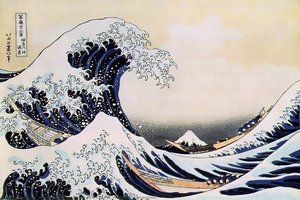
Hokusai's artistic output was astonishingly prolific; tens of thousands of woodblock prints, paintings, and illustrated books bear his signature. While he explored a vast array of subjects—from scenes of everyday life to fantastical creatures—it was his series *Thirty-Six Views of Mount Fuji* (circa 1831) that cemented his enduring fame. This monumental collection wasn’t merely a straightforward depiction of a landscape; it was a masterful exploration of perspective, composition, and the sheer power of nature. The wave itself – a towering, dynamic force about to crash down upon tiny boats – embodies both the breathtaking beauty and the underlying terror of the sea. Beyond *Fuji*, works like *Fireworks at Ryōgoku Bridge* (1790) demonstrated his remarkable ability to capture the energy and dynamism of everyday life in Japan with astonishing detail and a sense of immediacy. His *Hokusai Manga* – a collection of sketches and studies encompassing people, animals, landscapes, and even fantastical creatures—was groundbreaking in its scope and influence, foreshadowing the development of modern manga as an art form. These works weren’t isolated achievements; they were milestones in a continuous artistic journey, each building upon the last to create a body of work that is both deeply rooted in Japanese tradition and remarkably innovative.

The Old Man Mad About Painting

Hokusai's life was one of constant reinvention, marked by numerous name changes – over thirty throughout his career – each reflecting a new phase in his artistic development. He often referred to himself as “Gakyō Rōjin,” or "Old Man Crazy to Paint," a fitting title for an artist who remained passionately devoted to his craft well into his eighties. This relentless pursuit of perfection, coupled with his innovative spirit and profound understanding of both Japanese tradition and the wider world, cemented Hokusai’s legacy as a true master of *ukiyo-e* and a pivotal figure in the history of art. He continued to experiment with new techniques and subjects until his death in 1849 at the age of 89, leaving behind an unparalleled body of work that continues to captivate and inspire.

A Legacy Beyond Borders: Hokusai's Enduring Influence

Hokusai’s impact extended far beyond Japan. In the late 19th century, as Japan opened its doors to the West, *ukiyo-e* prints flooded European markets, sparking a phenomenon known as *Japonisme*. Artists like Claude Monet, Edgar Degas, and Vincent van Gogh were profoundly influenced by Hokusai’s bold compositions, vibrant colors, and unconventional perspectives. Van Gogh, in particular, was deeply moved by *The Great Wave off Kanagawa*, even recreating it in his own paintings. Hokusai's influence wasn't limited to Impressionism; it permeated various modern art movements, shaping the way artists approached composition, color, and subject matter. His emphasis on capturing fleeting moments, his dynamic use of line, and his ability to find beauty in everyday life resonated with a generation of artists seeking new forms of expression. Even today, Hokusai’s work continues to inspire and challenge artists around the world, solidifying his place as one of the most important figures in art history.
  • Major Influences: Ukiyo-e traditions, Chinese landscape painting, everyday life in Edo.
  • Key Characteristics: Bold lines, vibrant colors, dynamic compositions, keen observation of nature.
Hokusai

Hokusai

1760 - 1849 , Japan

Belangrijkste feiten

  • Artistic Movement Or Style: Ukiyo-e
  • Artists Or Movements Influenced By This Artist:
    • Impressionisme
    • Van Gogh
  • Artists Who Influenced This Artist:
    • Chinese landschap
    • Tradities
  • Date Of Birth: 31 okt 1760
  • Date Of Death: 10 mei 1849
  • Full Name: Katsushika Hokusai
  • Nationality: Japanse
  • Notable Artworks:
    • De grote golf
    • Fuji
    • Manga
  • Place Of Birth: Tokyo, Japan
Ontdek kunstwerken georganiseerd op thema, stijl en kenmerk.