x

Håndmalt olje på lerret i din valgte størrelse og ramme, laget på bestilling av våre kunstnere. ( Bytt til trykk Bytt til bilde)





























Velg mellom våre forhåndsdefinerte størrelser som bevarer kunstverkets opprinnelige proporsjoner.

Du kan angi egne mål for å tilpasse en spesifikk ramme eller plass. Dersom den valgte størrelsen ikke samsvarer med originalbildets proporsjoner, vil vi enten beskjære kunstverket eller utvide maleriet med ytterligere håndmalte elementer. En digital mockup vil bli sendt til din godkjenning før produksjonen starter.
Vennligst merk at forhåndsvisningen på skjermen ikke gjenspeiler den faktiske beskjæringen eller utvidelsen. Kun mockuppen vil vise den endelige komposisjonen nøyaktig.
Selv om tilpassede størrelser er tilgjengelige, anbefaler vi å velge et mål fra den forhåndsdefinerte listen for å bevare de originale proporsjonene.
Verdensomspennende levering () på 3–4 uker i stedet for standard 5 uker. (8 August). Ingen kompromisser med kvaliteten.


Somerset House Terrass og Themsen: Et syn fra Waterloo Bridges nordende med St. Pauls Katedral i det fjerne
Størrelse på reproduksjon
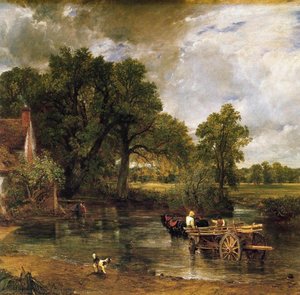
John Constable’s “Somerset House Terrace and the Thames, A View from the North End of Waterloo Bridge with St. Paul’s Cathedral in the distance” is far more than a simple depiction of a London street scene; it's an immersive experience, a carefully constructed meditation on light, space, and the evolving relationship between humanity and its environment. Painted in 1816, at a pivotal moment in the city’s rapid transformation, this canvas captures the burgeoning energy of early Victorian London while simultaneously anchoring itself to the enduring grandeur of St. Paul’s Cathedral – a testament to both human ambition and timeless beauty.
Constable masterfully employs a high horizon line, drawing the viewer's eye upwards into an expansive sky that immediately establishes a sense of openness and tranquility. This deliberate choice contrasts sharply with the bustling activity below, creating a dynamic tension between the vastness of nature and the density of urban life. The river itself isn’t merely a backdrop; it’s a vibrant, ever-changing force, reflecting the shifting light and subtly shaping the composition – a crucial element in Constable's approach to capturing atmosphere.
What truly distinguishes this painting is Constable’s distinctive approach to portraying atmosphere. He deliberately eschews the precise detail favored by earlier landscape painters, opting instead for loose, expressive brushstrokes that convey movement and fleeting effects of light with remarkable immediacy. Notice how he utilizes a “broken technique” – applying paint in short, separate strokes – to create an illusion of shimmering water and hazy distance. This isn’t a photographic representation; it's a deeply felt impression, imbued with Constable’s personal response to the scene. The effect is remarkably tactile, inviting the viewer to almost *feel* the warmth of the sun on the Thames and the slight chill in the air.
The use of color is equally significant. Constable doesn’t rely on stark contrasts; instead, he employs subtle gradations and muted tones to create a sense of depth and atmosphere. The blues and greens of the river and sky are interwoven with earthy browns and ochres, reflecting the palette of the city itself. This careful orchestration of color contributes significantly to the painting's overall mood – one of quiet contemplation amidst urban activity.
To fully appreciate “Somerset House Terrace,” it’s essential to understand the context in which it was created. London in 1816 was a city undergoing dramatic transformation. Industrialization was reshaping its landscape, and a new sense of civic pride – alongside social unrest – was emerging. Waterloo Bridge, still relatively new at this time, symbolized this progress, connecting Westminster with South Bank and representing the burgeoning spirit of innovation. Somerset House, a grand architectural statement commissioned by William III, stood as a powerful reminder of the monarchy’s enduring legacy, while St. Paul’s Cathedral, completed just decades earlier, represented the city's resilience and spiritual heart.
Beyond its historical context, “Somerset House Terrace” is rich in symbolism. The river, a constant presence throughout English art, represents life, movement, and connection – linking different parts of the city and offering a pathway to the unknown. St. Paul’s Cathedral, towering above the scene, symbolizes faith, stability, and the enduring spirit of London. Constable's choice to include these iconic landmarks within a bustling urban landscape suggests a harmonious balance between tradition and progress.
Ultimately, “Somerset House Terrace” is more than just a painting; it’s a window into a specific moment in time – a vibrant snapshot of a city on the cusp of greatness. It invites us to contemplate the beauty of the natural world alongside the dynamism of urban life, capturing the essence of London with remarkable sensitivity and skill.


1776 - 1837 , Storbritannia
Opplev John Constables 25 mest ikoniske malerier! Fordyp deg i engelsk romantikk, landskapskunst og atmosfæriske scener. Finn museumskvalitets reproduksjoner & interiørinspirasjon på Most-Famous-Paintings.com. Utforsk samlingen online!

Explore 25 iconic John Singer Sargent paintings – from dazzling portraits to Impressionist landscapes. Discover the stories behind Madame X, El Jaleo & more! Find museum-quality art reproductions and elevate your home decor with Most-Famous-Paintings.com.

Oppdag de 10 mest ikoniske romantiske landskapsmaleriene! Fra Caspar David Friedrich til Turner – utforsk kunsthistorien, stemningen og fargepalettene. Finn museumskvalitets reproduksjoner på Most-Famous-Paintings.com.
Oppdag National Gallery Londons 25 mest ikoniske kunstverk! Lær historien bak mesterverk fra Van Gogh, Monet & Rembrandt. Finn inspirasjon til interiøret og kjøp museumskvalitets reproduksjoner på Most-Famous-Paintings.com – din kilde for klassisk kunst.

Explore the life & art of John Constable, the Romantic painter who revolutionized landscape with emotive scenes of rural England. Discover his techniques, legacy, and key works – perfect for collectors & enthusiasts.


Hold deg oppdatert med de siste kunstnyhetene, eksklusive tilbud og dekorasjonsideer.
Fortell oss om prosjektet ditt, så vil våre kunsteksperter gi deg 3 personlige kunstforslag.
Vi velger ut 3 alternativer kun for deg – helt gratis!


 Forhåndsvisning
 Send
Send Del med andre
 Vis detaljer

 Last ned bildet
 Liknende objekter
 Røntgenundersøkelse
 Lysbildefremvisning

 Vis hele teksten







 Glassalternativet er kun tilgjengelig i størrelser under 110 cm