x

 Akryl på lerretVeggkunstSymbolist Painting
 1876Renessansen
 22.0 x 12.0 cm
 Metropolitan Museum of Art
Håndmalt olje på lerret i din valgte størrelse og ramme, laget på bestilling av våre kunstnere. ( Kjøp trykk Kjøp bilde)





























Velg mellom våre forhåndsdefinerte størrelser som bevarer kunstverkets opprinnelige proporsjoner.

Du kan angi egne mål for å tilpasse en spesifikk ramme eller plass. Dersom den valgte størrelsen ikke samsvarer med originalbildets proporsjoner, vil vi enten beskjære kunstverket eller utvide maleriet med ytterligere håndmalte elementer. En digital mockup vil bli sendt til din godkjenning før produksjonen starter.
Vennligst merk at forhåndsvisningen på skjermen ikke gjenspeiler den faktiske beskjæringen eller utvidelsen. Kun mockuppen vil vise den endelige komposisjonen nøyaktig.
Selv om tilpassede størrelser er tilgjengelige, anbefaler vi å velge et mål fra den forhåndsdefinerte listen for å bevare de originale proporsjonene.
Verdensomspennende levering () på 3–4 uker i stedet for standard 5 uker. (15 August). Ingen kompromisser med kvaliteten.


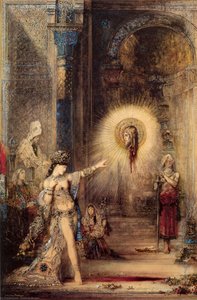
Salome med hodet til Johannes Døperen
Størrelse på reproduksjon
Gustave Moreau’s 1876 oil painting, *Salome med Hodet av Johannes Døperen*, is far more than a depiction of a biblical event; it's an intimate and profoundly unsettling exploration of psychological space. Measuring just 22 x 12 cm and executed with meticulous care on wood, this diminutive canvas holds immense power, currently captivating viewers at The Metropolitan Museum of Art in New York. Moreau doesn’t offer us the act itself, nor a triumphant Salome reveling in her victory; instead, he presents a moment suspended in time – a chilling stillness that invites contemplation rather than shock. This painting transcends a simple narrative, becoming a profound meditation on desire, regret, and the complex moral landscape within the burgeoning Symbolist aesthetic of his era.
Moreau’s genius lies not just in recreating a scene from the Gospels, but in transforming it into a deeply personal allegory. The composition is dominated by Salome herself, an arresting figure adorned with a crown and cascading hair – she embodies both regal beauty and a palpable sense of danger, a captivating yet unsettling presence. Crucially, her detachment from the severed head is key; she doesn’t gaze upon it with pride or malice, but rather turns away, lost in her own thoughts. This deliberate distance immediately complicates our understanding of her motivations, suggesting a profound internal struggle far beyond mere vengeance. The head of John the Baptist, bathed in an ethereal glow, isn't merely a trophy of violence; it’s imbued with symbolic weight, representing sanctity and martyrdom, elevating the scene to something far more significant than a simple act of brutality.
Moreau was a master weaver of symbolism, and *Salome med Hodet av Johannes Døperen* is rich with layered meanings. The silent witness to the event – a sword resting on the wall – serves as a stark reminder of the violence that has transpired, adding an element of unease and foreboding. Even the turbulent sky swirling in the background contributes significantly to the painting’s emotional weight, evoking a sense of unrest and impending doom. These elements aren't merely decorative; they are integral to unlocking the painting’s deeper psychological resonance. The use of color is particularly noteworthy – muted browns, ochres, and deep reds dominate the palette, creating a somber and melancholic atmosphere that perfectly complements the subject matter.
Created during the *fin de siècle*, a period marked by profound social and intellectual upheaval – religious questioning, artistic experimentation, and a fascination with decadence – *Salome med Hodet av Johannes Døperen* is a quintessential example of its time. Moreau was at the forefront of the Symbolist movement, which rejected Realism’s objective representation in favor of expressing ideas and emotions through symbolic imagery. His technique is characterized by meticulous detail, a vibrant yet restrained color palette, and an almost dreamlike quality achieved through layered brushstrokes that create rich textures and jewel-toned effects. The influence of Orientalism – prevalent throughout 19th-century art – is subtly evident in the decorative elements and exotic atmosphere, adding to the painting’s otherworldly feel. Moreau's sustained engagement with the Salome myth—he revisited the story numerous times throughout his career—demonstrates its enduring importance to his artistic exploration.
Moreau’s work profoundly impacted subsequent generations of artists, including luminaries like Henri Matisse and Odilon Redon. His ability to blend mythological narratives with psychological depth paved the way for new forms of artistic expression, influencing the development of modern art. But beyond its historical significance, *Salome med Hodet av Johannes Døperen* continues to resonate with viewers today because it refuses easy answers. It’s a painting that demands contemplation, forcing us to grapple with uncomfortable questions about morality, desire, and the darker aspects of the human psyche. The unsettling stillness, combined with the radiant depiction of death, creates an atmosphere of unease and ambiguity – a testament to Moreau's genius in transforming a violent biblical tale into a work of enduring emotional power. The painting’s small size only intensifies its impact, drawing the viewer into its intimate and haunting world.
Photo Description: --Overall Impression-- The image depicts a vertical oil painting of a woman holding the severed head of John the Baptist. The composition is centered on the figure, with the head prominently displayed in her hands. The background is a dark, turbulent landscape suggesting a stormy or desolate environment. The style appears to be Romantic, characterized by dramatic lighting and emotional intensity. The technique suggests loose brushwork and an emphasis on capturing mood rather than precise detail. The materials used are evident in the visible texture of the paint and the aged appearance of the canvas. The subject matter is religious – a scene from the Gospels concerning John the Baptist’s execution. Symbolically, it represents grief, loss, and perhaps sacrifice or judgment. The lighting is dramatic, with a strong light source illuminating the woman and her head, creating deep shadows in the background. Perspective is somewhat flattened, focusing on the central figure rather than realistic spatial depth. The use of lines is loose and expressive, contributing to the overall feeling of unrest. Shapes are primarily organic – the human form, the head, and the flowing drapery – contrasted with the angular shapes of the landscape. Texture is created through visible brushstrokes and impasto in certain areas, particularly on the head and clothing. The color palette is dominated by muted browns, ochres, and dark reds, creating a somber and melancholic atmosphere. The woman’s attire is rich and elaborate, suggesting royalty or nobility, while the head of John the Baptist is rendered with stark realism, emphasizing its gruesome nature.

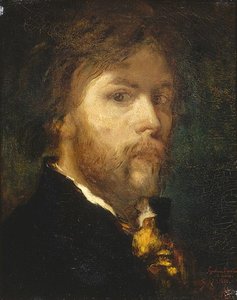
1826 - 1898 , Frankrike

Explore 25 iconic John Singer Sargent paintings – from dazzling portraits to Impressionist landscapes. Discover the stories behind Madame X, El Jaleo & more! Find museum-quality art reproductions and elevate your home decor with Most-Famous-Paintings.com.

Opplev John Constables 25 mest ikoniske malerier! Fordyp deg i engelsk romantikk, landskapskunst og atmosfæriske scener. Finn museumskvalitets reproduksjoner & interiørinspirasjon på Most-Famous-Paintings.com. Utforsk samlingen online!

Explore the rich history & enduring techniques of oil painting on canvas. Discover the science behind its longevity, conservation practices, and contemporary relevance. Expert insights for art enthusiasts.

Explore the rich history & techniques of oil painting – from Renaissance masters to Impressionism. Discover pigments, layering methods, and why this timeless medium endures. Expert insights for artists & art enthusiasts.

Explore the rich history & enduring techniques of oil painting with Most-Famous-Paintings. Discover masterpieces, learn about art collecting, and find authentic handmade reproductions crafted by skilled artists.


Hold deg oppdatert med de siste kunstnyhetene, eksklusive tilbud og dekorasjonsideer.
Fortell oss om prosjektet ditt, så vil våre kunsteksperter gi deg 3 personlige kunstforslag.
Vi velger ut 3 alternativer kun for deg – helt gratis!


 Forhåndsvisning
 Send
Send Del med andre
 Vis detaljer

 Last ned bildet
 Liknende objekter
 Røntgenundersøkelse
 Lysbildefremvisning
 Vis hele teksten







 Glassalternativet er kun tilgjengelig i størrelser under 110 cm