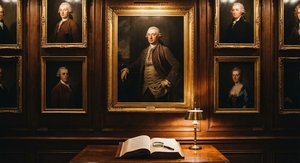
A Quiet Observer of Norfolk Landscapes and Dignified Portraits
Joseph Clover (1779-1853) stands as a pivotal figure within the Norwich School, an artistic movement that flourished in rural Norfolk during the Victorian era. Unlike his contemporaries who often embraced dramatic narratives or grand historical subjects, Clover cultivated a distinctive style characterized by understated elegance and meticulous observation of the natural world alongside portraits imbued with quiet dignity. His canvases rarely shout for attention; instead, they invite contemplation, capturing fleeting moments of beauty and conveying an inner stillness that reflects the sensibilities of his time.
Born in Norwich, Clover’s formative years were shaped by a family steeped in Quaker traditions—beliefs which instilled a profound appreciation for simplicity and moral integrity. This foundational respect for the unadorned truth would later manifest in his artistic approach. Crucially, he absorbed considerable artistic influence from John Opie, whose landscapes championed naturalism and humanist ideals. Opie's emphasis on depicting ordinary subjects with sensitivity and honesty resonated deeply within Clover’s artistic vision, guiding him toward a way of seeing that prioritized the authentic over the theatrical.
The Mastery of Light and Landscape
Clover’s contribution to the Norwich School is undeniable. He eschewed flamboyant brushstrokes and theatrical compositions in favor of a technique rooted in careful tonal gradations and subtle modeling—methods honed through diligent study and practice. His landscapes, particularly those depicting Norfolk countryside scenes, are imbued with an atmospheric quality that captures the very essence of place. One might find himself lost in his depictions of fields bathed in golden light or tranquil rivers meandering through meadows, where the air itself seems to possess a tangible weight.
His ability to render the shifting moods of the English sky and the soft textures of the rural terrain allowed him to create works that felt both intimate and eternal. Through his eyes, the Norfolk landscape was not merely a backdrop but a living, breathing protagonist. This mastery of light and atmosphere served to elevate the mundane aspects of nature into something profoundly spiritual, echoing the quietude found in his personal heritage.
Portraiture and Psychological Depth
Beyond the rolling hills and pastoral serenity, Clover’s portraits distinguished themselves by their psychological depth and understated realism. He skillfully rendered his subjects—often members of the landed gentry—with remarkable accuracy, capturing not merely physical likeness but also conveying a sense of character and inner life. There is a certain gravitas in his portraiture; he possessed a rare ability to look past the finery of clothing and the status of the sitter to find the human soul beneath.
His approach to the human form was marked by:
- Subtle Modeling: Using light and shadow to create a sense of three-dimensional presence.
- Emotional Restraint: Avoiding exaggerated expressions in favor of a dignified, thoughtful composure.
- Naturalistic Detail: A commitment to the true textures of skin, fabric, and hair that grounded his subjects in reality.
Through this combination of landscape sensitivity and portraitist precision, Joseph Clover left an indelible mark on British art. His legacy remains a testament to the power of observation and the beauty found in the quiet, the simple, and the sincere.