


x

 Oil On CanvasWallArtGerman Expressionism
 1913
1913 60.0 x 80.0 cm
Ręcznie malowany obraz olejny na płótnie, wykonany na zamówienie przez naszych artystów w wybranym przez Ciebie wymiarze i oprawie. ( Zamów wydruk Kup obraz wysokiej rozdzielczości)





























Wybierz spośród naszych standardowych rozmiarów, które zachowują oryginalne proporcje dzieła sztuki.

Możesz wprowadzić własne wymiary, aby dopasować obraz do konkretnej ramy lub przestrzeni. Jeśli wybrany rozmiar nie będzie odpowiadał proporcjom oryginału, przytniecie dzieło sztuki lub rozszerzymy je o dodatkowe elementy, ręcznie domalowane przez artystę. Przed rozpoczęciem produkcji wyślemy projekt cyfrowy do Twojej akceptacji.
Należy pamiętać, że podgląd na ekranie nie odzwierciedla rzeczywistego przycinania ani rozszerzania obrazu. Tylko projekt dokładnie pokaże ostateczną kompozycję.
Choć oferujemy możliwość zamówienia niestandardowych rozmiarów, zalecamy wybór wymiaru z gotowej listy, aby zachować oryginalne proporcje dzieła.
Dostawa na całym świecie () w ciągu 3–4 tygodni zamiast standardowych 5 tygodni. (14 Sierpień). Bez kompromisów w kwestii jakości.


Long Yellow Horse
Wymiary reprodukcji
Franz Marc's *Long Yellow Horse*, painted in 1913, isn’t merely a depiction of an animal; it’s a profound meditation on the relationship between humanity and nature, faith and instinct. This arresting canvas, currently residing at the Nassau County Museum of Art in Roslyn Harbor, pulsates with a raw emotionality that speaks to the core of Expressionist philosophy – a desire to convey inner experience rather than simply represent external reality. The painting immediately commands attention through its scale: measuring 60 x 80 centimeters, it’s an immersive work designed to draw the viewer into its world.
At first glance, the composition appears straightforward—a solitary yellow horse dominates the frame, set against a muted background of earthy tones and punctuated by the suggestion of human figures. However, closer inspection reveals a carefully constructed interplay of forms and colors. Marc’s masterful use of Cubist principles – fracturing shapes and simplifying forms – isn't about dissecting reality; it’s about distilling its essence. The horse itself is rendered with angularity and abstraction, its body broken down into geometric planes that simultaneously suggest movement and stillness. This deliberate distortion invites us to consider the animal not as a fixed object, but as a living embodiment of primal energy.
Marc's signature use of color is utterly central to *Long Yellow Horse*. The dominant yellow isn’t a cheerful, sunny hue; it’s a rich, almost bruised ochre—a color associated with the earth, decay, and even sacrifice. This deliberate choice imbues the horse with a sense of vulnerability and spiritual weight. The surrounding browns and greens further ground the image, creating a visual dialogue between the animal's vibrant presence and the natural world from which it emerges. The application of paint is equally significant; Marc employs thick, impasto strokes, building up layers of color to create texture and depth. This tactile quality invites us to reach out and touch the canvas, fostering a sense of intimacy with the artwork.
Technically, the painting utilizes oil on canvas, a medium that allows for both luminous color saturation and textural complexity – qualities perfectly suited to Marc’s expressive vision. The brushwork is loose and gestural, conveying a feeling of immediacy and spontaneity. It's as if Marc was attempting to capture not just the appearance of the horse, but its very spirit.
To understand *Long Yellow Horse*, it’s crucial to consider Franz Marc’s broader artistic and philosophical context. Born in Munich in 1880, Marc was deeply influenced by his early exposure to religious thought, a legacy that continued to inform his work throughout his career. He co-founded the influential journal *Der Blaue Reiter* (The Blue Rider), a group of artists who sought to explore spirituality through art. Marc believed that animals possessed a purity and innocence unattainable by humans, representing a connection to a more fundamental reality.
The figures in the background – a man and a woman – are deliberately ambiguous, almost spectral. They aren’t actively engaged with the horse; instead, they seem to observe it from a distance, perhaps contemplating its significance. The dog near the horse further reinforces this theme of observation and connection. Some art historians interpret these figures as representing humanity's yearning for spiritual understanding, mirroring the horse’s own quest for meaning within the natural world.
*Long Yellow Horse* transcends its specific subject matter to become a powerful symbol of the human condition. It speaks to our innate connection with nature, our spiritual longings, and our capacity for both wonder and vulnerability. The painting’s emotional impact is profound—it evokes feelings of awe, melancholy, and perhaps even a touch of unease. It's a work that invites repeated viewing, revealing new layers of meaning with each encounter. For those seeking an artwork that embodies the spirit of modernism while retaining a deeply human resonance, *Long Yellow Horse* remains a compelling and unforgettable masterpiece.

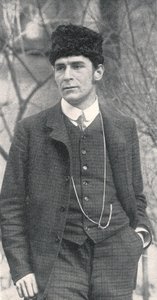
1880 - 1916 , Niemcy

Explore the revolutionary world of Cubism. Discover how masters Pablo Picasso and Georges Braque dismantled reality through geometric abstraction to redefine modern art history.


Bądź na bieżąco z najnowszymi wiadomościami ze świata sztuki, ekskluzywnymi ofertami i inspiracjami dekoratorskimi.
Opowiedz nam o swoim projekcie, a nasi eksperci przygotują dla Ciebie 3 spersonalizowane propozycje dzieł sztuki.
Przygotujemy dla Ciebie 3 propozycje zupełnie za darmo!


 Podgląd w skali
 Wyślij jako kartkę
 Udostępnij
 Szczegóły dzieła

 Pobierz
 Podobne obiekty
 RTG
RTG Pokaz slajdów
 Rozwiń treść







 Opcja ze szkłem jest dostępna wyłącznie w rozmiarach poniżej 110 cm


