


x

 Akryl na płótnieSztuka ściennaRenaissance Revival
 1893
1893 31.0 x 42.0 cm
 Zamek Sforzeski
Ręcznie malowany obraz olejny na płótnie, wykonany na zamówienie przez naszych artystów w wybranym przez Ciebie wymiarze i oprawie. ( Zamów wydruk Przełącz na obraz)





























Wybierz spośród naszych standardowych rozmiarów, które zachowują oryginalne proporcje dzieła sztuki.

Możesz wprowadzić własne wymiary, aby dopasować obraz do konkretnej ramy lub przestrzeni. Jeśli wybrany rozmiar nie będzie odpowiadał proporcjom oryginału, przytniecie dzieło sztuki lub rozszerzymy je o dodatkowe elementy, ręcznie domalowane przez artystę. Przed rozpoczęciem produkcji wyślemy projekt cyfrowy do Twojej akceptacji.
Należy pamiętać, że podgląd na ekranie nie odzwierciedla rzeczywistego przycinania ani rozszerzania obrazu. Tylko projekt dokładnie pokaże ostateczną kompozycję.
Choć oferujemy możliwość zamówienia niestandardowych rozmiarów, zalecamy wybór wymiaru z gotowej listy, aby zachować oryginalne proporcje dzieła.
Dostawa na całym świecie () w ciągu 3–4 tygodni zamiast standardowych 5 tygodni. (8 Sierpień). Bez kompromisów w kwestii jakości.


Plan Sala delle Asse Sforza Castello
Wymiary reprodukcji

Luca Beltrami was far more than a mere builder; he was a guardian of the Lombardian soul, an intellectual whose life’s work served as a bridge between the crumbling grandeur of the past and the burgeoning energy of a modernizing Italy. Born in 1854 in Milan, a city then navigating the complex transitions of the Austro-Hungarian era and the fervent spirit of the Risorgimento, Beltrami possessed a sensitivity to the layers of history that define urban landscapes. His early years were marked by a profound duality of mind—a rigorous mathematical precision paired with an exquisite artistic temperament. It is whispered in historical accounts that his talent for fine detail was first discovered during a mathematics lesson, when the esteemed Francesco Brioschi caught the young student meticulously etching designs onto copper plates. This early intersection of science and art would become the hallmark of his entire career.
His academic journey took him through the prestigious halls of the Polytechnic University of Milan and the Brera Academy, where he studied under the influential Camillo Boito. However, it was his pilgrimage to Paris that truly expanded his architectural vocabulary. Immersed in the atmosphere of the École des Beaux-Arts, Beltrami entered the ateliers of masters such as Jean-Louis Pascal and Gabriel Daviult, and came into contact with the legendary Charles Garnier. This exposure to French neoclassicism and the grand urban planning of Paris provided him with a sophisticated lens through which to view his native Milan. He did not merely seek to copy European trends; rather, he sought to translate their elegance into a local vernacular that respected the unique Lombard heritage.
While history remembers Beltrami primarily as an architect of monumental restoration, his artistic output was equally diverse, encompassing the delicate medium of etching. His graphic works, such as his evocative depictions of the Arch of Titus in Rome or the serene columns of Saint Mark’s Square, reveal a man deeply enamored with the interplay of light and shadow on ancient surfaces. Through his etchings, he captured the ephemeral beauty of architectural textures, documenting the very details that he would later fight to preserve in stone. This artistic practice was not a separate pursuit but an essential component of his architectural methodology, allowing him to study and communicate the structural nuances of the monuments he loved.
The true magnitude of Beltrami’s contribution lies in his transformative work on Milan’s most iconic landmarks. His tenure as a restorer was characterized by a scientific devotion to authenticity. Between 1891 and 1905, he undertook the Herculean task of restoring the Castello Sforzesco, a project that required him to act as both an archaeologist and an artist. He meticulously researched original designs to ensure that every reconstructed facade remained true to its medieval and Renaissance roots. His influence can be seen across the city in various capacities:
As an all-round intellectual—a conservator, historian, journalist, and politician—Beltrami understood that a city’s identity is inextricably linked to its physical continuity. He viewed the demolition of historic structures not merely as urban progress, but as a loss of collective memory. His career was a constant struggle to balance the necessity of modern development with the sacred duty of historical preservation. Even as Milan expanded and modernized, Beltrami’s hand was present, ensuring that the new layers of the city did not erase the old.
By the time of his death in 1933, Luca Beltrami had left an indelible mark on the skyline of Lombardy. His legacy is found in the very stones of the Castello Sforzesco and in the quiet dignity of the churches he helped restore. He taught future generations that architecture is not just about creating new spaces, but about honoring the dialogue between what was and what is yet to be. Through his meticulous research, his exquisite etchings, and his architectural triumphs, he ensured that the glory of Milan’s past would remain a living, breathing part of its future.

1854 - 1933 , Italy

Odkryj fascynujący świat renesansu! Ekspercka analiza humanizmu, innowacji artystycznych i dzieł mistrzów takich jak Leonardo da Vinci. Poznaj historię i wpływ tej epoki na sztukę europejską.

Odkryj fascynującą historię i technikę malarstwa olejnego! Poznaj sekrety mistrzów, wpływ światłocienia (chiaroscuro) oraz emocjonalny rezonans klasycznych dzieł. Poradniki konserwacji i trwałości obrazów.

Explore the revolutionary art of Antonio da Correggio, a master of Renaissance illusionism and chiaroscuro. Discover his frescoes, mythological paintings & lasting influence on Baroque art. Expert analysis & key works featured.
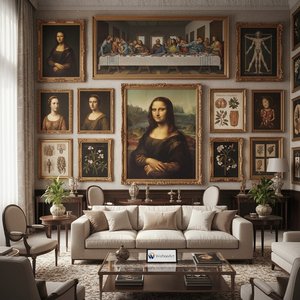
Odkryj 25 arcydzieł Leonardo da Vinci! Poznaj historię Mona Lisy, Ostatniej Wieczerzy i innych renesansowych perełek. Reprodukcje obrazów najwyższej jakości – inspiracje do wnętrz na Most-Famous-Paintings.com.
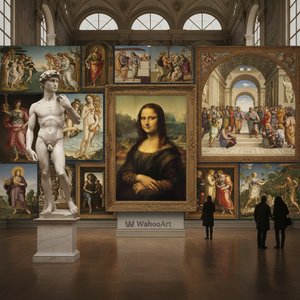
Poznaj 10 renesansowych arcydzieł Leonarda da Vinci, Michała Anioła i Rafaela! Odkryj historie, techniki i wpływ malarstwa renesansowego na sztukę. Reprodukcje obrazów najwyższej jakości – Most-Famous-Paintings.com


Bądź na bieżąco z najnowszymi wiadomościami ze świata sztuki, ekskluzywnymi ofertami i inspiracjami dekoratorskimi.
Opowiedz nam o swoim projekcie, a nasi eksperci przygotują dla Ciebie 3 spersonalizowane propozycje dzieł sztuki.
Przygotujemy dla Ciebie 3 propozycje zupełnie za darmo!


 Podgląd w skali
 Wyślij jako kartkę
 Udostępnij
 Szczegóły dzieła

 Pobierz
 Podobne obiekty
 RTG
RTG Pokaz slajdów
 Rozwiń treść







 Opcja ze szkłem jest dostępna wyłącznie w rozmiarach poniżej 110 cm


