


x

 Acrílico sobre telaArte de ParedeRomanticism
 1797
1797 365.0 x 320.0 cm
 Museu Hermitage
Óleo sobre tela pintado à mão no seu tamanho e moldura, feito sob encomenda pelos nossos artistas. ( Ver impressão do pedido Baixar imagem em alta resolução)





























Escolha entre os nossos tamanhos pré-definidos que respeitam as proporções originais da obra de arte.

Pode inserir as suas próprias dimensões para se adequar a uma moldura ou espaço específico. Se o tamanho selecionado não corresponder às proporções da imagem original, iremos cortar a obra de arte ou estender a pintura com elementos adicionais pintados à mão. Um esboço digital será enviado para sua aprovação antes do início da produção.
Tenha em atenção que a pré-visualização no ecrã não reflete o corte ou extensão real. Apenas o esboço mostrará com precisão a composição final.
Embora tamanhos personalizados estejam disponíveis, recomendamos selecionar uma dimensão da lista predefinida para preservar as proporções originais.
Entrega mundial () em 3 a 4 semanas, em vez das 5 semanas padrão. (7 Agosto). Sem comprometer a qualidade.


Design da Decoração para a Porta Triunfal Vermelha de Moscou
Dimensões da Reprodução

Born in the serene landscape of Longarone, Italy, in 1751, Pietro di Gottardo Gonzaga emerged as a singular force within the Venetian artistic tradition. While many of his contemporaries sought the patronage of grand ecclesiastical institutions or the opulent halls of Italian palaces, Gonzaga carved out a niche that bridged the gap between architectural precision and theatrical enchantment. His early life was deeply rooted in the tactile world of art; as the son of the painter and sculptor Giovanni Battista Gonzaga, he was raised amidst the scent of pigments and the dust of marble. This familial immersion provided him with a foundational mastery of form and light, which he would later refine under the guidance of Giuseppe Bolognese, a master of chiaroscuro whose influence is visible in the dramatic shadows and luminous depths of Gonzaga’s most celebrated works.
As his career matured, Gonzaga’s artistry transcended simple representation, evolving into what he himself poetically described as "music for the eyes." This philosophy—the idea that perspective and visual composition could mirror the emotional fluctuations of a musical score—became the heartbeat of his creative output. He was not merely a painter but a master of trompe-l’œil, an artist capable of deceiving the eye through the sheer brilliance of his technical skill. His work often functioned as a bridge between reality and fantasy, particularly in his renowned stage designs. Whether working in Italy or later within the Russian Empire, Gonzaga possessed the uncanny ability to manipulate space, using pen, ink, and wash to create architectural vistas that felt both monumentally solid and ethereally dreamlike.
The breadth of Gonzaga’s oeuvre is a fascinating study in duality, ranging from the rigorous technicality of architectural studies to the sweeping grandeur of imperial celebrations. His sketches for temple designs and religious iconography reflect the Enlightenment's reverence for classical antiquity and humanist ideals. In these works, one finds a profound engagement with the principles of Andrea Palladio, as he sought to revive the dignity of ancient Roman structures through meticulous detail and balanced composition. His contributions to San Pietro Martire in Venice stand as enduring testaments to this period, where his frescoes breathed life into sacred spaces through dynamic narratives and a luminous palette.
However, it was perhaps in the realm of the theatrical and the monumental that Gonzaga’s imagination truly soared. His designs for the Russian court, particularly during the reign of Emperor Paul I, showcased an ambitious vision of imperial splendor. Notable achievements include:
Ultimately, the historical significance of Pietro di Gottardo Gonzaga lies in his ability to harmonize the technical demands of an architect with the emotive power of a storyteller. He did not merely document the world; he reimagined it through a lens of classical beauty and theatrical wonder. Even as the centuries have passed, his "music for the eyes" continues to resonate, inviting viewers to step through the thresholds of his imagined temples and into a realm where art and architecture become one.

1751 - 1831 , Italy

Descubra as 25 obras-primas do Metropolitan Museum of Art em Nova York! Explore a história de Van Gogh, Monet e outros artistas renomados. Encontre reproduções de arte exclusivas para decorar sua casa com elegância. Most-Famous-Paintings.com – Sua fonte de inspiração artística.

Descubra as 25 obras-primas do Detroit Institute of Arts! Explore a história de Van Gogh, Monet e outros artistas icônicos. Encontre reproduções de arte de alta qualidade para decorar sua casa com elegância. Most-Famous-Paintings.com: A sua fonte de inspiração artística.
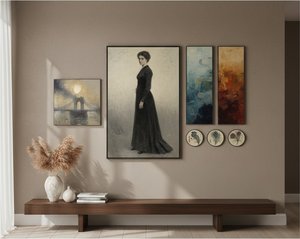
Descubra as 25 obras-primas de James Abbott McNeill Whistler, o mestre do Impressionismo e dos 'Nocturnes'. Explore a história por trás de cada pintura, cores e técnicas. Encontre reproduções de arte exclusivas para decorar sua casa com elegância em Most-Famous-Paintings.com!
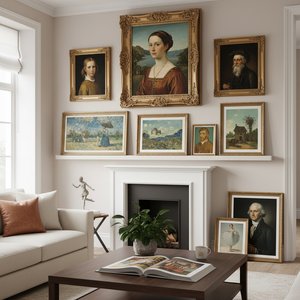
Descubra os 25 tesouros da National Gallery of Art, Washington! Explore a história de Cézanne, Matisse, Picasso e outros mestres. Encontre reproduções de arte exclusivas para decorar sua casa com elegância. Inspire-se e explore a coleção completa em Most-Famous-Paintings.com.
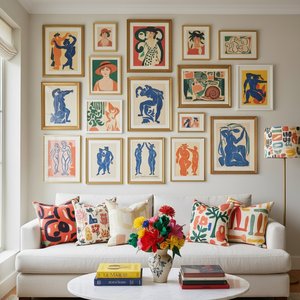
Descubra as 25 obras-primas de Henri Matisse que revolucionaram a arte moderna! Explore o Fauvismo, cores vibrantes e a história por trás dos quadros mais famosos do artista. Encontre reproduções de alta qualidade para decorar sua casa com Most-Famous-Paintings.com.


Fique por dentro das últimas notícias de arte, ofertas exclusivas e ideias de decoração.
Conte-nos sobre o seu projeto e os nossos especialistas em arte fornecerão 3 sugestões de arte personalizadas.
Deixe que selecionamos 3 opções especialmente para você – Grátis!


 Visualizar em escala
 Enviar
 Compartilhar
 Ver detalhes

 Baixar
 Semelhantes
 Raio X
 Apresentação de slides
 Ver mais







 A opção de vidro está disponível apenas para tamanhos inferiores a 110 cm


