x

Óleo sobre tela pintado à mão no seu tamanho e moldura, feito sob encomenda pelos nossos artistas. ( Ver impressão do pedido Baixar imagem em alta resolução)





























Escolha entre os nossos tamanhos pré-definidos que respeitam as proporções originais da obra de arte.

Pode inserir as suas próprias dimensões para se adequar a uma moldura ou espaço específico. Se o tamanho selecionado não corresponder às proporções da imagem original, iremos cortar a obra de arte ou estender a pintura com elementos adicionais pintados à mão. Um esboço digital será enviado para sua aprovação antes do início da produção.
Tenha em atenção que a pré-visualização no ecrã não reflete o corte ou extensão real. Apenas o esboço mostrará com precisão a composição final.
Embora tamanhos personalizados estejam disponíveis, recomendamos selecionar uma dimensão da lista predefinida para preservar as proporções originais.
Entrega mundial () em 3 a 4 semanas, em vez das 5 semanas padrão. (8 Agosto). Sem comprometer a qualidade.


Retrato de Antonin Proust (Estudo)
Dimensões da Reprodução
Édouard Manet’s *Portrait of Antonin Proust (Study)* stands as a monumental work, not merely a likeness, but a declaration of artistic intent. Completed in 1877, this painting transcends the conventions of academic portraiture, boldly embracing a new approach to depicting contemporary life and marking a decisive break with the traditions of the Salon. It’s a piece that whispers of a burgeoning modernity, capturing a moment of quiet contemplation within a man – Antonin Proust, a prominent diplomat and literary figure – imbued with an undeniable presence, far removed from the idealized figures favored by earlier generations.
Manet's genius lies in his masterful manipulation of light and color. He deliberately eschews the meticulous detail and smooth tonal transitions that were hallmarks of academic painting. Instead, he employs loose, expressive brushstrokes – a radical departure from established norms – and a palette dominated by warm yellows and oranges. This creates an atmosphere simultaneously intimate and subtly luminous, inviting us into Proust’s world with a sense of immediacy and emotional resonance. The deliberate rejection of precise detail wasn't simply stylistic; it was a fundamental shift towards the burgeoning Impressionistic aesthetic, signaling a new era in art.
The historical context surrounding *Portrait of Antonin Proust (Study)* is crucial to understanding its significance. Painted during Manet’s formative years as an Impressionist, this work embodies the movement's ambition: to capture fleeting impressions of reality – a deliberate move away from the grand narratives and mythological allegories that had dominated art for centuries. It perfectly reflects the spirit of a Parisian landscape eager for innovation, a city brimming with change and new artistic voices. The painting isn’t just a portrait; it’s a snapshot of a specific moment in time, imbued with the energy and dynamism of modern life.
The muted color scheme – primarily yellows and oranges – is far more than mere decoration. It acts as a conduit for conveying Proust's character and inner state. These warm hues evoke feelings of warmth, sophistication, and perhaps even a touch of melancholy, reflecting the complexities inherent in human experience. Manet’s subtle portrayal of Proust’s gaze is particularly compelling; it invites contemplation about his thoughts and emotions – a hallmark of Impressionist psychology, encouraging us to look beyond the surface and delve into the subject's soul.
The background plays an equally important role. The yellowish-orange backdrop isn’t simply a neutral space; it subtly enhances the painting’s vintage charm and contributes to its sense of depth. It contrasts beautifully with Proust’s attire, emphasizing his formal demeanor and reinforcing the portrait's connection to a specific historical period. Notice, too, the meticulous rendering of his suit and tie – details that, despite Manet’s stylistic choices, demonstrate his dedication to capturing accurate representations of everyday objects, elevating the work beyond mere visual depiction.
Édouard Manet's *Portrait of Antonin Proust (Study)* is a pivotal work in art history, serving as a crucial stepping stone towards the stylistic breakthroughs that defined Impressionism and profoundly influencing countless artists who followed. Its enduring appeal lies in its ability to convey profound emotion through understated technique – a legacy that continues to inspire admiration and scholarly debate. Consider, for example, Gustave Courbet’s *The Stone Breakers*, which similarly championed realism and challenged academic conventions, or Gustave Courbet's *Head of Jean Baptiste Faure*, another masterful portrayal capturing a moment of quiet introspection. For a broader perspective, delve into the grandeur of Gustave Courbet: 705px-L°/°27 Origine du monde – an ambitious canvas that embodies Courbet’s commitment to depicting the natural world with uncompromising honesty.
This painting isn't just a beautiful reproduction; it’s a window into a transformative period in art history, offering a glimpse of Manet’s revolutionary vision and his profound impact on the course of modern art. It is a testament to the power of observation, emotion, and artistic innovation.


1832 - 1883 , França
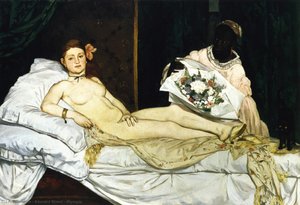
Descubra as 25 obras-primas de Édouard Manet, o mestre do Impressionismo! Explore a história por trás de 'Le Déjeuner sur l'herbe', 'Olympia' e mais. Reproduções de arte exclusivas para decorar sua casa com elegância. Most-Famous-Paintings.

Explore the life & art of Édouard Manet, a pivotal figure bridging Realism and Impressionism. Discover his revolutionary techniques, controversial masterpieces like 'Olympia,' and lasting impact on modern art history.

Journey through Impressionistic Realism with 10 iconic masterpieces by Monet, Renoir & Van Gogh. Explore art history, techniques & find museum-quality reproductions for your home at Most-Famous-Paintings.com. Discover all masterpieces online!
Descubra os 10 quadros impressionistas que revolucionaram a arte! Explore Monet, Renoir, Degas e outros mestres. História, técnica e cores vibrantes para inspirar sua decoração. Encontre reproduções de alta qualidade em

Descubra 10 obras-primas do Realismo! Explore a história, técnica e emoção por trás de Courbet, Millet e outros artistas icônicos. Encontre reproduções de arte exclusivas para decorar sua casa com Most-Famous-Paintings.com.


Fique por dentro das últimas notícias de arte, ofertas exclusivas e ideias de decoração.
Conte-nos sobre o seu projeto e os nossos especialistas em arte fornecerão 3 sugestões de arte personalizadas.
Deixe que selecionamos 3 opções especialmente para você – Grátis!


 Visualizar em escala
 Enviar
 Compartilhar
 Ver detalhes

 Baixar
 Semelhantes
 Raio X
 Apresentação de slides

 Ver mais







 A opção de vidro está disponível apenas para tamanhos inferiores a 110 cm