Juan de Flandes: Bridging Flemish Tradition and Spanish Renaissance
Juan de Flandes remains an enigmatic figure in the history of Early Netherlandish painting, shrouded in mystery surrounding his true identity. While scholars debate whether he was “jan van der straat” or perhaps another unnamed artist bearing a similar moniker—suggested by an inscription on one remarkable work—his undeniable talent shone brightly during his prolific career spanning from approximately 1460 to 1519, primarily active in Spain.
Born likely in Flanders (modern Belgium), Juan’s artistic training undoubtedly occurred within the vibrant artistic milieu of Ghent. Evidence points to connections with luminaries like Joos van Wassenhove and Hugo van der Goes—artists who epitomized the flourishing Ghent School style—demonstrating a foundational grounding in Flemish techniques and aesthetic sensibilities. His formative years were spent absorbing the stylistic innovations of Ghent, establishing him as part of a significant artistic movement.
- Royal Patronage & The Spanish Court: Juan’s career ascended to prominence when he secured patronage from Queen Isabella I of Castile in 1496, marking a pivotal moment that propelled him into the heart of the Spanish Renaissance. He served Isabella faithfully until her death in 1504, becoming “court painter” during this period.
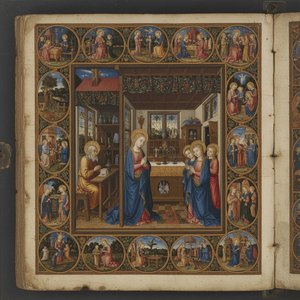
His artistic output was remarkably diverse, encompassing portraits of the royal family—particularly Isabella and Ferdinand—and most notably a monumental series of small panels commissioned for a polyptych altarpiece dedicated to the Virgin Mary. These panels, now dispersed across institutions like the Prado Museum in Madrid and the National Gallery of Art in Washington D.C., exemplify his masterful blending of Flemish detail with Spanish artistic tastes and landscape considerations. The sheer scale of his contribution to the polyptych project underscores his ambition
- Notable Achievements: Juan’s meticulous attention to detail—a hallmark of Flemish painting—combined with a sophisticated understanding of spatial perspective and illumination—created works that resonated with both artistic heritage and cultural context.
Juan de Flandes' paintings are characterized by refined coloring—often favoring “rather acid hues”—and a distinctive visual effect achieved through dividing space into thin planes—a technique honed in Ghent—resulting in a captivating illusion of depth. He skillfully adapted his style to suit the conventions of Spanish Renaissance art, creating masterpieces that continue to inspire awe and admiration centuries later. Following Isabella’s reign, Juan turned his artistic energies towards ecclesiastical commissions in Spain, notably undertaking a monumental reredos for Salamanca Cathedral and establishing himself in Palencia where he resided with his wife until her passing in December 1519. His legacy as one of the foremost painters of his time is secured by his enduring contribution to European art history.