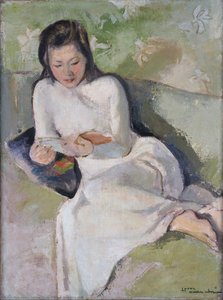
Luong Xuan Nhi: A Vision of Rural Vietnam
Luong Xuan Nhi, born in Vietnam (date unknown), stands as a pivotal figure in 20th-century Vietnamese art, renowned for his deeply evocative and remarkably realistic depictions of rural life. His work transcends mere representation; it’s imbued with a profound understanding of the human condition within the context of Vietnamese tradition and landscape. Initially trained at the Hanoi Fine Arts School in 1937, Nhi quickly distinguished himself through a distinctive style characterized by meticulous detail, subtle color palettes, and an ability to capture both the beauty and hardship of everyday existence. He wasn’t simply painting scenes; he was translating emotions and experiences onto canvas, offering viewers intimate glimpses into a vanishing world.
Early Life and Artistic Formation
Nhi's artistic journey began within the vibrant cultural landscape of pre-war Vietnam. His formative years coincided with a period of significant social and political change, marked by growing nationalist sentiment and increasing Western influence. This context profoundly shaped his artistic sensibilities. He was a founding member of FARTA (Foyer de l’Art Annamite), an influential group dedicated to promoting Vietnamese art and culture during the 1940s. This association exposed him to fellow artists like To Ngoc Van, Tran Van Can, and Le Van De – all grappling with questions of identity, tradition, and modernity. The philosophical currents of the time, particularly those espoused by the ‘Tu Luc Van Doan’ literary movement, which critiqued societal inequalities and championed the plight of the working class, deeply resonated within his work. Notably, Nhi's artistic approach diverged from many of his contemporaries who favored idealized portrayals of women; instead, he focused on depicting the realities of peasant life – their labor, resilience, and quiet dignity.
Key Works and Artistic Style
Luong Xuan Nhi’s oeuvre is characterized by a remarkable sensitivity to light, texture, and color. His most celebrated work, ‘La Petite Gardienne de Buffle’ (1937), exemplifies his signature style – a poignant portrait of a young girl tending buffalo in a rural setting. The painting isn't merely a visual record; it’s a meditation on childhood innocence, the connection between humans and nature, and the rhythms of agricultural life. Other significant works include “Three Young Ladies” (1936), which explores themes of social dynamics within a traditional Vietnamese family, and "Fisherman’s Family" (1940), offering a glimpse into the daily struggles and joys of a fishing community. His use of muted earth tones – greens, browns, ochres – creates a sense of authenticity and immediacy, while his meticulous attention to detail—the wrinkles on a farmer's face, the texture of woven fabrics—adds layers of meaning to each composition. He was often described as “the master of the color green,” reflecting his deep connection to Vietnam’s verdant landscapes.
Political Engagement and Later Years
Following the First Indochina War, Nhi became increasingly involved in Vietnamese politics, aligning himself with socialist ideals. He spent considerable time abroad, particularly in Eastern European countries, studying artistic techniques and engaging with communist movements. This period significantly influenced his work, leading to a greater emphasis on social realism and themes of collective struggle. He returned to Vietnam and continued to teach at the University of Fine Arts, shaping generations of Vietnamese artists. His later works often depicted scenes of rural life alongside portraits of political figures and propaganda imagery reflecting the evolving socio-political landscape of post-war Vietnam. Despite facing censorship during periods of political upheaval, Nhi remained committed to his artistic vision, producing a substantial body of work that offers invaluable insights into Vietnamese history and culture.
Legacy and Historical Significance
Luong Xuan Nhi’s contribution to Vietnamese art is undeniable. He stands as one of the most important 20th-century painters in the country, not only for his technical skill but also for his ability to capture the essence of Vietnamese rural life with such profound empathy and realism. His work serves as a powerful reminder of Vietnam's rich cultural heritage and its enduring connection to the land. His paintings are now held in prominent collections worldwide, ensuring that his artistic legacy continues to inspire and educate audiences for generations to come. He is remembered not just as an artist, but as a chronicler of a disappearing world – a testament to the beauty and resilience of Vietnamese culture.