Early Life and Career
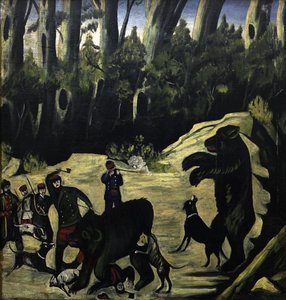
Niko Pirosmani (Georgian: ნიკოლოზ ფიროსმანაშვილი), born Nikoloz Aslanis Dze Pirosmanashvili (May 5, 1862) in Mirzaani, Kakheti Province, Georgia, was a Georgian primitivist painter who posthumously rose to prominence. Relatively poor for most of his life, he worked a variety of ordinary jobs. His rustic, everyday scenes are celebrated today for their depiction of the Georgia of Pirosmani’s lifetime, and he has become one of the country's most beloved artistic figures. He was orphaned at a young age, left in the care of his two elder sisters. Artistic style and themes Pirosmani's artistic style is characterized by its naive and primitivist nature, often depicting everyday scenes of Georgian life. His paintings, mostly done on oilcloth, showcase his unique compositional consideration and frontal placements of figures. Pirosmani was fond of nature and rural life, rarely employing city landscapes in his work. Artistic Style and Themes
Pirosmani’s distinctive approach to painting involved applying pigment directly onto black oilcloth—a technique that prioritized expressive gesture over meticulous detail. This method allowed him to capture the essence of Georgian culture and traditions with remarkable immediacy. His compositions often featured figures positioned prominently at the center, emphasizing their importance within the narrative. Notable Works and Exhibitions
Some of Pirosmani’s most celebrated paintings include “Musha with a Wineskin,” which embodies the spirit of rural Georgia and captures a moment of simple human connection. “Georgian Wedding” portrays a traditional Georgian ceremony with vibrant colors and dynamic movement, reflecting the cultural heritage of his time. “Portrait of Zhdanevich” is considered one of Pirosmani’s finest achievements—a portrait of Mikhail Le-Dantyu, which garnered considerable admiration from Kirill Zdanevich and his brother Ilya Zdanevich. These works were exhibited in museums across Russia and Ukraine, furthering their recognition as pivotal pieces within the primitivism art movement. Legacy and Posthumous Recognition
Despite facing hardship throughout his life, Pirosmani’s legacy endured beyond his death in April 1918 due to malnutrition during the influenza pandemic. His paintings gained prominence after the First Georgian Painter's Exhibition in 1918, cementing his place as a national icon. Today, his artworks are showcased prominently at the Art Museum of Georgia and the Historical-Ethnographic Museum of Sighnaghi, attracting over 350,000 visitors annually—a testament to the enduring fascination with this extraordinary artist.