Early Life and Training
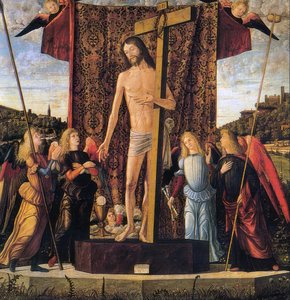
Vittore Carpaccio, a Venetian painter of the Early Venetian Renaissance, was born around 1465 in Venice. He descended from a family of fishermen and boat builders—a heritage that instilled in him an appreciation for craftsmanship and observation of nature. His artistic education began under the tutelage of Gentile Bellini, arguably the most influential artist of his time and a cornerstone of Venetian painting tradition. Bellini’s workshop fostered Carpaccio's understanding of disegno (drawing) and sfumato (subtle shading), techniques that would become hallmarks of his distinctive style. This formative apprenticeship ensured Carpaccio’s future success as one of Venice’s foremost artists.
Artistic Style and Influences
Carpaccio’s artistic approach was remarkably conservative, diverging significantly from the humanist fervor sweeping across Italy during his lifetime. Unlike many contemporaries who embraced innovative ideas and experimented with new compositional strategies, Carpaccio adhered to established conventions—a deliberate choice that reflects a deep respect for Venetian artistic heritage. His style bears the unmistakable imprint of Antonello da Messina’s influence, particularly in its meticulous attention to detail and masterful use of color. However, Carpaccio's work also absorbed elements from Early Netherlandish painting, notably the dramatic lighting effects and expressive emotionalism characteristic of artists like Rogier van der Weyden and Hans Memling. This unique synthesis resulted in a Venetian style that possessed both solidity and lyricism—a captivating blend of realism and spiritual contemplation.
Notable Works
Carpaccio’s prolific output spanned from 1490 to 1519, cementing his position as one of the earliest masters of the Venetian Renaissance. Among his most celebrated achievements is undoubtedly “The Legend of Saint Ursula,” a monumental cycle of nine paintings housed in the Gallerie dell'Accademia in Florence. This ambitious undertaking showcases Carpaccio’s unparalleled skill in narrative painting—capturing complex stories with breathtaking visual clarity and conveying profound moral lessons. The altarpiece "Glory of St. Ursula" exemplifies Carpaccio’s masterful manipulation of light and color, mirroring Bellini’s stylistic brilliance and demonstrating his ability to evoke a sense of ethereal beauty. Furthermore, “Miracle of the Relic of the Cross at the Ponte di Rialto” stands as a testament to Carpaccio's compositional prowess—balancing intricate detail with harmonious balance and conveying palpable emotion through expressive gestures and facial expressions.
Career Highlights and Legacy
Carpaccio’s artistic career flourished during a period of considerable artistic dynamism in Venice, where he competed alongside luminaries like Bellini and Giorgione. His exploration of orientalist themes—evident in “St. George Baptizing the Selenites”—reflects the burgeoning interest in the Levant during the Renaissance, fueled by Venetian trade routes and scholarly expeditions. Despite being somewhat overshadowed by his more flamboyant contemporaries, Carpaccio’s enduring legacy resides in his unwavering commitment to artistic integrity and his contribution to establishing Venetian painting as a bastion of humanist tradition. His meticulous technique and profound understanding of narrative storytelling continue to inspire artists today.
References and Further Reading