


x

 Oil On CanvasWallArtGerman Expressionism
 1913
1913 60.0 x 80.0 cm
Ročno slikano olje na platnu v vaši izbiri velikosti in okvirja, izdelano po naročilu naših umetnikov. ( Kupi tisk Kupi digitalno sliko)





























Izberite eno od naših vnaprej določenih velikosti, ki ustrezajo prvotnim proporcijam umetničkega dela.

Svoje dimenzije lahko vnesete tako, da se prilagodite določenemu okvirju ali prostoru. Če izbrana velikost ne ustreza razmerjem originalne slike, bomo umetniško delo obrezali ali sliko dopolnili z dodatnimi ročno naslikanimi elementi. Pred začetkom proizvodnje vam bo poslan digitalni osnutek v odobritev.
Upoštevajte, da predogled na zaslonu ne odraža dejanskega obrezovanja ali podaljšanja. Le osnutek bo natančno prikazal končno kompozicijo.
Čeprav so na voljo velikosti po meri, priporočamo izbiro dimenzije s preddefiniranega seznama, da ohranimo originalne razmere.
Svetska dostava () za 3/4 nedelje umesto uobičajenih 5 nedelja. (14 avgust). Bez kompromisa po pitanju kvaliteta.


Long Yellow Horse
Velikost reprodukcije
Franz Marc's *Long Yellow Horse*, painted in 1913, isn’t merely a depiction of an animal; it’s a profound meditation on the relationship between humanity and nature, faith and instinct. This arresting canvas, currently residing at the Nassau County Museum of Art in Roslyn Harbor, pulsates with a raw emotionality that speaks to the core of Expressionist philosophy – a desire to convey inner experience rather than simply represent external reality. The painting immediately commands attention through its scale: measuring 60 x 80 centimeters, it’s an immersive work designed to draw the viewer into its world.
At first glance, the composition appears straightforward—a solitary yellow horse dominates the frame, set against a muted background of earthy tones and punctuated by the suggestion of human figures. However, closer inspection reveals a carefully constructed interplay of forms and colors. Marc’s masterful use of Cubist principles – fracturing shapes and simplifying forms – isn't about dissecting reality; it’s about distilling its essence. The horse itself is rendered with angularity and abstraction, its body broken down into geometric planes that simultaneously suggest movement and stillness. This deliberate distortion invites us to consider the animal not as a fixed object, but as a living embodiment of primal energy.
Marc's signature use of color is utterly central to *Long Yellow Horse*. The dominant yellow isn’t a cheerful, sunny hue; it’s a rich, almost bruised ochre—a color associated with the earth, decay, and even sacrifice. This deliberate choice imbues the horse with a sense of vulnerability and spiritual weight. The surrounding browns and greens further ground the image, creating a visual dialogue between the animal's vibrant presence and the natural world from which it emerges. The application of paint is equally significant; Marc employs thick, impasto strokes, building up layers of color to create texture and depth. This tactile quality invites us to reach out and touch the canvas, fostering a sense of intimacy with the artwork.
Technically, the painting utilizes oil on canvas, a medium that allows for both luminous color saturation and textural complexity – qualities perfectly suited to Marc’s expressive vision. The brushwork is loose and gestural, conveying a feeling of immediacy and spontaneity. It's as if Marc was attempting to capture not just the appearance of the horse, but its very spirit.
To understand *Long Yellow Horse*, it’s crucial to consider Franz Marc’s broader artistic and philosophical context. Born in Munich in 1880, Marc was deeply influenced by his early exposure to religious thought, a legacy that continued to inform his work throughout his career. He co-founded the influential journal *Der Blaue Reiter* (The Blue Rider), a group of artists who sought to explore spirituality through art. Marc believed that animals possessed a purity and innocence unattainable by humans, representing a connection to a more fundamental reality.
The figures in the background – a man and a woman – are deliberately ambiguous, almost spectral. They aren’t actively engaged with the horse; instead, they seem to observe it from a distance, perhaps contemplating its significance. The dog near the horse further reinforces this theme of observation and connection. Some art historians interpret these figures as representing humanity's yearning for spiritual understanding, mirroring the horse’s own quest for meaning within the natural world.
*Long Yellow Horse* transcends its specific subject matter to become a powerful symbol of the human condition. It speaks to our innate connection with nature, our spiritual longings, and our capacity for both wonder and vulnerability. The painting’s emotional impact is profound—it evokes feelings of awe, melancholy, and perhaps even a touch of unease. It's a work that invites repeated viewing, revealing new layers of meaning with each encounter. For those seeking an artwork that embodies the spirit of modernism while retaining a deeply human resonance, *Long Yellow Horse* remains a compelling and unforgettable masterpiece.

Der Blaue Reiter
Franz Marc, nemški slikar, risar in grafik, * 8. februar 1880, München, Nemško cesarstvo (zdaj Nemčija), † 4. marec 1916, Braquis, Francija.
Velja za enega najpomembnejših ekspresionističnih slikarjev v Nemčiji. Ob Vasiliju Kandinskim je bil soustanovitelj uredniške skupine Der Blaue Reiter, ki je svojo prvo razstavo odprla v Münchnu 18. decembra 1911. Blaue Reiter je nastal iz Novega münchenskega združenja umetnikov, katerega član je bil Marc kratek čas.
Marc je imel zamisel o študiju klasične filologije ali teologije kot njegov starejši brat Paul - kot je v pismu leta 1897 povedal pastorju Ottu Schlierju, katerega tečaji birme so nanj naredili trajen vtis.
Marc je študiral umetnostno-teoretične spise za almanah Der Blaue Reiter in druge publikacije.
Franz Marc se je rodil 8. februarja 1880 kot drugi sin družine Marc na Schillerstrasse 35 v Münchnu. Njegov oče Wilhelm Marc, ki je sprva končal pravo, preden je študiral slikarstvo na Akademiji za likovno umetnost v Münchnu, je bil krajinski in žanrski slikar.
Izhajal iz bavarske uradniške družine. Njegova mati Sophie, rojena Maurice, je prišla iz Alzacije in je otroštvo preživela v francosko govoreči Švici, kjer je obiskovala strogi kalvinistički internat.
Njegovi predniki bili aristokrati, z prijatelji med umetniki kot tudi ljudmi znanstvenimi.
Marc je študiral literaturo in filozofijo, zlasti delo Thomasa Carlyla in Friedricha Nietzscheja. Zaradi težav v mladosti je bila njegova vera zelo kritična do Münchnega mladostnega gibanja in mesta življenja.
Njegov brat Paul je študiral klasično filologijo kot njegov starejši brat Paul - kot je v pismu leta 1897 povedal pastorju Ottu Schlierju, katerega tečaji birme so nanj naredili trajen vtis.
Njegova zgodnja dela še v naturalističnem slogu akademizma, vendar se po obisku Pariza leta 1907 pod vplivom Gauguina in van Gogha posvetil postimpresionizmu. Marc je študiral umetnostno-teoretične spise za almanah Der Blaue Reiter in druge publikacije.
Marc je ustanovni član skupine Der Blaue Reiter (Modri jezdec) v Münchnu leta 1911. Blaue Reiter je nastal iz Novega münchenskega združenja umetnikov, katerega član je bil Marc kratek čas.
Marc je ustvarjal umetnostno-teoretične spise za almanah Der Blaue Reiter in druge publikacije.
Marc je ustvarjal umetnostno-teoretične spise za almanah Der Blaue Reiter in druge publikacije.
Marc je umrl 4. marca 1916, v času Prve svetovne vojne, kar je bila tragedija za svet umetnosti.
Njegovo delo še vedno resonira danes, zavzdihnjuje generacije umetnikov in očarati občinstvo z globoko emotivnostjo in duhovno vrednostjo. Marc je znan kot pionir nemške ekspresionistične umetnosti.
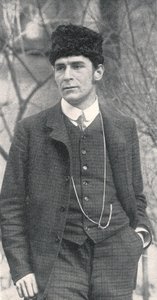
1880 - 1916 , Nemčija

Explore the revolutionary world of Cubism. Discover how masters Pablo Picasso and Georges Braque dismantled reality through geometric abstraction to redefine modern art history.


Bodite na sešte, s najnovejšimi novicami iz sveta umetnosti, ekskluzivnimi ponudbami in idejami za dekoracijo.
Povejte nam o svojem projektu in naši strokovnjaki za umetnost vam bodo pripravili 3 prilagojene predloge umetniških del.
Naj vam izberemo 3 možnosti – popolnoma brezplačno!


 Predogled
 Pošlji
 Deli
Deli
 Podrobnosti o delu

 Prenesi
 Podobni izdelki
 Rentgenski posnetek
 Predvajaj diaporama
 Razviljaj več







 Možnost stekla je na voljo le za velikosti pod 110 cm


