x
 Akril na platnuStenska umetnostPost-Impressionism
 1883
1883 73.0 x 54.0 cm
Ročno slikano olje na platnu v vaši izbiri velikosti in okvirja, izdelano po naročilu naših umetnikov. ( Kupi tisk Kupi digitalno sliko)





























Izberite eno od naših vnaprej določenih velikosti, ki ustrezajo prvotnim proporcijam umetničkega dela.

Svoje dimenzije lahko vnesete tako, da se prilagodite določenemu okvirju ali prostoru. Če izbrana velikost ne ustreza razmerjem originalne slike, bomo umetniško delo obrezali ali sliko dopolnili z dodatnimi ročno naslikanimi elementi. Pred začetkom proizvodnje vam bo poslan digitalni osnutek v odobritev.
Upoštevajte, da predogled na zaslonu ne odraža dejanskega obrezovanja ali podaljšanja. Le osnutek bo natančno prikazal končno kompozicijo.
Čeprav so na voljo velikosti po meri, priporočamo izbiro dimenzije s preddefiniranega seznama, da ohranimo originalne razmere.
Svetska dostava () za 3/4 nedelje umesto uobičajenih 5 nedelja. (18 avgust). Bez kompromisa po pitanju kvaliteta.


Farm v Osny
Velikost reprodukcije
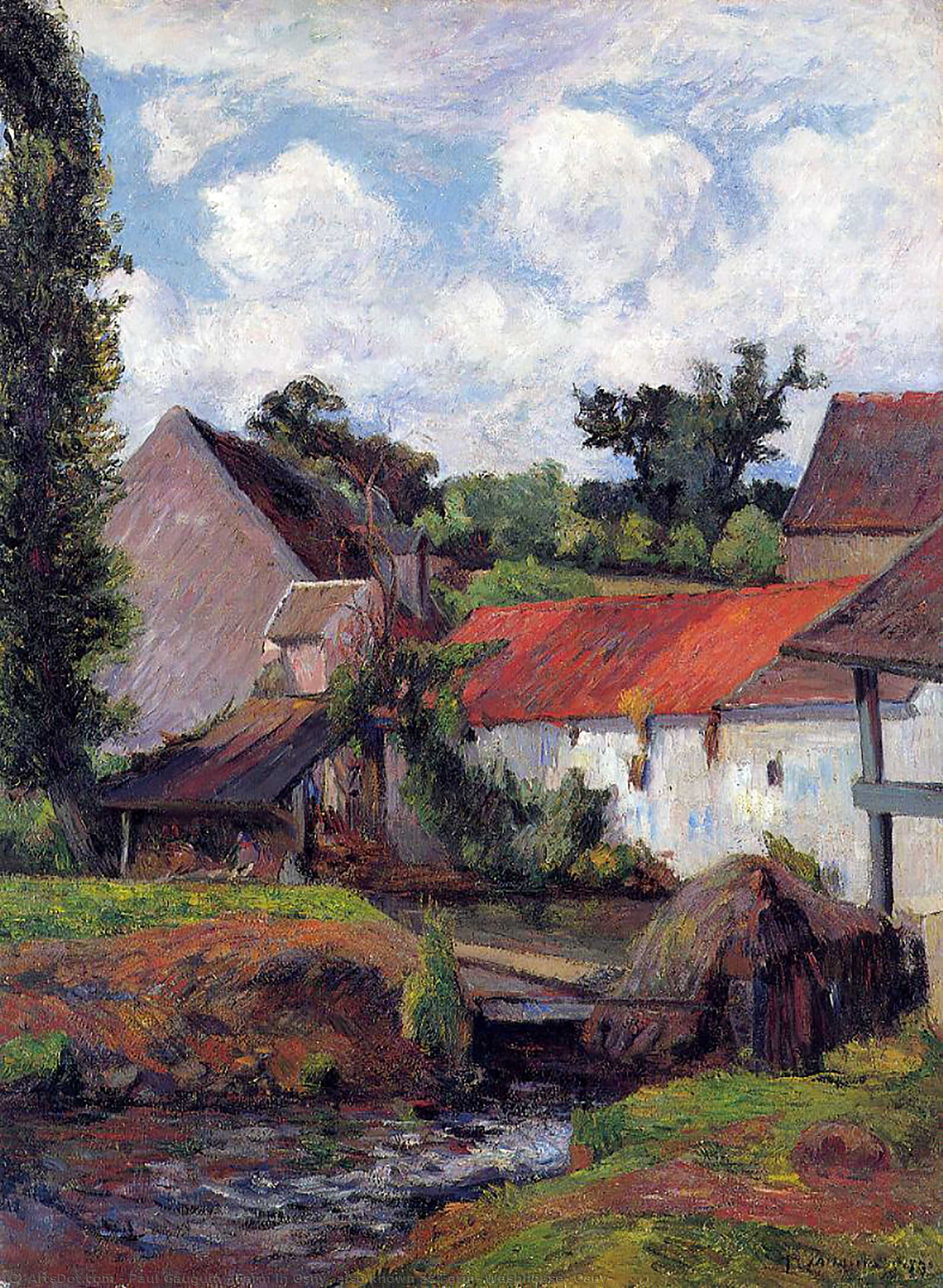
Paul Gauguin's 1883 painting, *Farm in Osny*, stands as a pivotal moment in the artist’s artistic evolution—a decisive break from Impressionism and an embrace of Post-Impressionist principles. More than just a depiction of a French countryside scene, it’s a profound exploration of light, color, and burgeoning symbolism – elements that would become hallmarks of Gauguin's distinctive oeuvre.
The artwork presents a tranquil rural panorama centered around a working farm nestled in Osny, France. Dominating the foreground is a washhouse alongside several buildings adorned with striking red roofs, skillfully arranged amidst lush greenery. Gauguin’s compositional genius lies in achieving balance; a meandering stream gracefully guides the viewer's gaze towards these structures, while trees framing the vista on either side create an intimate and enclosed atmosphere. A subtle bridge in the background adds depth, inviting contemplation of this idyllic landscape.
*Farm in Osny* boldly rejects the fleeting impressions championed by Impressionist predecessors. Gauguin abandons photographic accuracy for expressive emotion; he employs bold colors – vibrant greens, reds, and blues – juxtaposed to generate visual interest and evoke a specific mood. Crucially, he utilizes thick, visible brushstrokes—a technique that prioritizes tactile quality and sculptural form over meticulous detail. This approach mirrors the influence of Cloisonism, emphasizing distinct color blocks rather than blended hues.
Painted in 1883, *Farm in Osny* occurs during a period of intense artistic experimentation. Gauguin wrestled with the limitations of Impressionism’s focus on capturing transient moments of light and sensation. Seeking greater substance and emotional resonance, he drew inspiration from Japanese prints (Japonisme), which championed flattened perspectives and simplified forms—a stylistic shift that foreshadowed Synthetism.
Despite its seemingly straightforward portrayal of rural life, *Farm in Osny* resonates with deeper symbolic meanings. The farm itself embodies stability and tradition, reflecting Gauguin’s fascination with enduring values. Similarly, the washhouse symbolizes communal labor and social interaction—a reminder of human connection amidst natural beauty. The painting's overall atmosphere exudes quiet contemplation and evokes a nostalgic appreciation for simplicity. Gauguin’s masterful use of color contributes significantly to this emotional impact, conveying warmth, serenity, and an idealized vision of rural existence.
A high-quality reproduction of *Farm in Osny* offers more than just aesthetic pleasure; it presents an opportunity to bring a piece of Gauguin's groundbreaking artistic legacy into your home—a testament to beauty, history, and enduring inspiration.


1848 - 1903 , Francija

Explore the transformative era of Post-Impressionism. Discover how masters like Van Gogh moved beyond light to embrace emotion, structure, and vibrant color, redefining modern art history through expressive brushwork and symbolic depth.


Bodite na sešte, s najnovejšimi novicami iz sveta umetnosti, ekskluzivnimi ponudbami in idejami za dekoracijo.
Povejte nam o svojem projektu in naši strokovnjaki za umetnost vam bodo pripravili 3 prilagojene predloge umetniških del.
Naj vam izberemo 3 možnosti – popolnoma brezplačno!


 Predogled
 Pošlji
 Deli
Deli
 Podrobnosti o delu

 Prenesi
 Podobni izdelki
 Rentgenski posnetek
 Predvajaj diaporama
 Razviljaj več







 Možnost stekla je na voljo le za velikosti pod 110 cm