x

 Tempera na drvenoj podloziProto-Renaissance
 1287Kasno srednjovekovno doba
 448.0 x 390.0 cm
 Museo dell'Opera di Santa Croce
Ručno oslikano uljanim bojama na platnu u dimenzijama i okviru po vašem izboru, izrađeno po porudžbini od strane naših umetnika. ( Pređi na štampu Prebacite na sliku)





























Izaberite jednu od naših unapred definisanih veličina koje odgovaraju originalnim proporcijama umetničkog dela.

Можете унети сопствене димензије како бисте прилагодили дело одређеном оквиру или простору. Ако одабрана величина не одговара пропорцијама оригинала, слика ће бити исечена или проширена додатним елементима који се ручно насликавају. Дигитални prikaz ће вам бити послат на одобрење пре почетка производње.
Имајте на уму да преглед на екрану не одражава стварно исецање или проширење. Само приказ (mockup) ће тачно приказати коначну композицију.
Иако су доступне прилагођене величине, препоручујемо да одаберете димензију из дефинисане листе како бисте сачували оригиналне пропорције.
Isporuka širom sveta () za 3/4 nedelje umesto uobičajenih 5 nedelja. (8 август). Bez kompromisa po pitanju kvaliteta.


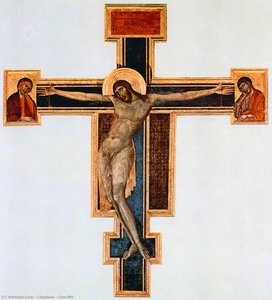
Križ Cimabuea u Santa Croce
Dimenzije reprodukcije
The Crucifix by Cimabue at Santa Croce stands as one of the most poignant emblems of Florentine artistic heritage and a testament to the transformative shift occurring in European art during the thirteenth century. Commissioned by the Franciscan friars of Santa Croce, this monumental panel painting—discovered amidst the devastation of the 1966 Arno flood—captures not merely a biblical narrative but embodies the very spirit of Byzantine influence gradually yielding to the burgeoning realism that would define the Proto-Renaissance.
Subject and Composition
At its core, the artwork depicts the crucifixion of Jesus Christ, a central motif in Christian iconography. Cimabue adheres to a traditional cruciform layout—a cornerstone of Byzantine art—where Christ dominates the composition at the center, flanked by two mourners: Saint Mary Magdalene and Saint John the Evangelist. Their expressions convey profound sorrow and devotion, enriching the scene’s emotional depth.
Style and Technique
Cimabue's stylistic approach distinguishes itself as a harmonious blend of Byzantine traditions and nascent Renaissance innovations. The artist skillfully employs rich colors—deep blues, reds, and golds—creating an atmosphere imbued with reverence and divine splendor. Furthermore, Cimabue’s figures are rendered with unprecedented anatomical accuracy, surpassing the stylized representations prevalent in earlier medieval art. This breakthrough signifies a move toward portraying human form with greater realism and volume.
The painting is executed in tempera on a wooden panel—a technique common during the period—enhanced by delicate gold leaf accents that amplify its sacred character. Cimabue’s meticulous attention to detail—particularly in capturing the contours of skin and clothing—demonstrates his mastery of artistic craftmanship.
Historical Context
Giovanni Cimabue (c. 1240 – 1302), born in Florence, represents a pivotal figure in Italian art history. He ushered in an era where artists began to challenge Byzantine conventions, introducing elements of naturalism and emotional expression that would foreshadow the monumental achievements of Giotto and subsequent Renaissance masters. Cimabue’s influence extended beyond mere stylistic innovation; he championed a humanist perspective—a burgeoning appreciation for human dignity and experience—that profoundly impacted artistic sensibilities.
The Crucifix at Santa Croce exemplifies Cimabue's pioneering spirit, marking the genesis of a new artistic paradigm. Its enduring legacy continues to inspire artists today, cementing its place as an icon of Florentine art and a cornerstone of Western cultural heritage.

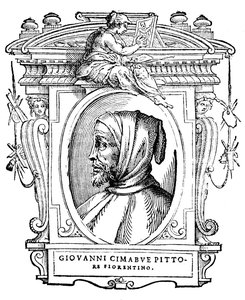
1240 - 1302 , Italija

Journey through 10 defining Late Medieval masterpieces – from Giotto's frescoes to Jan van Eyck’s realism. Explore the stories, techniques & vibrant colors of Gothic art. Find museum-quality reproductions and elevate your home decor with Most-Famous-Paintings.com! Discover all masterpieces on Most-Famous-Paintings.com

Journey through High Medieval Art! Explore 10 iconic masterpieces – from Giotto's frescoes to stunning Gothic cathedrals. Discover the stories behind these timeless paintings, sculptures & illuminated manuscripts. Find museum-quality art reproductions at Most-Famous-Paintings.com.
Journey back to the dawn of Renaissance art! Explore 10 iconic Proto-Renaissance masterpieces by Giotto, Cimabue & Duccio. Discover their stories, techniques & lasting impact. Find museum-quality reproductions for your home at Most-Famous-Paintings.com

Explore the rich history of Medieval Art (c. 500 – c. 1500) with Most-Famous-Paintings. Discover Byzantine mosaics, Gothic cathedrals & Renaissance masterpieces. Expert insights & museum-quality reproductions.

Explore the rich history & stunning artistry of the Byzantine Empire! Discover iconic mosaics, profound symbolism, and lasting influence on Western art. A comprehensive guide for history lovers.


Budite u toku sa najnovijim vestima o umetnosti, ekskluzivnim ponudama i idejama za dekoraciju.
Recite nam o vašem projektu i naši stručnjaci za umetnost će vam pružiti 3 personalizovana predloga umetničkih dela.
Dozvolite nam da odaberemo 3 opcije specijalno za Vas - Besplatno!


 Pošalji
 Podeli
 Detalji o delu

 Преузми
 Slični predmeti
 Slajdovi
 Pročitaj više







 Opcija sa staklom dostupna je samo za dimenzije manje od 110 cm