x

 Akryl på dukVäggkonstMannerism
 1608Renässansen
 112.0 x 92.0 cm
 Metropolitan Museum of Art
Handmålad olja på duk i din valda storlek och ram, tillverkad efter beställning av våra konstnärer. ( Beställ tryck Byt till bild)





























Välj bland våra förinställda storlekar som motsvarar konstverkets ursprungliga proportioner.

Du kan ange egna mått för att passa en specifik ram eller yta. Om den valda storleken inte matchar originalbildens proportioner kommer vi antingen att beskära konstverket eller utöka målningen med ytterligare handmålade element. En digital skiss skickas till dig för godkännande innan produktionen påbörjas.
Observera att förhandsvisningen på skärmen inte återspeglar den faktiska beskärningen eller utökningen. Endast skissen visar den slutgiltiga kompositionen korrekt.
Även om anpassade storlekar är möjliga, rekommenderar vi att du väljer en dimension från den fördefinierade listan för att bevara originalproportionerna.
Leverans över hela världen () på 3–4 veckor istället för standard 5 veckor. (10 augusti). Inga kompromisser med kvaliteten.


Laocoön (El Greco)
Reproduktionsstorlek
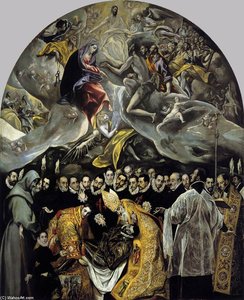
El Greco’s “The Opening of the Fifth Seal,” completed in 1608, stands as an unparalleled testament to Mannerist artistry and a profound engagement with theological themes. More than just a depiction of biblical prophecy—the Book of Revelation—it embodies El Greco's distinctive vision of spiritual ecstasy and suffering, capturing the essence of his artistic genius.
Composition and Symbolism: The painting centers around a man in supplication, positioned centrally against a backdrop of turbulent skies and shadowy figures. His outstretched arms convey an overwhelming yearning for divine grace, mirroring the core message of Revelation 6:9–11—the judgment of God upon earthly wickedness. Surrounding him are angels and saints, meticulously rendered with luminous blues and dramatic contrasts, symbolizing hope amidst despair.
Artistic Style: El Greco’s technique is characterized by elongated figures that defy anatomical realism, prioritizing emotional impact over precise representation. He skillfully manipulated oil paint to achieve unprecedented levels of luminosity—a hallmark of Mannerism—creating an ethereal atmosphere reminiscent of Byzantine iconography. The artist’s use of sfumato—subtle blending of tones—softens contours and enhances the painting's otherworldly beauty.
Historical Context: Commissioned for the Hospital of Saint John the Baptist in Toledo, Spain, “The Opening of the Fifth Seal” reflects the fervent piety of its patrons—Cardinal Juan de Tavera and his successors—who sought solace during a period marked by political instability. Interestingly, the painting was cut at the top when originally conceived as part of a larger altarpiece; the missing portion would have depicted the Throne of God, further emphasizing the scene’s apocalyptic grandeur.
Size: 112 x 92 cm
Date: 1608
Doménikos Theotokópoulos, universally known as El Greco—meaning “the Greek”—was a painter whose life and work defied easy categorization. Born in Crete in 1541, under Venetian rule, his artistic journey led him through Venice and Rome before finding its ultimate expression in the spiritual heartland of Spain: Toledo.
El Greco wasn’t merely a product of these places; he synthesized their influences into something wholly unique—a style that anticipated the emotional intensity of Expressionism and the fragmented forms of Cubism centuries later. His early training within the Byzantine tradition instilled in him a meticulous attention to detail and a profound understanding of religious iconography.
However, El Greco’s artistic path wasn't solely defined by tradition. He embraced experimentation—particularly with color—pushing boundaries and challenging conventions. This boldness distinguishes him from his contemporaries and establishes him as a pioneer of Mannerism, an artistic movement that emerged in Italy during the 16th century.
His distinctive style is instantly recognizable: elongated figures, dramatic poses, and vibrant, otherworldly pigments—a deliberate rejection of Renaissance idealism in favor of conveying profound spiritual emotion. This stylistic choice aligns perfectly with El Greco’s preoccupation with theological themes and his desire to communicate the sublime experience of faith.
El Greco's influence extends far beyond his own lifetime, resonating through subsequent artistic movements. His elongated figures—a hallmark of Mannerism—inspired artists like Picasso and Matisse, demonstrating the enduring power of his stylistic innovations. Furthermore, scholars have explored connections between El Greco’s work and broader cultural trends—particularly the rise of mysticism and the anxieties surrounding religious dogma during the Reformation.
The painting's symbolism—the outstretched arms representing supplication, the luminous blues symbolizing heaven—continues to inspire contemplation and interpretation today. Its depiction of divine judgment serves as a reminder of humanity’s vulnerability before God’s power and grace—a timeless message that transcends temporal boundaries.
For those seeking a stunning reproduction of this masterpiece, Most-Famous-Paintings offers meticulously crafted oil paintings that faithfully recreate El Greco’s luminous palette and dramatic composition. Explore our collection today!

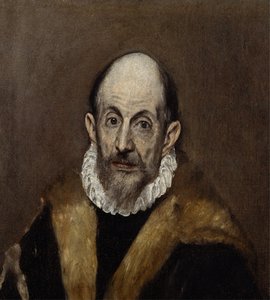
1541 - 1614 , Griechenland
Explore the dramatic transition from High Renaissance harmony to Mannerist tension. Discover how masters like El Greco redefined art through distortion and spiritual intensity. An expert guide for art enthusiasts seeking deep historical context and museum-quality inspiration.

Explore the dramatic evolution of Mannerism from High Renaissance perfection to El Greco's spiritual intensity. Discover the history, techniques, and enduring legacy of this transformative era through an expert art-history lens.


Håll dig uppdaterad med de senaste konstnyheterna, exklusiva erbjudanden och inredningsidéer.
Berätta om ditt projekt så kommer våra konstexperter att ge dig 3 personliga konstförslag.
Vi skapar ett urval av 3 alternativ helt anpassat för dig – gratis!


 Visa i rummet
 Skicka
 Dela
Dela
 Detaljer

 Ladda ner
 Liknande objekt
 Röntgen
 Bildspel
 Läs mer







 Glasalternativet är endast tillgängligt i storlekar under 110 cm.