A Renaissance Jewel on Via dei Coronari
Nestled within the vibrant tapestry of Rome’s historic center, where the shadows of antiquity dance upon the cobblestones of Via dei Coronari, stands Palazzo Lancellotti. This architectural masterpiece serves as a profound testament to Roman grandeur and the enduring legacy of papal patronage. To walk past its imposing façade is to encounter a building that breathes with the spirit of the 16th century, embodying the transition from the refined symmetry of the Renaissance to the dramatic, emotive flourishes of the Baroque era. While much of its inner splendor remains shielded from the casual passerby, the palace’s exterior offers a captivating glimpse into a world where architecture was used to broadcast power, lineage, and an unyielding devotion to beauty.
The history of the palazzo is a layered narrative of ambition and artistic evolution. Originally commissioned in the early 16th century by Luigi De Torres and shaped by the hands of Neapolitan architect Pirro Ligorio, the structure was designed to be a monumental family seat. As the centuries unfolded, the building underwent a metamorphosis, most notably through the interventions of Carlo Maderno, one of Rome's most influential architects. Maderno’s touch is visible in the harmonious proportions and the sophisticated masking of irregular plans, creating a seamless dialogue between existing structures and new, grander visions. The palace even bears the scars of history; faded inscriptions on its portal from the era of Italian unification serve as silent witnesses to the political upheavances that once threatened the very heart of the Papal States.
A Symphony of Frescoes and Classical Statuary
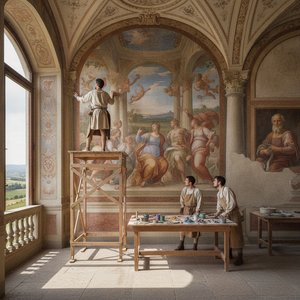
Beyond the travertine walls lies a sanctuary of artistic achievement, where the interior spaces once functioned as a canvas for the greatest masters of their age. The palazzo’s halls were designed to overwhelm the senses, adorned with breathtaking frescoes that capture the very essence of Baroque theatricality. The works of Agostino Tassi and Guercino transform ceilings into celestial windows, utilizing light, shadow, and perspective to convey complex allegories of divine grace and worldly triumph. In rooms such as the Hall of the Grooms, the artistry reaches a crescendo, with painted narratives that transport the viewer into idealized landscapes and epic historical moments, such as the Battle of Lepanto.
For the collector and the lover of classical antiquity, the palazzo’s true soul resides in its extraordinary collection of ancient statues and marble reliefs. This assembly of sculptural wonders, many of which were unearthed from excavations across Rome, represents a profound connection to the classical past. These pieces are not merely displayed; they are integrated into the very fabric of the architecture, with marble figures set into the walls to create a living museum of Roman heritage. The presence of such treasures—ranging from intricate reliefs to monumental busts—imbues the palace with an atmosphere of scholarly reverence, making it a singular destination for those who seek to understand the intersection of ancient myth and Baroque reconstruction.
An Intellectual Legacy of Art and Inquiry
What truly distinguishes Palazzo Lancellotti from the many palazzos of Rome is its unique role as a cradle of intellectual curiosity. In 1650, it became the home of the Accademia degli Infecondi, a society dedicated to exploring the profound philosophical and moral implications of human existence. This intersection of high art and scientific inquiry reflects the broader cultural landscape of Baroque Rome, where the pursuit of beauty was inextricably linked to the pursuit of knowledge. The palace was not merely a residence for the noble Lancellotti family; it was a laboratory of thought, where the aesthetic splendor of the surroundings fueled the intellectual rigor of its inhabitants.
For interior designers and art historians alike, Palazzo Lancellotti remains an unparalleled source of inspiration. Its ability to blend the structural rigidity of classical principles with the fluid, decorative energy of the Baroque provides a masterclass in spatial harmony. Even as much of its interior remains preserved for conservation, the palace continues to exert a magnetic pull on the Roman landscape, standing as a monumental reminder that true art is not just something to be viewed, but an environment to be inhabited.