x

Sanatçılarımız tarafından sipariş üzerine hazırlanan; istediğiniz boyut ve çerçevede, tuval üzerine el boyaması yağlı boya. ( Baskıya Geç Görsele Geç)





























Eserin orijinal oranlarıyla uyumlu, önceden belirlenmiş boyutlarımız arasından seçim yapın.

Belirli bir çerçeveye veya alana uyması için kendi boyutlarınızı girebilirsiniz. Seçtiğiniz boyut orijinal görüntünün oranlarıyla eşleşmiyorsa, sanat eserini kırparak veya ek el boyaması öğelerle resmi uzatarak ayarlayacağız. Üretim başlamadan önce onayınız için dijital bir taslak gönderilecektir.
Lütfen ekrandaki önizlemenin gerçek kırpmayı veya uzatmayı yansıtmadığını unutmayın. Nihai kompozisyonu yalnızca hazırlanan taslak doğru şekilde gösterecektir.
Özel boyutlar mevcut olsa da, orijinal oranları korumak adına önceden tanımlanmış listeden bir boyut seçmenizi öneririz.
Dünya Çapında Teslimat (); standart 5 hafta yerine 3/4 haftada. (8 Ağustos). Kaliteden ödün verilmez.


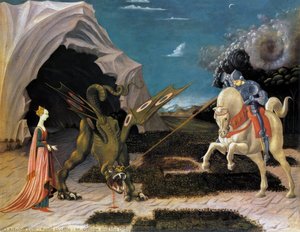
Saint George Releases the Princess
Reproduksiyon Boyutu
Paolo Uccello’s *San Jorge Libera a la Princesa*, painted around 1470, stands as an unparalleled achievement of Florentine art and a cornerstone in the history of perspective. Currently housed within the Museo Duomo di Città Di Castello, Italy, this monumental tempera on wood panel transcends mere depiction; it embodies Uccello’s revolutionary vision for representing three-dimensional space onto a two-dimensional surface—a feat that irrevocably altered artistic conventions and cemented his legacy as one of the Quattrocento's foremost innovators.
The fervor for realism that characterized the Florentine Renaissance found its most eloquent expression in Uccello’s meticulous approach to composition and technique. Influenced profoundly by mathematical principles—particularly geometry—Uccello wasn’t simply striving to capture what he saw; he was actively attempting to understand how the human eye perceives depth. Giorgio Vasari famously lauded Uccello's dedication, noting his tireless efforts to grasp the precise vanishing point, a testament to the intellectual curiosity that fueled his artistic endeavors. This obsession with perspective mirrored broader humanist ideals of observation and rational inquiry, reflecting a desire to emulate nature’s order through artistic representation.
The painting's dynamic arrangement immediately draws the viewer into its dramatic narrative. Diagonal lines dominate the scene—the horse’s gait, Saint George’s lance thrust forward—creating a palpable sense of movement and tension. Uccello skillfully employs color to heighten emotional impact; the brilliant white of Saint George’s steed contrasts sharply with the verdant hues of the dragon’s scales and foliage, directing the eye's gaze and emphasizing the central conflict. Beyond its visual splendor, *San Jorge Libera a la Princesa* is laden with symbolic significance. The dragon represents evil and oppression, while Saint George embodies courage and divine protection—his triumph over the beast symbolizes liberation from darkness and reaffirmation of Christian virtue. The princess, representing innocence and vulnerability, underscores the stakes of the heroic struggle.
Uccello’s mastery lies in his groundbreaking application of linear perspective—a technique he painstakingly developed through rigorous experimentation with mathematical calculations. Unlike earlier artists who relied on illusionistic methods to convey depth, Uccello achieved a remarkable degree of realism by employing converging lines that converge at a vanishing point located off-center. This innovative approach necessitated painstaking preparation and meticulous execution, resulting in an image that convincingly simulates three dimensions—a breakthrough that profoundly influenced subsequent generations of painters. The artist’s attention to detail extends beyond perspective; the intricate armor worn by Saint George and the delicate textures of the princess's gown demonstrate Uccello’s unwavering commitment to capturing the nuances of reality.
*San Jorge Libera a la Princesa* served as an indelible inspiration for artists throughout Europe, propelling the development of perspective and establishing new standards for visual representation. Its influence can be discerned in works by Jan van Eyck and Albrecht Dürer, among others—artists who embraced Uccello’s pioneering techniques to create masterpieces that continue to captivate audiences today. To delve deeper into Paolo Uccello's artistic vision and explore reproductions of his celebrated paintings, visit Most-Famous-Paintings.com and discover the enduring beauty of Renaissance art. Specifically, Most-Famous-Paintings offers exceptional hand-painted reproductions of *San Jorge Libera a la Princesa*, allowing collectors and enthusiasts alike to experience this iconic artwork in breathtaking detail.


1397 - 1475 , İtalya
Georges Braque'ın en iyi 25 eserini keşfedin! Kübizm hareketinin öncüsü olan bu ikonik tablolar, modern sanatın ruhunu yansıtıyor. Sanat tarihine yolculuk yapın ve evinizi Most-Famous-Paintings.com'un yüksek kaliteli baskılarıyla zenginleştirin.
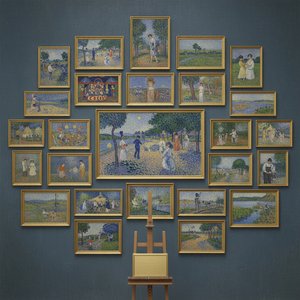
Georges Seurat'ın en iyi 25 eserini keşfedin! İzlenimcilik ve Noktacılık akımının öncüsü bu Fransız ressamın renkli dünyasına yolculuk yapın. Sanat baskıları ve ev dekorasyonu için Most-Famous-Paintings.com'da koleksiyonu inceleyin.

Explore the revolutionary art of Paolo Uccello, a Florentine Renaissance master who pioneered perspective. Discover his iconic paintings like 'St. George & The Dragon' and learn about his lasting influence on art history.

Explore the vibrant world of Paolo Veronese, a Renaissance master renowned for his opulent compositions, masterful use of color, and dramatic Venetian scenes. Discover key artworks & legacy.
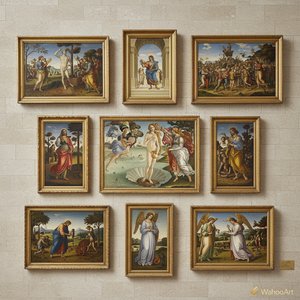
Erken Rönesans'ın 10 başyapıtıyla sanat tarihine yolculuk! Botticelli, Leonardo da Vinci gibi ustaların eserleriyle evinizi dönüştürün. Most-Famous-Paintings.com’da müze kalitesinde replikalar ve benzersiz dekorasyon fikirleri keşfedin.


En son sanat haberlerinden, özel tekliflerden ve dekorasyon fikirlerinden haberdar olun.
Projenizden bize bahsedin; sanat uzmanlarımız size özel 3 sanat eseri önerisi sunsun.
Size Özel 3 Seçeneği Ücretsiz Olarak Hazırlayalım!


 Önizleme yap
 Paylaş
 Paylaş
 Detayları Gör

 İndir
İndir
 Benzerlerini gör
 X-Işını
 Slayt Gösterisi

 Tümünü Gör







 Cam seçeneği yalnızca 110 cm altındaki boyutlar için mevcuttur.