x


 Олія на полотніНастінний декорPost-Impressionism
 1890— XIX століття
 81.0 x 65.0 cm
 Ohara Museum of Art
Написана вручну олією на полотні у вашому розмірі та рамі, виготовлена на замовлення нашими художниками. ( Перейти до друку Перейти до зображення)





























Обирайте з наших стандартних розмірів, що відповідають оригінальним пропорціям твору мистецтва.

Ви можете вказати власні розміри, щоб репродукція ідеально підійшла до конкретної рами або інтер'єру. Якщо вибраний вами розмір не відповідає пропорціям оригіналу, ми або обріжемо полотно, або доповнимо картину додатковими елементами, промальованими вручну. Цифровий макет буде надіслано вам на затвердження перед початком виробництва.
Зверніть увагу, що попередній перегляд на екрані не відображає фактичне обрізання або розширення зображення. Тільки макет точно покаже остаточну композицію.
Хоча ми можемо виготовити виріб у нестандартному розмірі, для збереження оригінальних пропорцій рекомендуємо обирати варіанти зі встановленого списку.
Доставка по всьому світу () за 3–4 тижні замість стандартних 5 тижнів. (2 Серпень). Без жодних компромісів у якості.


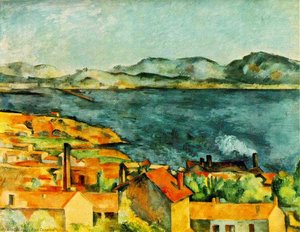
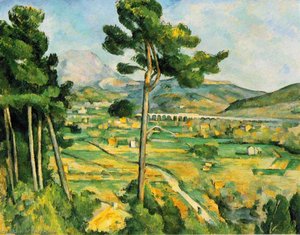
Гірська панорама Провансу
Розмір репродукції
The world of art often presents us with grand narratives – sweeping battles, dramatic portraits, and monumental religious scenes. Yet, within the quiet depths of Paul Cézanne's "Landscape" (circa 1890-92), residing in the National Gallery’s collection, lies a profoundly intimate experience: a glimpse into the heart of Provence, rendered not as a photographic imitation of reality, but as a carefully constructed meditation on form and light. This painting isn’t merely a depiction of a landscape; it's an exploration of perception itself, a testament to Cézanne’s revolutionary approach to capturing the essence of his beloved region.
Cézanne wasn’t interested in simply recreating what he saw with his eyes. Instead, he sought to understand and reconstruct the underlying structure of nature—the geometric forms that underpinned its appearance. This is immediately apparent in the painting's composition: rolling hills are broken down into a series of interlocking cylinders, cones, and spheres – elements borrowed from the work of the Italian Renaissance masters, particularly Leonardo da Vinci. These simplified shapes aren’t haphazard; they’re meticulously arranged to create a sense of depth and volume, suggesting solidity and permanence within the fleeting impression of light and atmosphere. The artist deliberately flattened perspective, abandoning traditional linear methods in favor of variations in color intensity and layering, creating an illusion of space that feels both familiar and subtly unsettling.
The palette of "Landscape" is remarkably restrained—a symphony of muted ochres, blues, greens, and browns. These earthy tones evoke the warmth of the Provençal sun and the stillness of the countryside. However, Cézanne doesn’t rely solely on color to convey atmosphere; he masterfully manipulates light through his use of impasto – thick, textured application of paint—particularly prominent in the depiction of the buildings and hills. This technique not only adds tactile richness but also creates a sense of movement and energy within the composition. The brushstrokes themselves are loose and expressive, conveying a feeling of spontaneity and immediacy, as if Cézanne were capturing a fleeting moment of light and shadow.
Notice how the sky, rendered in hazy blues and greys, seems to press down upon the landscape, creating a sense of enclosure. The distant hills recede into an atmospheric haze, while the foreground elements—the small village nestled amongst the rolling hills—are presented with greater clarity and detail. This interplay between near and far creates a dynamic visual experience, drawing the viewer’s eye through the painting and inviting them to contemplate the relationship between these distinct spatial zones.
Cézanne’s lifelong fascination with the landscape of Provence is deeply embedded in this work. He spent much of his life living and working in Aix-en-Provence, constantly returning to the same hillsides and villages to study their forms and colors. This painting represents a culmination of that exploration—a distillation of Cézanne's artistic vision into a single, powerful image. It’s important to remember that Cézanne was initially met with skepticism by many of his contemporaries, who found his unconventional approach jarring and unfamiliar. However, his insistence on capturing the underlying structure of nature ultimately paved the way for modern art movements such as Cubism, influencing generations of artists who followed.
“Landscape” is more than just a pretty picture; it’s an invitation to engage with the fundamental questions of perception. Cézanne wasn't simply trying to depict what he *saw*; he was attempting to capture how he *experienced* the world—the way light and color interact, the way forms are perceived in space, and the way our minds construct a sense of reality. Owning a reproduction of this painting is not merely acquiring a beautiful artwork; it’s embracing a piece of art history – a testament to Cézanne's revolutionary vision and his profound impact on the course of modern art.


1839 - 1906 , Франція

Explore the transformative era of Post-Impressionism. Discover how masters like Van Gogh moved beyond light to embrace emotion, structure, and vibrant color, redefining modern art history through expressive brushwork and symbolic depth.


Будьте в курсі останніх новин зі світу мистецтва, ексклюзивних пропозицій та ідей для декорування.
Розкажіть нам про свій проєкт, і наші експерти з мистецтва підготують для вас 3 персоналізовані пропозиції щодо творів мистецтва.
Дозвольте нам підібрати 3 варіанти спеціально для вас — безкоштовно!


 Переглянути в інтер'єрі
 Надіслати
 Поділитися
 Деталі

 Завантажити
 Схожі експонати
 Рентгенівське дослідження
 Слайд-шоу
 Читати далі







 Скляний варіант доступний лише для розмірів до 110 см