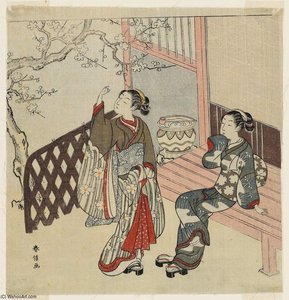
Suzuki Harunobu - A Pioneer of Color in Ukiyo-e
Suzuki Harunobu (c. 1725 – 8 July 1770) stands as a monumental figure in Japanese art history, recognized for his transformative contribution to *ukiyo-e*, the genre of popular prints that flourished during Edo period Japan. While biographical details remain elusive—his birthplace and precise birthdate are shrouded in obscurity—scholars believe he was born in Tokyo, marking him as one of the era’s most prominent artists. His legacy transcends mere artistic skill; Harunobu fundamentally reshaped visual culture by ushering in an unprecedented era of polychromatic printing, forever altering the aesthetic landscape of Japan and influencing Western art movements like Japonisme.
- Early Life & Influences: Little is known about Harunobu’s formative years beyond his association with Kyoto artist Nishikawa Sukenobu. Sukenobu's influence on Harunobu’s early style is undeniable, evident in the delicate compositions and subtle tonal gradations characteristic of Harunobu’s initial prints. These works demonstrate a profound engagement with established artistic traditions, particularly those championed by the Torii school and Ishikawa Toyonobu—artists who skillfully blended meticulous observation with refined stylistic conventions.
- The Birth of Color: Harunobu's breakthrough arrived in 1765 when he pioneered the use of multiple woodblocks to achieve vibrant color prints – a revolutionary technique that decisively superseded the monochrome prints prevalent at the time. This innovation demanded extraordinary precision and collaboration between artists, engravers, and publishers, establishing a new paradigm for printmaking and propelling *ukiyo-e* into an entirely different dimension.
- Subject Matter & Artistic Style: Harunobu’s artistic vision encompassed a breathtaking range of subjects—from serene landscapes depicting Mount Fuji to captivating depictions of contemporary life, including bustling urban scenes and elegant courtesans—reflecting the multifaceted cultural milieu of Edo. His prints frequently incorporated elements of classical poetry and folklore, demonstrating an intellectual curiosity that distinguished him from many of his contemporaries.
- Collaboration & Patronage: Harunobu’s success stemmed not only from his artistic prowess but also from his astute partnerships with influential patrons and publishers who recognized the potential for commercial viability in his innovative approach to printmaking. These collaborations fostered experimentation and propelled Harunobu's prolific output, resulting in an astonishing array of designs—estimated at around 800—that captivated audiences across Japan.
- Legacy & Influence: Suzuki Harunobu’s impact on subsequent generations of artists is profound. His masterful command of color and composition served as a cornerstone for the development of Japonisme in Europe, inspiring Impressionist painters like Claude Monet and Edgar Degas to explore new visual vocabularies rooted in Japanese aesthetics. Today, Harunobu's prints continue to resonate with audiences worldwide, cementing his place as one of Japan’s most celebrated artistic figures—a testament to his enduring contribution to the history of art.
Notable Paintings & Artists:
Museums & Collections:
- Indianapolis Museum of Art: Located in Indianapolis, United States
- Fukuoka City Museum: Situated in Fukuoka, Japan