


x

 Woodblock PrintShin-hanga Landscape
 192019th Century
 45.0 x 29.0 cm
 Toledo Museum of Art
Hand-painted oil on canvas in your size and frame, made to order by our artists. ( Switch to Print Switch to Image)





























Pick from our preset sizes that match the artwork's original proportions.

You may enter your own dimensions to fit a specific frame or space. If your selected size does not match the original image's proportions, we will either crop the artwork or extend the painting with additional hand-painted elements. A digital mockup will be sent for your approval before production begins.
Please note that the on-screen preview does not reflect the actual cropping or extension. Only the mockup will accurately show the final composition.
While custom sizes are available, we recommend selecting a dimension from the predefined list to preserve the original proportions.
Worldwide Delivery () in 3/4 weeks instead of standard 5 weeks. (30 July). No compromise on quality.


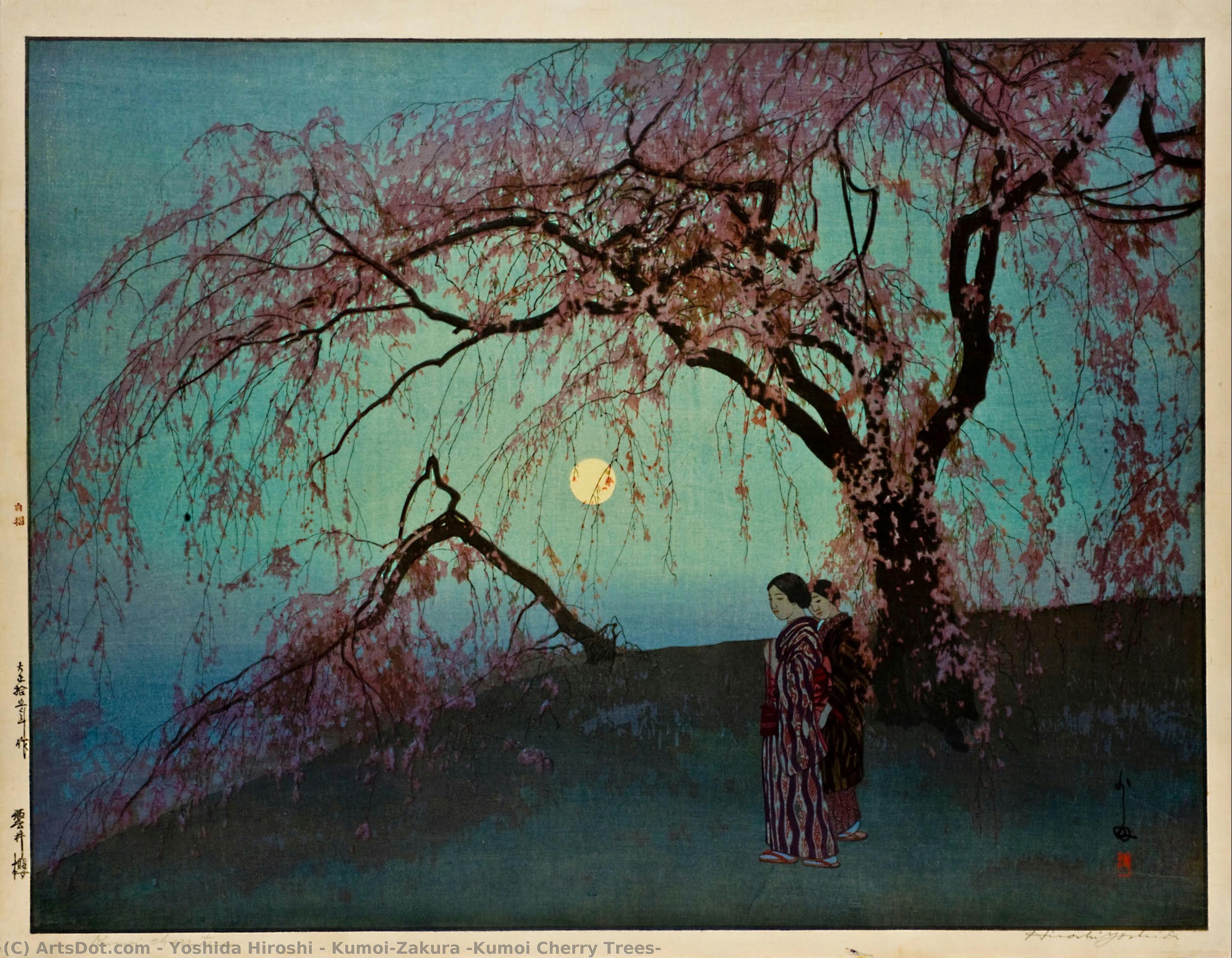
Kumoi-Zakura (Kumoi Cherry Trees)
Reproduction Size
Kumoi-Zakura (Kumoi Cherry Trees), painted in 1920 by the esteemed Japanese master Yoshida Hiroshi, is more than just a depiction of blossoming cherry trees; it's an exquisitely rendered meditation on beauty, tranquility, and the ephemeral nature of existence. This captivating artwork, measuring 45 x 29 cm, offers a profound glimpse into the heart of shin-hanga – a revolutionary artistic movement that redefined Japanese landscape painting in the early 20th century. Hiroshi’s work stands as a testament to his meticulous observation of nature and his ability to translate it onto canvas with remarkable sensitivity.
Yoshida Hiroshi was a pivotal figure in the shin-hanga movement, which emerged as a reaction against the rigid conventions of traditional Japanese art. Shin-hanga, meaning “new style print,” championed a return to direct observation of nature, rejecting Western academic techniques in favor of a more intuitive and expressive approach. Hiroshi’s training under Tamura Sōryū and Miyake Kokki instilled in him a deep respect for the principles of *sumi-e* (ink wash painting) while simultaneously exposing him to Western influences, particularly Impressionism. This synthesis is brilliantly evident in Kumoi-Zakura – the loose brushwork, vibrant color palette, and emphasis on capturing atmospheric effects are all hallmarks of his unique style.
Technique: Hiroshi employed a layered approach, building up color gradually with thin washes of pigment applied to rice paper. This technique created a luminous quality that is characteristic of shin-hanga prints. The use of *katazome* (stencil cutting) allowed for precise placement of the blossoms and leaves, while still maintaining a sense of spontaneity.Beyond its aesthetic qualities, Kumoi-Zakura is rich in symbolic meaning. Cherry blossoms, or *sakura*, hold profound cultural significance in Japan, representing themes of beauty, fragility, mortality, and renewal. The woman’s solitary presence beneath the tree evokes a sense of introspection and contemplation – a common motif in Japanese art that encourages viewers to reflect on their own lives and place within the natural world. The body of water acts as a mirror, reflecting not only the scene before us but also perhaps our own inner thoughts and emotions.
This hand-painted reproduction of Yoshida Hiroshi’s *Kumoi-Zakura* offers an unparalleled opportunity to experience the beauty and serenity of this iconic artwork. Its dimensions (45 x 29 cm) make it suitable for a wide range of interior design settings, from formal living rooms to tranquil bedrooms. Whether you are an art collector seeking to expand your collection or an interior designer looking for a unique piece to elevate your space, this reproduction is sure to captivate and inspire.


1876 - 1950 , Japan

Explore the rich history of trees in painting! Discover symbolism, Romantic masterpieces by Caspar David Friedrich & beyond. A curated journey for art enthusiasts.

Explore the rich history of trees in painting! Discover symbolism, Romantic masterpieces by Caspar David Friedrich & beyond. A curated journey for art enthusiasts.
Journey through 25 iconic artworks by Paul Cézanne – a master of Impressionism and Post-Impressionism. Explore his landscapes, still lifes, and the stories behind these timeless masterpieces. Discover museum-quality reproductions & curated decor at Most-Famous-Paintings.com.

Explore the rich history of forests in art! Discover Romantic masterpieces by Friedrich & Monet, Symbolist depths, and contemporary visions. Find inspiration & quality reproductions at Most-Famous-Paintings.
Delve into the world of Gustav Klimt with our top 25 masterpieces! Explore his iconic paintings – 'The Kiss,' 'Portrait of Adele,' and more. Discover museum-quality reproductions & curated decor ideas. Explore the full collection online at Most-Famous-Paintings.com.


Stay updated with the latest art news, exclusive offers, and decoration ideas.
Tell us about your project and our art experts will provide you with 3 personalized art suggestions.
Let Us Curate 3 Options Just for You - Free!


 Preview
 Send
Send Share
Share
 Details

 Download
 Similars
 X-Ray
X-Ray Diaporama
 Read More







 Glass option is only available in size under 110 CM


