x

 Oil On CanvasWallArtBaroque
 1620
1620 154.0 x 120.0 cm
 Art Gallery of South Australia
Hand-painted oil on canvas in your size and frame, made to order by our artists. ( Buy Print Buy Image)





























Pick from our preset sizes that match the artwork's original proportions.

You may enter your own dimensions to fit a specific frame or space. If your selected size does not match the original image's proportions, we will either crop the artwork or extend the painting with additional hand-painted elements. A digital mockup will be sent for your approval before production begins.
Please note that the on-screen preview does not reflect the actual cropping or extension. Only the mockup will accurately show the final composition.
While custom sizes are available, we recommend selecting a dimension from the predefined list to preserve the original proportions.
Worldwide Delivery () in 3/4 weeks instead of standard 5 weeks. (14 August). No compromise on quality.


A married couple
Reproduction Size
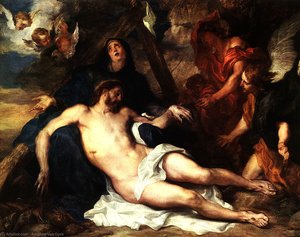
Sir Anthony van Dyck’s “A Married Couple,” painted circa 1620, is more than a simple portrait; it's a carefully constructed tableau of domestic harmony and subtle emotional resonance. Executed during the artist’s formative years in Antwerp and later refined during his influential period at the English court, this work exemplifies the burgeoning Baroque style’s emphasis on naturalism, dramatic lighting, and an exploration of human psychology. The painting captures a moment of quiet intimacy – a man and woman seated together on a bench beneath a crimson curtain, their gazes meeting with a shared sense of contentment. It's a scene that feels both familiar and profoundly moving, inviting the viewer to step into this private world.
Van Dyck’s masterful technique is immediately apparent. He employs a loose, almost impasto brushstroke, particularly noticeable in the rendering of fabrics – the man’s ruffled collar, the woman's voluminous sleeves, and the rich velvet drapes behind them. This textural approach adds depth and vibrancy to the composition, while his use of chiaroscuro—the dramatic contrast between light and shadow—creates a sense of theatricality and draws attention to key elements within the scene. The subtle gradations of color, achieved through meticulous layering of glazes, contribute to an overall luminosity that is characteristic of the artist’s style.
The painting's creation coincided with a pivotal moment in Van Dyck’s career. Following his apprenticeship under Peter Paul Rubens in Antwerp, he quickly established himself as a leading portraitist, securing commissions from prominent figures across Europe. His work for Charles I of England, beginning in 1632, cemented his reputation and profoundly influenced the development of English portraiture. “A Married Couple” reflects this shift towards courtly formality, showcasing the refined elegance favored by the aristocracy. The couple’s attire—the man's elaborate doublet and hose, the woman’s richly embroidered gown—underscores their status and wealth, while their composed demeanor suggests a shared understanding and mutual respect.
Interestingly, the painting has been linked to Charles I and Henrietta Maria of France. While not definitively proven, many art historians believe this portrait served as a preparatory sketch for a larger, more elaborate depiction of the royal couple intended for Charles’s private collection. The composition—the seated figures, the curtain backdrop—mirrors elements found in later portraits commissioned by the King, suggesting Van Dyck meticulously planned his approach to capturing the essence of the royal family.
Beyond its formal qualities, “A Married Couple” is rich in symbolic meaning. The crimson curtain, a recurring motif in Van Dyck’s work, represents passion, love, and domesticity—a safe haven from the outside world. The couple's direct gaze suggests intimacy and connection, while their relaxed posture conveys a sense of comfort and security. The subtle smile on the woman’s face hints at contentment and happiness, creating an emotional core that resonates with viewers even centuries later. It is not merely a depiction of two individuals; it’s a meditation on love, companionship, and the quiet beauty of everyday life.
Van Dyck's ability to capture such nuanced emotion within a formal portrait is a testament to his artistic skill and psychological insight. “A Married Couple” remains a powerful example of Baroque artistry—a timeless depiction of human connection that continues to captivate audiences today.


1599 - 1641 , Belgium
Journey through Vincent van Gogh's 25 most iconic paintings! Explore 'Starry Night', 'Sunflowers,' and more—discover the stories, techniques & emotions behind these Post-Impressionist masterpieces. Find museum-quality art reproductions for your home at Most-Famous-Paintings.com.

Explore the life & legacy of Sir Anthony van Dyck, the leading court painter of his era. Discover his innovative portraiture, Baroque masterpieces, and investment potential for discerning collectors. Learn more at Most-Famous-Paintings.
Journey through Rembrandt van Rijn's 25 most iconic paintings & etchings. Explore Dutch Golden Age masterpieces, dramatic chiaroscuro, and timeless portraits. Find museum-quality art reproductions to elevate your home decor on Most-Famous-Paintings.com.

Explore the grandeur of Baroque portraiture! Discover Rubens, Van Dyck & the masters of 17th-century art. Uncover symbolism, techniques & lasting influence. Expert insights for collectors and enthusiasts.
Journey through the drama & grandeur of Baroque art! Explore 10 masterpieces by Caravaggio, Rembrandt, Rubens & more. Discover stunning oil paintings, rich colors & timeless stories. Find museum-quality reproductions at .


Stay updated with the latest art news, exclusive offers, and decoration ideas.
Tell us about your project and our art experts will provide you with 3 personalized art suggestions.
Let Us Curate 3 Options Just for You - Free!


 Preview
 Send
Send Share
Share
 Details

 Download
 Similars
 X-Ray
X-Ray Diaporama
 Read More







 Glass option is only available in size under 110 CM