


x


 Preview
 اطلب نسخة مرسومة يدوياً شراء الصورة بدقة عالية
 مشاركة
 التفاصيل
 أضف إلى المفضلة
 تحميل الملف
 قطع مشابهة
 الأشعة السينية
 عرض شرائح
 Gold LeafSculptureMannerist Renaissance
 1540
1540 26.0 x 33.0 cm
 Kunsthistorisches Museum
طباعة جيكلي أو كانفاس بجودة المتاحف، مع سرعة في التنفيذ وخيارات متنوعة للتشطيب.
اختر من بين أحجامنا المُعدّة مسبقًا والتي تتطابق مع النسب الأصلية للعمل الفني.

يمكنك إدخال أبعادك الخاصة لتناسب إطاراً أو مساحة معينة. وإذا لم يتطابق الحجم الذي اخترته مع نسب الصورة الأصلية، فسنقوم إما بقص العمل الفني أو تمديد الصورة باستخدام حافة معكوسة أو بلون مصمت. سيتم إرسال نموذج تجريبي رقمي لاعتمادك قبل بدء الإنتاج.
يرجى ملاحظة أن المعاينة على الشاشة لا تعكس عملية القص أو التمديد الفعلية؛ حيث سيوضح النموذج التجريبي فقط التكوين النهائي بدقة.
وعلى الرغم من توفر أحجام مخصصة، إلا أننا نوصي باختيار أبعاد من القائمة المحددة مسبقاً للحفاظ على النسب الأصلية.
توصيل عالمي إلى خلال أسبوعين بدلاً من المدة القياسية البالغة 4/5 أسابيع. 25 يوليو


Salt Cellar
مقاس النسخة المطبوعة
Benvenuto Cellini's Salt Cellar, a shimmering testament to the heights of Renaissance goldsmithing, isn’t merely a container for salt; it’s a miniature cosmos, a meticulously crafted allegory brimming with symbolism and technical brilliance. Completed in 1543 for King Francis I of France, this extraordinary object transcends its functional purpose, becoming a profound meditation on the relationship between earth and sea, divinity and humanity. It's a piece that whispers tales of ambition, artistry, and the intoxicating allure of the Italian Renaissance—a world where beauty was paramount and skill elevated to an almost religious pursuit.
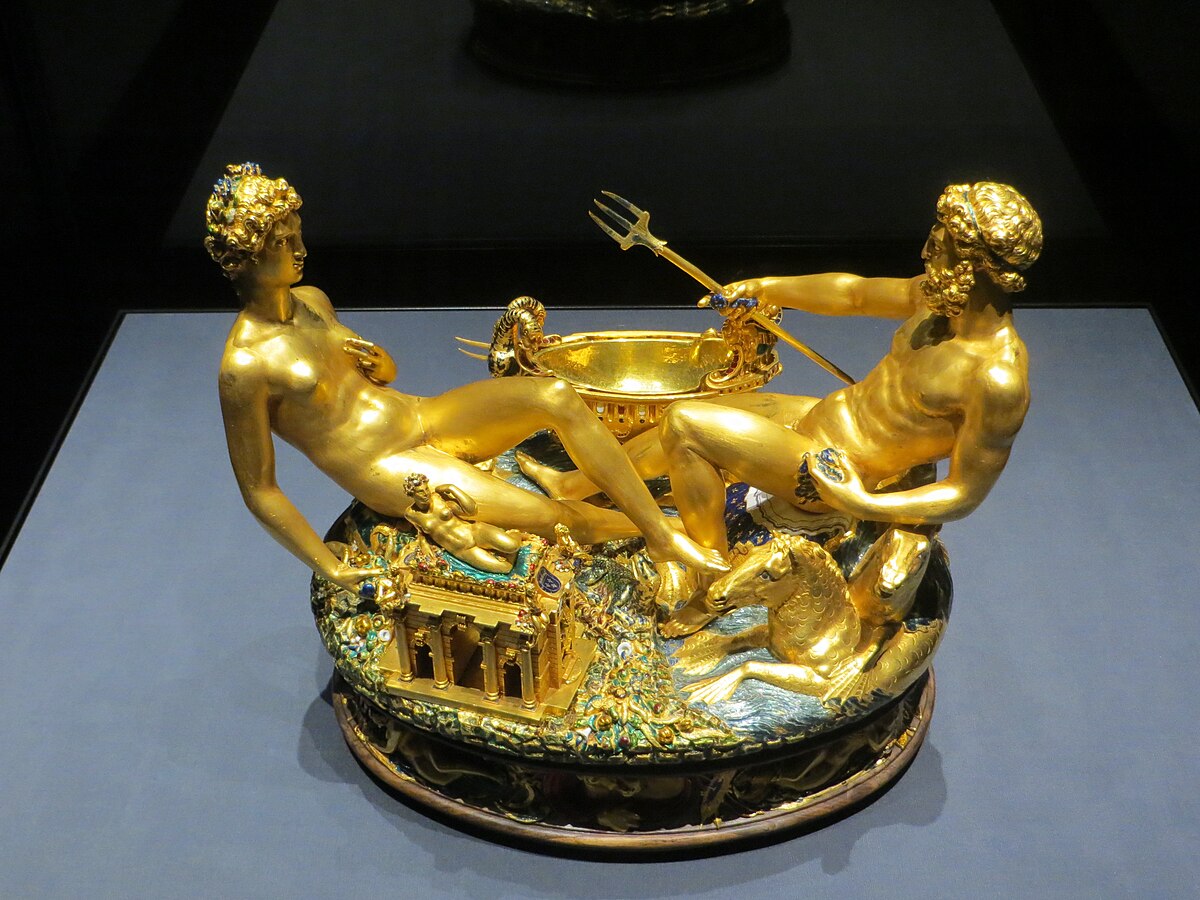
Image of Benvenuto Cellini’s Salt Cellar
Crafted primarily from gold, the Salt Cellar is an astonishing feat of technical mastery. Cellini, renowned for his flamboyant personality and equally impressive skill, eschewed traditional casting methods, instead meticulously hammering the gold into its delicate, flowing form by hand. The base is elegantly fashioned from ebony, providing a striking contrast to the radiant gold, while ivory bearings allow the sculpture to gracefully roll across a banquet table – a deliberate feature designed for display and conversation. But it’s the enameling that truly elevates the piece; intricate scenes depicting figures representing the four seasons and the four winds are painstakingly applied, adding layers of visual complexity and narrative depth. The sheer scale of detail—from the meticulously rendered folds of clothing to the lifelike expressions on the faces of Neptune and Tellus – speaks volumes about Cellini’s dedication and unparalleled skill.
The Salt Cellar’s symbolism is as captivating as its aesthetic beauty. At its heart lies a potent allegory of Terra e Mare – Earth and Sea – embodied by the figures of Neptune, god of the ocean, and Tellus, goddess of the earth. These two powerful deities are depicted in an intimate embrace, their legs intertwined, suggesting a harmonious connection between the terrestrial and aquatic realms. The sculpture is further enriched with symbolic details: a small boat carries the salt, representing the flow of commerce and sustenance; a temple dedicated to peppercorns stands alongside Tellus, signifying the pleasures of earthly life. The inclusion of animals—horses, dogs, dolphins—adds another layer of meaning, drawing upon classical iconography and reinforcing the sculpture’s connection to mythology and antiquity.
Cellini's autobiography, *Vita*, offers invaluable insight into the creation of this extraordinary piece. He recounts his initial reluctance to accept the commission from Cardinal Ippolito d’Este, dismissing the cardinal’s suggestions with characteristic arrogance and asserting sole credit for the design. The story is rife with anecdotes about Cellini’s daring exploits—including a dramatic escape from bandits while transporting the gold—further cementing his image as a larger-than-life figure of Renaissance Italy. The Salt Cellar, therefore, isn't just an artistic achievement; it’s a reflection of Cellini’s own complex and often contradictory personality – a testament to ambition, skill, and a profound appreciation for beauty. It remains one of the most celebrated examples of Renaissance goldsmithing, captivating viewers with its exquisite detail and enduring symbolism.
ولد بنوفينوتو تشيليني في فلورنسا عام 1500، وكان تجسيدًا حقيقيًا لروح عصر النهضة الإيطالي. لم يكن مجرد صائغ أو نحات، بل كان فنانًا شاملاً امتلك موهبة استثنائية في الرسم والتصميم والعزف على الآلات الموسيقية والكتابة أيضًا. اشتهر تشيليني بشخصيته الجريئة وطموحه الذي لا يعرف الحدود، وترك لنا إرثًا فنيًا وأدبيًا فريدًا من نوعه. يعتبر كتابه الذاتي، الذي يروي فيه تفاصيل حياته ومغامراته، عملًا أدبيًا هامًا يعكس ثقافة المجتمع في تلك الحقبة.
ينحدر تشيليني من عائلة ذات ميول موسيقية؛ فقد كان والده موسيقيًا وصانع آلات. أظهر بنوفينوتو شغفًا بالموسيقى في بداية حياته، لكنه سرعان ما اكتشف موهبته الفطرية في الصياغة. في الخامسة عشرة من عمره، أقنع والده المتردد بالسماح له بالتدريب على يد أنطونيو دي ساندرو، المعروف باسم ماركوني. كانت هذه بداية رحلته الفنية الطويلة. لم تخلُ سنواته الأولى من التحديات؛ فقد تورط في شجار مع بعض الأصدقاء في سن السادسة عشرة، مما أدى إلى نفيه من فلورنسا وعمله لفترة في سيينا تحت إشراف الصائغ فراكاستورو.
تميزت أعمال بنوفينوتو تشيليني بالدقة المتناهية والابتكار والإحساس العميق بالجمال. من بين أشهر أعماله:
استوحى تشيليني إلهامه من الفن الكلاسيكي وأعمال مايكل أنجلو، لكنه أضفى على أعماله لمسة خاصة تميزه عن غيره. يتميز أسلوبه بالديناميكية والواقعية والانتباه إلى التفاصيل الدقيقة.
لم يقتصر نشاط تشيليني على ورشته الفنية فحسب؛ فقد شارك في العديد من المعارك العسكرية، وزعم أنه لعب دورًا حاسمًا في الدفاع عن روما ضد القوات الإمبراطورية. كان أيضًا موسيقيًا موهوبًا يعزف على آلة الكورنيت والناي في البلاط البابوي. لكن ما يميزه حقًا هو سيرته الذاتية التي كتبها بنفسه.
ليست سيرته الذاتية مجرد استعراض للأحداث؛ بل هي صورة ذاتية دقيقة رسمها تشيليني بعناية لإبراز مواهبه وتبرير أفعاله. على الرغم من أنها قد تكون غير موثوقة في بعض الأحيان بسبب تحيزاته الشخصية، إلا أنها تظل مصدرًا أساسيًا لفهم حياة عصر النهضة.
توفي بنوفينوتو تشيليني في فلورنسا عام 1571، وترك لنا إرثًا كواحد من أهم فناني عصر المانييريزم. لا تزال مهاراته الفنية وابتكاراته وسيرته الذاتية الجذابة تلهم الفنانين وعشاق الفن حتى اليوم. يمثل تشيليني النموذج المثالي لفنان عصر النهضة – فنان متعدد المواهب، مدفوعًا بالطموح، ولا يخاف من التعبير عن فرديته. تحتفل أعماله بجمالها وحرفيتها وقوتها الدرامية، مما يؤكد مكانته كشخصية محورية في تاريخ الفن الغربي.

1500 - 1571 , إيطاليا

Discover the innovative terracotta glazing techniques of Luca della Robbia, a Renaissance master sculptor. Explore his iconic works, legacy, and collecting tips with Most-Famous-Paintings.

Elevate your wine cellar or tasting room with curated art! Expert guidance on landscape paintings, symbolism & lighting to enhance the oenological experience. Discover how art transforms spaces and tells your winery's story.

Explore 10 Renaissance Humanism masterpieces by Leonardo da Vinci, Michelangelo & Raphael. Discover the stories behind these iconic paintings & sculptures and bring timeless art into your home with museum-quality reproductions from Most-Famous-Paintings.com. Explore the full collection online!

اكتشف أروع 25 لوحة فنية في معرض أوفيزي بفلورنسا! رحلة آسرة عبر عصر النهضة مع أعمال ليوناردو دا فينشي، بوتيتشيلي، ورفائيل. احصل على نسخ فاخرة من هذه التحف الفنية لتزيين منزلك. اكتشف المجموعة الكاملة على Most-Famous-Paintings.

Explore the profound religious art of Matthias Grünewald, master of the Isenheim Altarpiece. Discover his unique expressionism, symbolism & lasting impact on Renaissance painting. A guide for collectors and enthusiasts.


ابقَ على اطلاع بأحدث أخبار الفن، والعروض الحصرية، وأفكار الديكور.
أخبرنا عن مشروعك، وسيقدم لك خبراؤنا الفنيون 3 اقتراحات فنية مخصصة لك.
دعنا نختار لك ٣ خيارات مخصصة تماماً - مجاناً!


 مشاركة

 عرض المزيد




































 خيار الزجاج متاح فقط للمقاسات التي تقل عن 110 سم


