


x

طباعة جيكلي أو كانفاس بجودة المتاحف، مع سرعة في التنفيذ وخيارات متنوعة للتشطيب. ( اشترِ لوحة مرسومة يدويًا اشترِ الصورة)





























اختر من بين أحجامنا المُعدّة مسبقًا والتي تتطابق مع النسب الأصلية للعمل الفني.

يمكنك إدخال أبعادك الخاصة لتناسب إطاراً أو مساحة معينة. وإذا لم يتطابق الحجم الذي اخترته مع نسب الصورة الأصلية، فسنقوم إما بقص العمل الفني أو تمديد الصورة باستخدام حافة معكوسة أو بلون مصمت. سيتم إرسال نموذج تجريبي رقمي لاعتمادك قبل بدء الإنتاج.
يرجى ملاحظة أن المعاينة على الشاشة لا تعكس عملية القص أو التمديد الفعلية؛ حيث سيوضح النموذج التجريبي فقط التكوين النهائي بدقة.
وعلى الرغم من توفر أحجام مخصصة، إلا أننا نوصي باختيار أبعاد من القائمة المحددة مسبقاً للحفاظ على النسب الأصلية.
توصيل عالمي إلى خلال أسبوعين بدلاً من المدة القياسية البالغة 4/5 أسابيع. 18 أغسطس


حوار صامت
مقاس النسخة المطبوعة
في عالم الفن الهندي الذي شهد تحولات عميقة خلال القرن العشرين، يبرز اسم داتاتتراي غوندو كولكارني (دزي) كشخصية فريدة ومتميزة، تجسيدًا للإخلاص الفني والروح المستقلة التي تحدت التقاليد السائدة. ولد في قرية shedbal، ولاية كارناتيكا، الهند، في الثامن والعشرين من ديسمبر عام 1921، وبدأ رحلته الإبداعية بتأليف مجموعة متنوعة من الأعمال الفنية تتجاوز الرسم والرسومات والتماثيل، لتأسيس مكانة مرموقة بين الأصوات الحديثة الهندية الأكثر تميزًا.
البدايات وتشكيل الموهبة الفنية
تأثر كولكارني في سنوات شبابه بتعليم فني مبكر شجعه على استكشاف الإمكانات الكامنة لعالمه البصري. بدأ دراسته في أكاديمية جيسيميتسيه جيجيبхой للفنون الجميلة في مومباي، حيث أتقن مهاراته كرسام ومؤلف كاريكاتوري، دور مزدوج كان له أهمية حيوية لدعمه الشديد لاهتمامه بالرسم. خلال هذه الفترة تحديدًا، اختار الاسم المستعار "دزي"، وهو لقب محبوب يحمل دلالة على التميز الفني والحرية الروحية التي ميزت مسيرته المهنية.
الأسلوب والتكوين التقني
تميز أسلوب كولكارني بتوازن بين التقاليد الهندية والفنون الغربية الحديثة، حيث استلهم الإلهام من التراث الثقافي الغني لبلاده، مع تبني تقنيات حديثة مثل الرسم الزيتي والتصوير الفوتوغرافي والطباعة الحجرية. كان يركز بشكل خاص على استخدام الألوان البسيطة والخطوط الواضحة لإبراز القوة العاطفية للعمل الفني، مما جعله من أبرز الفنانين الذين دافع عن رؤيته الفنية المستقلة.
السياق التاريخي والرمزية الجمالية
ظهرت أعمال كولكارني في فترة شهدت صعود الحركات الفنية الحديثة وتحديها للقيم التقليدية، مثل حركة الفنانين التقدميين وحركة البومباي للفنون الجميلة، التي كانت تسعى إلى إحداث ثورة في التعبير الفني وإعادة النظر في الأساليب السائدة. كان الفنان يرى أن الفن يجب أن يكون وسيلة للتواصل مع العالم من حوله والتعبير عن المشاعر والأفكار الإنسانية العميقة، ويؤمن بأهمية الجمال كقوة لتحقيق التغيير الاجتماعي والسياسي.
التأثير العاطفي والإلهام الداخلي
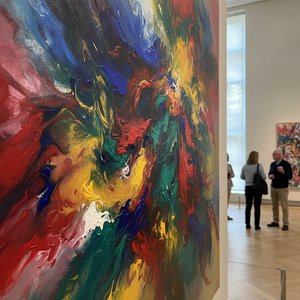
يعتبر داتاتتراي غوندو كولكارني من أبرز الفنانين الذين استطاعوا أن يلهموا الأجيال القادمة ويقدموا لهم رؤية جديدة للعالم، حيث يرى أن الفن يجب أن يكون مصدرًا للفرح والسعادة والإبداع، ويؤمن بأنه قادر على إثراء حياة الإنسان وتوسيع آفاقه الفكرية والعاطفية. لا شك أن لوحة "الحديث الصامت" تثير التأمل والتفكير في طبيعة الوجود الإنساني وعلاقة الإنسان بالطبيعة والروحانية.

Dattatray Gundo Kulkarni, known to the art world by the evocative moniker Dizi, remains one of the most compelling and singular voices in twentieth-century Indian modernism. Born on December 28, 1921, in the village of Shedbal, Karnataka, his life was a profound testament to the pursuit of artistic truth over external acclaim. While many of his contemporaries sought refuge in established movements, Dizi maintained a fiercely independent path, characterized by an unwavering commitment to his own creative vision. His journey was not merely one of aesthetic evolution but also one of personal resilience; during the Quit India movement of 1942, his patriotic fervor led to imprisonment, an experience that left him with a lifelong limp but perhaps deepened the raw intensity found within his work.
His formal artistic foundation was laid at the prestigious Sir Jamsetjee Jeejebhoy School of Art in Mumbai. It was during these formative years that he balanced the practical necessity of working as an illustrator and cartoonist with his burgeoning passion for fine art. This dual existence allowed him to master the precision of line and the wit of caricature, skills that would later inform the structural integrity of his paintings and sculptures. The name Dizi emerged from this period, becoming a symbol of an artist whose personality and style were inextricably linked. Though he held brief affiliations with the Progressive Artists’ Group and the Bombay Group, he never allowed himself to be subsumed by any single school, preferring instead to exist in the vibrant, often turbulent, center of India's modernizing art scene.
The evolution of Dizi’s technique is a fascinating study in artistic maturation. In his early career, his palette was characterized by a certain brightness—vibrant, gay, and light colors that captured the energy of a young artist exploring the possibilities of medium. However, as he matured, his work underwent a profound transformation. He began to eschew superficial ornamentation and flamboyant color in favor of a more sombre and meditative representation. This shift toward deeper tones, mass, and volume allowed him to explore the very essence of form, creating works that felt grounded and monumental even in their most minimalist expressions.
His versatility was truly remarkable, spanning three distinct media: drawing, painting, and sculpture. Whether he was capturing nuanced details in an intricate drawing, exploring abstract depths in a painting, or manipulating physical space through sculpture, his core philosophy remained constant. He sought to convey an honest representation of inner truth, a goal shared by his close friends and contemporaries, V. S. Gaitonde and S. B. Palsikar. His work often reflected a minimalist approach, reminiscent of the post-war European movements, where simplicity was used as a tool to probe the complexities of human psychology and existence. In his art, one finds a deliberate rejection of the decorative, replaced by a search for a core essence that resonates far beyond the canvas.
Dizi’s contribution to Indian art is marked by both his technical mastery and his philosophical depth. He was an artist who believed in surrendering to the center of life without losing one's individual identity, a sentiment that permeates his entire oeuvre. His ability to mirror his own personality through his artistic style made him a unique figure—a rebel with a refined sensibility. This dedication to integrity did not go unnoticed by the institutional art community, which recognized his profound impact on the landscape of Indian modernism.
Throughout his career, he received several prestigious accolades that honored his lifelong commitment to excellence:
Today, the legacy of Dattatray Gundo Kulkarni lives on through works that continue to challenge and inspire. His ability to blend traditional Indian aesthetics with modernist experimentation ensures his place in the canon of great modernists. He remains a symbol of the artist as an independent thinker—one who navigates the complexities of history, politics, and personal struggle to emerge with a voice that is unmistakably, and eternally, his own.

1921 - 1992 , India
Explore the profound emotional depth of Lyrical Abstraction. Discover how masters like Raymond Parker used color and form to bridge Impressionism and Abstract Expressionism. Learn about this pivotal movement through our expert-led art history guide.

Explore the profound emotional depth of Color Field painting. Discover the history of mid-century abstraction, from Rothko to Newman, and learn how pure color transforms the viewer's experience through our expert art history guide.

Discover the profound emotional depth and investment potential of contemporary abstraction. Our expert guide explores how texture, movement, and form create timeless value for discerning art collectors and sophisticated interiors.


ابقَ على اطلاع بأحدث أخبار الفن، والعروض الحصرية، وأفكار الديكور.
أخبرنا عن مشروعك، وسيقدم لك خبراؤنا الفنيون 3 اقتراحات فنية مخصصة لك.
دعنا نختار لك ٣ خيارات مخصصة تماماً - مجاناً!


 معاينة الحجم الحقيقي
 مشاركة
 مشاركة
 التفاصيل

 تحميل الملف
 قطع مشابهة
 الأشعة السينية
 عرض شرائح


 عرض المزيد







 خيار الزجاج متاح فقط للمقاسات التي تقل عن 110 سم


