x

 Giclée PrintDigitalContemporary Realism
 1922Modern
 20.0 x 24.0 cm
طباعة جيكلي أو كانفاس بجودة المتاحف، مع سرعة في التنفيذ وخيارات متنوعة للتشطيب. ( اشترِ لوحة مرسومة يدويًا اشترِ الصورة)
اختر من بين أحجامنا المُعدّة مسبقًا والتي تتطابق مع النسب الأصلية للعمل الفني.

يمكنك إدخال أبعادك الخاصة لتناسب إطاراً أو مساحة معينة. وإذا لم يتطابق الحجم الذي اخترته مع نسب الصورة الأصلية، فسنقوم إما بقص العمل الفني أو تمديد الصورة باستخدام حافة معكوسة أو بلون مصمت. سيتم إرسال نموذج تجريبي رقمي لاعتمادك قبل بدء الإنتاج.
يرجى ملاحظة أن المعاينة على الشاشة لا تعكس عملية القص أو التمديد الفعلية؛ حيث سيوضح النموذج التجريبي فقط التكوين النهائي بدقة.
وعلى الرغم من توفر أحجام مخصصة، إلا أننا نوصي باختيار أبعاد من القائمة المحددة مسبقاً للحفاظ على النسب الأصلية.
توصيل عالمي إلى خلال أسبوعين بدلاً من المدة القياسية البالغة 4/5 أسابيع. 14 أغسطس


East Side Interior
مقاس النسخة المطبوعة
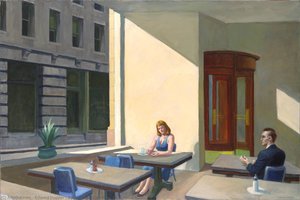
Edward Hopper’s “East Side Interior,” rendered in 1922, is more than just a depiction of a room; it’s a distilled essence of American loneliness and the poignant beauty found within moments of solitary contemplation. This meticulously crafted black and white drawing captures a scene brimming with understated drama – a woman seated by a window, lost in observation, surrounded by the quiet formality of an upper-class dining space. The image immediately evokes a sense of detachment, a feeling that is central to Hopper’s enduring appeal and a hallmark of American art during the early 20th century.
Hopper's technique in “East Side Interior” is characterized by a precise realism, honed through his training under William Merritt Chase. The drawing showcases a remarkable attention to detail – the texture of the fabric on the chairs, the sheen of the vase, the subtle variations in light and shadow. This meticulous approach isn’t merely about accurate representation; it's about capturing the *essence* of the scene, imbuing it with a palpable sense of atmosphere. Hopper’s style aligns perfectly with the broader Realist movement, but he elevates it through his ability to convey complex emotional states within seemingly simple compositions.
The use of black and white further intensifies the drawing's impact, stripping away any distractions and focusing attention on form, light, and shadow. This monochrome palette contributes significantly to the artwork’s melancholic mood, a signature element of Hopper’s oeuvre.
"East Side Interior" was created during a period of significant social and cultural change in America – the rise of industrialization, urbanization, and increasing mobility. Hopper's work reflects this shift by portraying individuals grappling with feelings of alienation and displacement within modern urban environments. The dining room itself can be interpreted as a symbol of domesticity and tradition, yet the woman’s solitary presence suggests a disconnect from these values. The clock, a recurring motif in Hopper’s art, adds another layer of symbolism – a reminder of the relentless passage of time and the inevitability of mortality.
“East Side Interior” resonates with viewers precisely because it taps into universal human emotions – loneliness, contemplation, and a yearning for connection. Hopper’s ability to evoke these feelings through seemingly mundane scenes is what has cemented his place as one of America's most important artists. This drawing exemplifies the quiet power of Hopper’s vision, offering a timeless meditation on the complexities of modern life and the enduring human need for solace and understanding. Its compact size (20 x 24 cm) makes it an ideal addition to any collection or interior space, providing a constant reminder of Hopper's profound insights.


1931 - 1967 , الولايات المتحدة الأمريكية

Explore the profound artistry of black and white photography. From the chemistry of gelatin silver to the chiaroscuro of the Old Masters, discover how monochrome captures the eternal essence of light, form, and emotion for the discerning art collector.


ابقَ على اطلاع بأحدث أخبار الفن، والعروض الحصرية، وأفكار الديكور.
أخبرنا عن مشروعك، وسيقدم لك خبراؤنا الفنيون 3 اقتراحات فنية مخصصة لك.
دعنا نختار لك ٣ خيارات مخصصة تماماً - مجاناً!


 مشاركة
 مشاركة
 التفاصيل

 تحميل الملف
 قطع مشابهة
 عرض شرائح
 عرض المزيد




































 خيار الزجاج متاح فقط للمقاسات التي تقل عن 110 سم