وصف القطعة الفنية
Pablo Picasso: A Revolutionary Artist
Pablo Ruiz y Picasso (1881 – 1973) stands as one of the most influential figures in 20th-century art, forever altering perceptions of visual expression and challenging conventional artistic boundaries. Born in Málaga, Spain, his prodigious talent emerged early, nurtured by his father’s encouragement and propelling him toward a remarkable artistic journey that spanned decades and encompassed diverse styles—from meticulous realism to groundbreaking abstraction. Picasso's formative years were marked by intense study and experimentation, culminating in pivotal breakthroughs that established him as a pioneer of Cubism alongside Georges Braque.
The Blue Period (1901-1906)
Picasso’s initial artistic explorations unfolded during the Blue Period, a melancholic phase characterized by somber hues—primarily blues and greens—that conveyed profound emotional depth. Influenced by personal tragedies and societal hardships, he depicted subjects of poverty, despair, and loneliness with unflinching honesty. Notable works from this period include “The Old Guitarist” (1903), capturing the poignant vulnerability of an aging musician grappling with hardship, and “Woman in Blue” (1904), portraying a woman consumed by sorrow—images imbued with symbolic resonance reflecting Picasso’s own inner turmoil.
The Rose Period (1906-1907)
Following the Blue Period's introspective gaze, Picasso transitioned into the Rose Period, embracing warmer tones—roses, reds, and oranges—that signaled a shift toward optimism and tenderness. This stylistic evolution coincided with his burgeoning romance with Fernande Olivier, inspiring canvases depicting familial scenes and portraits of women imbued with grace and beauty. “Family of Saltimbanques” (1906) exemplifies this period's aesthetic sensibilities, portraying a troupe of acrobats—a motif recurring throughout Picasso’s oeuvre—with expressive dynamism and vibrant color palettes.
Cubism: A Paradigm Shift
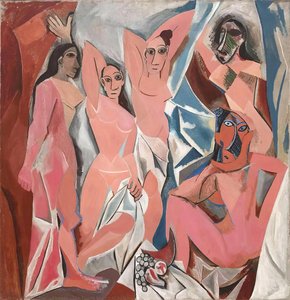
Picasso’s collaboration with Braque revolutionized artistic practice, initiating the Cubist movement—a radical departure from traditional representation that dismantled pictorial illusion. Embracing geometric forms and fragmented perspectives, Cubists dissected objects into constituent planes, presenting multiple viewpoints simultaneously on a single canvas. “Les Demoiselles d'Avignon” (1907), considered one of Cubism’s seminal achievements, shattered conventions by depicting five female figures—inspired by African masks—in an unsettling assemblage of angular shapes and distorted proportions. This audacious approach irrevocably transformed the visual landscape of art history.
Guernica: A Testament to Protest
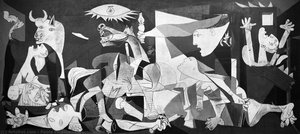
Picasso's monumental mural “Guernica” (1937), commissioned for the Spanish Pavilion at the Paris Exposition Internationale, stands as a searing indictment of Fascist aggression during the Spanish Civil War. Executed in monochrome—black, white, and gray—the painting portrays a harrowing tableau of suffering—human figures contorted in agony amidst chaos and destruction—symbolizing the horrors inflicted upon innocent civilians. Its powerful imagery transcends specificity, resonating universally as an emblem of pacifism and resistance against tyranny. Picasso’s masterful technique—characterized by expressive brushstrokes and meticulous detail—amplified Guernica's emotional impact, cementing its status as one of art history’s most enduring expressions of moral outrage.
### Legacy and Influence
Pablo Picasso’s artistic legacy extends far beyond his individual masterpieces, shaping the trajectory of subsequent generations of artists and influencing movements ranging from Surrealism to Pop Art. His unwavering commitment to experimentation—coupled with his profound sensitivity to human emotion—established him as a visionary whose work continues to inspire awe and provoke contemplation. Picasso's exploration of form, color, and symbolism remains relevant today, demonstrating the enduring power of art to communicate complex ideas and challenge societal norms—a testament to his indelible mark on the history of modern art.