x


 Купи картина Купи изображение
 Изпрати
 Детайли
 Добавяне към любими
 Изтегляне
 Подобни
 Рентгенова снимка
 Слайдшоу
 Acrylic On CanvasWallArtRealism
 186519th Century
 65.0 x 90.0 cm
 Национална галерия на Канада
Giclée печат или принт върху платно с музейно качество, бързо производство и гъвкави опции за завършен вид.





























Изберете от предварително зададените размери, които съответстват на оригиналните пропорции на произведението.

Можете да въведете собствени размери, за да паснат на конкретна рамка или пространство. Ако избраният от Вас размер не съвпада с пропорциите на оригиналното изображение, ние ще изрежем произведението или ще разширим изображението с огледален или едноцветен ръб. Дигитален макет ще бъде изпратен за Ваше одобрение преди започването на производството.
Моля, имайте предвид, че предпрегледът на екрана не отразява реалното изрязване или разширяване. Само макетът ще покаже точно финалната композиция.
Въпреки че са налични персонализирани размери, препоръчваме да изберете размер от предварително дефинирания списък, за да запазите оригиналните пропорции.
Доставка по целия свят () в рамките на 2 седмици вместо стандартните 4/5 седмици. (22 Юли)


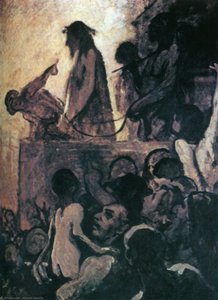
The Third-class Carriage
Размер на репродукцията
Honoré Daumier's 1865 painting, “The Third-Class Carriage,” is more than a simple depiction of a train journey; it’s a poignant snapshot of mid-19th century French society, rendered with the artist’s characteristic blend of realism and social commentary. Measuring 65 x 90 cm, this black and white composition immediately draws the viewer into the cramped confines of a third-class railway car, capturing a moment of everyday life that speaks volumes about class divisions and the burgeoning urbanization of France during the Second Empire.
Daumier’s style is immediately recognizable through his meticulous draftsmanship and a deliberate avoidance of idealized beauty. He was deeply influenced by artists like Rubens, particularly in his use of dramatic lighting (chiaroscuro) to sculpt forms and create mood. In “The Third-Class Carriage,” this influence is evident in the strong contrasts between light and shadow, which highlight the textures of the benches, luggage, and clothing. The artist’s technique relies on precise lines and detailed observation, reflecting his commitment to capturing reality with unflinching honesty. His work was often characterized by a rough, almost sketch-like quality, contributing to its raw emotional impact.
Painted in 1865, “The Third-Class Carriage” reflects the significant social and political changes occurring in France during this period. The rapid growth of Paris and other industrial centers led to a massive influx of rural populations seeking work and opportunity – often finding themselves crammed into overcrowded, poorly maintained train cars like the one depicted here. Daumier’s work aligns with the broader trend of Realist art, which sought to depict everyday life without romanticizing or idealizing it. The painting subtly critiques the social inequalities inherent in this transition, offering a glimpse into the lives of those marginalized by industrialization and urbanization.
Beyond its documentary value, “The Third-Class Carriage” possesses a powerful symbolic resonance. The presence of a woman holding a baby amidst the bustling crowd evokes themes of family, vulnerability, and the challenges faced by working-class families. The scattered luggage represents not just possessions but also dreams, aspirations, and the burdens carried on journeys – both literal and metaphorical. The overall mood is one of quiet observation, inviting viewers to contemplate the lives of these anonymous individuals and consider their place within a rapidly changing society. This artwork’s enduring appeal lies in its ability to capture a fleeting moment of human experience with remarkable sensitivity and artistic skill.


1808 - 1879 , Франция

Разгледайте топ 25 шедьовъра от Метрополитън Музея на изкуствата – Ван Гог, Моне и други! Открийте историите зад известните картини, техниките и вдъхновението им. Купете висококачествени репродукции за вашия дом на Most-Famous-Paintings.com.

Разгледайте топ 25 шедьовъра от MoMA – Ван Гог, Пикасо и Уорхол! Открийте историите зад импресионизма, кубизма и експресионизма. Купете висококачествени репродукции на картини за вашия дом в Most-Famous-Paintings.com.

Открийте 25 шедьовъра на Данте Габриел Росети! Потопете се в света на прерафаелитизма, символизма и викторианската красота. Висококачествени репродукции за вашия дом – купете картини онлайн на Most-Famous-Paintings.com.

Разгледайте топ 25 шедьовъра от Детройтския институт по изкуствата! От Ван Гог до Моне – истории на велики художници и техники. Вдъхновете се за вашия дом с репродукции на картини от Most-Famous-Paintings.com.
Разгледайте топ 25 шедьовъра от Националната художествена галерия във Вашингтон! От Сезан до Пикасо – истории на изкуството, техники и вдъхновение. Купете висококачествени репродукции и декорирайте с Most-Famous-Paintings.com.


Бъдете информирани за последните новини в света на изкуството, ексклузивни оферти и идеи за декорация.
Разкажете ни за вашия проект и нашите експерти по изкуство ще ви предложат 3 персонализирани предложения за произведения на изкуството.
Нека подберем 3 варианта само за вас – безплатно!


 Сподели

 Прочетете повече







 Стъклото е налично само в размери под 110 см